Monday, July 01, 2019

Desktop Refresh ;-) Gambling firms pay record £19.6m fines for failing to protect customers and stop money laundering


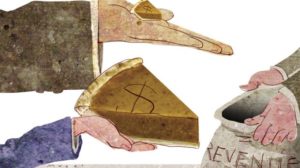
Poorest families pay 47.6% of their income in tax as top earners hive off wealth to tax havens  


Secrecy surrounds GST registered sellers, leaving online consumers vulnerable to profiteering - Courier Mail


Report of the IBA-OECD Task Force on The Role of Lawyers and International Commercial Structures


Stranger Things: Netflix and the challenge of tax in the digital 

Our filing last year with the ATO is a standard tax filing.” Netflix confirmed to the Financial Review that ...


The accountant who lost it 

The accountant who lost it all ... The TPB found that Moltoni “no longer meets registration requirements”, citing his ... Accountant Peter Moltoni . . . as president of the Taxation Institute of ...


Socialising Losses: Privatisation has damaged economy


The Australian Financial Review

Following up on Wednesday's post, An Open Letter To The 2020 Presidential Candidates: It’s Time To Tax Us More:  Wall Street Journal editorial, An Open Letter to Patriotic Billionaires:

Nineteen uberwealthy Americans posted an open letter Monday calling on “all candidates for President” to support a “moderate” wealth tax. Signatories include the investor George Soros, Berkshire Hathaway scion Molly Munger, Mickey Mouse heiress Abigail Disney, Facebook co-founder Chris Hughes, and a couple of Hyatt Hotel progeny from the Pritzker family. ...

The letter brushes by the arguments against a wealth tax, calling them “mostly technical and often overstated.” Would courts find it unconstitutional? How would assets like Picassos be valued? Why has Europe largely abandoned this kind of taxation? Doesn’t it diminish the incentive to save and invest? What’s to keep a wealth tax from expanding, like the income tax did, to cover more and more Americans?

Instead of seriously grappling with these objections, the letter tries to sweep readers along in sheer patriotic fervor. The rich “should be proud to pay a bit more,” the authors say. “Taking on this tax is the least we can do to strengthen the country we love.”


Tax  Inequality & Human Rights 2Tax, Inequality, and Human Rights (Philip Alston (NYU) & Nikki Reisch (NYU) eds. Oxford University Press 2019)


ImmortalityZombies control many charities. Zombies who are sometimes racist and usually misguided.

We don’t let dead people vote.

We don’t let dead people run for political office.

But we do let dead people donate money that shapes the world, using charitable trusts.

And as we learn on this episode of the Future Perfect podcast, letting zombie donors pull the strings often doesn’t turn out all that well.

Ray Madoff, a professor at Boston College Law School, wrote a whole book about people donating from beyond the grave, calledImmortality and the Law: The Rising Power of America’s Dead.

She says the all-powerful zombie donor is a relatively new American phenomenon.

For the first century or so after the American Revolution, the idea that the dead would have much control over the resources of the world seemed very undemocratic. But then came the Gilded Age, and the rise of a class of unprecedentedly rich people. Some of these robber barons were willing to spread their wealth around — in exchange for immortality. And that immortality came in the form of charitable trusts that lasted forever.

In the decades since, perpetual charitable trusts have become the norm.

The problem? Forever is a long time. And when donors write specific instructions in their trusts, they can’t predict the ways the world will change.


Pay Day: Christopher Pyne’s Defence bonanza a fee fillip for EY


It dwarfs all other government spending. It is secretive. A huge chunk of it does not even go out to tender. The lion's share goes to foreign multinationals who pay no tax in Australia. It is defence spending. 


ATO pursues Griffith spud king over tax fraud deal - The Australian

Ben Butler
"Using legal techniques not available when the ATO struck its deal with Mr Rennie in late 2012, investigators have been able to trace flows of money connected to his alleged efforts to cheat on the settlement through New York, where trillions of US dollars flow in and out of banks every day.Funded by the ATO, the liquidators have taken legal action in two US states, New York and Colorado, seeking transaction records from Swiss bank UBS, two smaller US banks, finance group Pershing and American central bank the Federal Reserve, which runs wire transfer service Fedwire. 

Misinformation and news avoidance First of July 2019


“Our society is run by insane people for insane objectives. I think we're being run by maniacs for maniacal ends and I think I'm liable to be put away as insane for expressing that. That's what's insane about it.” 
― John Lennon

To slow, or even arrest, the aging process in humans is fraught with serious problems in the relationships of humans to each other and to all of our institutions. By allowing asocial people, tyrants, dictators, mass murderers, and people who cause wars to have their longevity increased should be undesirable. Yet, that would be one outcome of being able to tamper with the aging process.
I guess at a minimum, as bad as everyone is, at least they (as an individual) are not around to be bad forever? I’ll take that silver lining.

Anyone who has worked with a CEO may not be surprised that many of them have common personality traits such as charisma, fearlessness, and a cool head under stress. ... According to Dr Tara Swart, neuroscientist, psychiatrist, and Neuroscientist in Residence at the ...

The Disturbing Link Between Psychopathy And Leadership - Forbes We tend to think of psychopathy as the province of criminals, with leadership qualities that may land someone atop a fringe religious cult, say - not in a boardroom. ...

THOUGHTS ON CHIVALRY AND CIVILITY. “It is pure madness and entitlement to expect to receive the deferential treatment expected under chivalry or civility when you openly mock the obligations for you to return the favor.”

Misinformation and news avoidance

The idea that the spread of misinformation makes some people want to tune out the news altogether has always lent a paradoxical quality to the work of fact-checkers and other truth-tellers. It’s hard to deliver the truth if people are avoiding the news because they think there are too many falsehoods out there.
 
Now comes another factor to consider, from the Reuters Institute’s recent 2019 Digital News Report, which studies news trends worldwide. The number of people who actively avoid the news, the report said, is up from the last time the report’s authors asked the question two years ago. But people avoid the news not just because they don’t believe what they read, or don’t think they can believe it. It also has to do with how the news makes them feel.
 
In the United Kingdom, for example, the report said, over half of respondents said the news “had a negative impact on their mood,” while four in 10 said they felt helpless to change the course of events.
 
In a recent essay for Nieman Labs, editor Joshua Benton explored this dynamic further, suggesting that lack of trust may be a lesser issue than the fact that the news is just depressing and anxiety-producing. He posits that maybe the news as delivered just isn’t competing well against “every other form of media, content, or diversion on your phone.” 
 
The Reuters report did say that concern about misinformation and disinformation “remains high despite efforts by platforms and publishers to build public confidence.” But that concern is only one of a constellation of factors, along with clickbait and the rise of political polarization fueling partisan agendas online, that combine to undermine trust among readers.
 
That conclusion comports with work in the United States from Andrea Wenzel, an assistant professor at Temple University, who found in a study last year that people often avoided the news due to a combination of feeling distrustful of it and being overwhelmed by its negativity. 
 
Her report, published in the International Journal of Communication, was based on conversations with 13 focus groups made up of news consumers across the country. It paints a picture of readers frustrated and weary with the “pervasive ambiguity” of information, navigating from site to site to verify something they had encountered online, often just giving up altogether.

Wenzel, reached by e-mail this week, said that when people in her study talked about “fake news” or trying to find “the truth,” they were often referring to the presence or absence of partisan narratives as opposed to misinformation.
 
Wenzel said that in more recent studies she’s done, trust was often connected with “how people felt their community was represented, and how they perceived the motives of journalists” — and not just if they thought something was factually accurate. So in these instances, she said, “traditional ideas of fact checking would be unlikely to influence people or woo them back to the news-using fold.”
 
Indeed, “fake news” is a politically charged term that doesn’t always mean misinformation, and is often used by people to characterize, simply, content that they don’t trust or agree with. But misinformers contribute to the erosion of trust by spreading falsehoods like doctored videos and disproven theories about the science of vaccinations or climate change.
 
What all this means for fact-checkers and other journalists is peril as well as opportunity. The peril is that people tune out due to all sorts of factors, misinformation being just one of them. The opportunity is in figuring out how to frame fact-checks and stories in ways that draw people in and in making them a compelling refuge from all the noise that might otherwise drive readers away. 

. . . technology

·        Opinion is divided about how concerned we should be about deepfakes. But given the amount being written about them, one thing is for sure: If they start appearing with more regularity, no one can say they weren’t warned. The Verge wrote about new research from London that shows how a single photo can be manipulated into a singing or talking video portrait. Among the (hilarious) examples is Russian religious mystic Grigori Rasputin singing Beyonce’s “Halo.” 
·        The Washington Post, meanwhile, has launched a special guide to identifying manipulated videos, complete with a unique landing page that explains the terms and gives examples. And Fast Company had a piece about research into detecting deepfakes.
·        That slowed-down Pelosi video continues to generate headaches for Facebook.

. . . politics

·        The first debate among Democrats (10 of them) running for U.S. president began last night, prompting a flurry of fact-checking and war-room efforts by social media companies. The Post concluded that the candidates “rarely strayed over the factual line.” The debates will continue tonight with 10 more candidates.
·        On Poynter.org, Cristina Tardáguila, IFCN’s associate director, explored the question of why fact-checkers in the United States don’t collaborate on elections coverage the way they do in other countries. 
  • The International Centre for Investigative Reporting has identified and analyzed instances of blatant misinformation and propaganda leading up to Nigeria’s general elections earlier this year.

. . . the future of news

  • We’re assuming all those fact-checkers who attended Global Fact 6 last week in Cape Town are now back at their desks, freshly inspired and ready to tackle all the falsehoods the world has to offer. By all accounts the event was a success. Here are some lessons from the gathering. And here is a post from three big fact-checkers — Africa Check, Chequeado and Full Fact — calling for an evolution in the craft. 
·        Two University of Washington professors have developed a course in “calling BS,” The Washington Post reported. They say more than 70 colleges have contacted them about the curriculum.
·        As part of a New York Times series of op-eds about the future, science fiction writer Cory Doctorow imagines what life would be like if the United States regulated social media platforms, as some have demanded.

This week we’re going with a story by the joint venture of PolitiFact and Kaiser Health News about claims from President Trump and former Vice President Joe Biden that they will cure cancer. 
This isn’t a typical truth-o-meter type fact-check. It’s basically a story about why politicians’ claims that their administration will cure cancer are oversimplified, even though voters might appreciate the intention behind them. Research to cure cancer has long been a priority for Biden, whose son Beau died of brain cancer in 2015, and whom then-President Barack Obama chose in 2016 to lead what they called a “cancer moonshot.”
Cancer, however, is not just one disease but rather a collection of them, and they all call for different treatments, most of which need funding more than anything. Moreover, prevention is a key to cancer reduction. The Kaiser reporter, Shefali Luthra, captured these all factors in her clear-eyed explanation. 
What we liked: This claim lent itself to the kind of nuance with which it was treated. Claims that  “we will cure cancer” don’t really call for a thumbs up or down. The science is complex because cancer is complex. These politicians know that, and many Americans probably know it, too, given their personal or family experiences. This piece can help people understand why.

1.      Researchers in the U.K. have created an online simulation that they say can increase people’s resistance to “fake news.”
2.      DW.com profiled Juliane von Reppert-Bismarck, a former reporter who created "Lie Detectors," a European news literacy program that has made hundreds of classroom visits across Belgium, Germany and Austria. The program is making plans to expand to other countries and languages.
3.      The Washington Post chronicled the journey of cancer patients who sought help online and instead became ensnared in a “web of false, misleading and potentially dangerous cancer cures.”
4.      Misinformation about U.S. travel and immigration policies continues to circulate overseas. The latest, that Malaysia was added to a visa waiver program, was debunked by Agence France-Press. 
5.      AFP, meanwhile, has joined with Facebook has in a fact-checking agreement to combat misinformation in Malaysia.
6.      A new law in Canada aimed at stemming the spread of political misinformation has led Twitter to ban political advertising in advance of this fall’s elections. Here’s the Toronto Star’s take.
7.      A doctor in the Democratic Republic of the Congo beat Ebola. Now he’s working to dispel misinformation about the virus, Nature reported.
8.      Researchers at the London School of Economics have drawn a number of conclusions from studies they’ve done on social media use. There is a lot there. We, of course, zeroed in on the part about the “shelf-life” of fact-checking. See what you think. 
9.      Wired chronicled how misinformation and vaccine fears combined to spread measles in Brooklyn.
10.   Yes, that spider really was eating that ‘possum, says Snopes. It was a very big spider and a very small ‘possum. Still, ewww.
That's it for this week! 

via Susan and Daniel