Saturday, August 31, 2019

The Wild Orchid Mystery

As Voltaire once said: 'Men will commit atrocities as long as they believe absurdities.


If you hit the target every time, it’s too near or too big. 

 —Tom Hirshfield

Trio of sparrows

Runaway morning glories
Late summer garden


Many happy returns to green fingered John Gabriele of 1962 vintage 
ABC Illawarra - If you missed out on the Compost Heap this... | Facebook 
If you missed out on the Compost Heap this morning, follow this link to hear John Gabrielle's Tip of the week. http://bit.ly/1997aFT.

Tanguy Viel–ARTICLE 353


“Nobody wants to fall overboard fully clothed into the ocean anywhere in the world, even close to shore – it’s such a surprise for the body to find itself in this new element.  One moment, the man is on a bench in a boat, chatting at the stern rail while rigging his lines and the next he’s in another world, with gallons of salt water, numbing cold, and the weight of wet clothes making it hard to swim. 

Kindness can forward the will to live in depressed individuals who feel isolated and different; that is why performing ... Kindness is potent in strengthening a sense of community and belonging.

“Real writers take seriously what writing is about—wrestling with words. Words are not inert counters like cloak-room tickets. They are living creatures which resent being treated as if they were knives, forks and spoons. You cannot take them out of a drawer, use them, then stow them away again. They are stubborn and they sometimes refuse to mean what the writer wants them to mean. It’s not merely a matter of the word itself—there’s also the delightful agony of arranging them in patterns, making music out of them.”


'The Delightful Agony of Arranging Them in Patterns'


Slovak’s dream orchard drawing volunteers from across the world
Sad u Harušťákov orchard planned as ideal space for ecological projects


The sentence

watching him where it hung above the mantel
and studied the hand there writing what he wrote,
something about the ocean in midsummer
when he was a child, the glint, the flecks of spume
tossed up where breakers thundered on the rocks;
the truth was a sentence they composed together
for no one else but the quiet of the house:
the tide he dreamt and the one he could remember,
subject and verb and the sun-touched swells they made
of the past itself now blended with invention,
his left hand moving the right hand in the mirror
and time a distance in the room between them
spread out there like a childhood shore where waves
broke on the sand and retreated to the green sea.


The Wild Orchid Mystery - Includes orchid collection photos and a podcast: “You probably know orchids as the big, colorful flowers found in grocery stores and given as housewarming gifts. But those tropical beauties represent only a fraction of the estimated 25,000 orchid species worldwide. While their showy relatives fly off the shelves, North America’s more understated native orchids are disappearing in the wild. Scientists at the Smithsonian Environmental Research Center are working to protect these orchids and their habitats, but first they need solve a surprisingly difficult problem: how to grow one…



Mystics of the Imagination. 

Mark Vernon, in this beautifully written and artfully constructed book, uses Barfield’s key insights and amplifying historical and literary scholarship, to trace the development of Christianity’s two founding traditions – Athens and Jerusalem – articulating how they embarked on similar journeys from original participation to an individualizing break to a new sense of humanity’s place in the cosmos. No longer inhabiting a field in which the gods pulled the strings of fate into a world governed by a unitary, ordered universe in which recognizable persons could, in freedom, respond either to Yahweh as person or in law or to the ordering Good or Logos. These two traditions, Vernon argues, merge in Christianity and give birth to a new dispensation, a new reconciling participation, witnessed to and embodied in the person of Christ.


The insatiable curiosity of Phillip Adams - Conversations - ABC  

Well, it is tring to get at a mystery …

For Wittgenstein, Philosophy Had to Be as Complicated as the Knots it Unties | Literary Hub.

“When a sentence is called senseless,” he said, “a combination of words is being excluded from the language, withdrawn from circulation,” and “it is not as it were its sense that is senseless.” But we cannot appreciate what we have achieved unless we find some way to commemorate our lost illusions and “get a clear view of the . . . state of affairs before the contradiction was resolved”—a task that called for imagination, tact and poetic skill rather than quick-witted cleverness.


Biography as autobiography …

… Reading in a Boom Time of Biographical Fiction | Literary Hub
I chose to write about Saint Paul because, first of all, I considered him the inventor of Christianity, a figure almost equal to Plato in his influence on western thought. But, in this case, one has only a handful of letters—perhaps six of the thirteen Pauline epistles in the New Testament are considered authentic by most scholars. The Acts of the Apostles provide a partial biography of Paul. But this is a sketch. It’s for the novelist to imagine the contours of Paul’s inner world, to guess at his motives. I saw him as a repressed homosexual, a man of amazing visionary powers, a godly person who heard voices—including the voice of God. 


'A pressure cooker for dark urges': Tasmania proving to be perfect backdrop for gothic horror


Forget sunny skies and glistening beaches — it's Tasmania's bleak, austere and gloomy locations which are drawing in film and television producers, with their creations having such a unique look and feel that experts have coined a name for the sub genre — Tassie Noir.
Politics of graphic design  


A Contentment with Things as They Are'

“A world without irony would have to be either an earthly paradise, where it could never arise for there would be nothing to provoke it, or else an earthly hell, where it was never allowed to show its face. Our world seems unlikely ever to become an earthly paradise.”
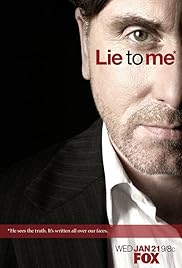
A Test of the Micro Expressions Training Tool:
Image result for lie to meThe theory behind micro‐expressions posits that when people attempt to mask their true emotional state, expressions consistent with their actual state will appear briefly on their face. Thus, while people are generally good at hiding their emotions, some facial muscles are more difficult to control than others and automatic displays of emotion will produce briefly detectable emotional “leakage” or micro‐expressions (Ekman, 1985). When a person does not wish to display his or her true feelings s/he will quickly suppress these expressions. Yet, there will be an extremely short time between the automatic display of the emotion and the conscious attempt to conceal it, resulting in the micro‐expression(s) that can betray a true feeling and according to theory, aid in detecting deception.

Amid fears about the death of books, finding new ways to bring them to life - The New Yorker – “A physical book is good for much more than reading. In our house, we have several large art books propping up a movie projector. A thin paperback is wedged under a couch leg in a spot where our old floors are especially uneven. One summer we pressed wildflowers between the pages of a gigantic book about the Louvre, and later used it to flatten out a freshly purchased Radiohead poster. I am not the first person to choose a large, sturdy book as an impromptu cutting board: the cover of the Exeter Book, a tenth-century repository of Anglo-Saxon literature, bears knife marks from what looks like chopping. Stains on its ancient vellum suggest that, like the big atlas of Vermont in our living room, it was also possibly used as a drink coaster. Twenty years ago, I had a very large bump on my wrist. The doctor examined it and told me it was a harmless fluid deposit—nothing to worry about. His remedy, delivered cheerfully in a French accent, has stuck with me: “Slam it with a book.”
As Leah Price suggests in her brisk new study, “What We Talk About When We Talk About Books: The History and Future of Reading” (Basic), physical books—which, ten or so years ago, many fretted might soon be obsolete—show no signs of going away. Nobody would try to pop a cyst with a Kindle or prop open a window with a phone…”

Friday, August 30, 2019

Sparkling Prose: Harvard risk and environmental economist Marty Weitzman has passed away.


Marty Weitzman passed away suddenly yesterday. He was on many people’s shortlist for the Nobel. His work is marked by high-theory applied to practical problems. The theory is always worked out in great generality and is difficult even for most economists. Weitzman wanted to be understood by more than a handful of theorists, however, and so he also went to great lengths to look for special cases or revealing metaphors. Thus, the typical Weitzman paper has a dense middle section of math but an introduction and conclusion of sparkling prose that can be understood and appreciated by anyone for its insights.
The Noah’s Ark Problem illustrates the model and is my favorite Weitzman paper. It has great sentences like these:
Noah knows that a flood is coming. There are n existing species/libraries, indexed i = 1, 2,… , n. Using the same notation as before, the set of all n species/libraries is denoted S. An Ark is available to help save some species/libraries. In a world of unlimited resources, the entire set S might be saved. Unfortunately, Noah’s Ark has a limited capacity of B. In the Bible, B is given as 300 x 50 x 30 = 450,000 cubits. More generally, B stands for the total size of the budget available for biodiversity preservation.
…If species/library i is boarded on the Ark, and thereby afforded some protection, its survival probability is enhanced to Pi. Essentially, boarding on the Ark is a metaphor for investing in a conservation project, like habitat protection, that improves survivability of a particular species/library. A particularly grim version of the Noah’s Ark Problem would make the choice a matter of life or death, meaning that Pi= 0 and Pi= 1. This specification is perhaps closest to the old testament version, so I am taking literary license here by extending the metaphor to less stark alternatives.
Weitzman first shows that the solution to this problem has a surprising property:
The solution of the Noah’s Ark Problem is always “extreme” in the following sense…In an optimal policy, the entire budget is spent on a favored subset of species/libraries that is afforded maximal protection. The less favored complementary subset is sacrificed to a level of minimal protection in order to free up to the extreme all possible scarce budget dollars to go into protecting the favored few.
Weitzman offers a stark example. Suppose there are two species with probabilities of survival of .99 and .01. For the same cost, we can raise the probability of either surviving by .01. What should we do?
We should save the first species and let the other one take its chances. The intuition comes from thinking about the species or libraries as having some unique features but also sharing some genes or books. When you invest in the first species you are saving the unique genes associated with that species and you are also increasing the probability of saving the genes that are shared by the two species. But when you put your investment in the second species you are essentially only increasing the probability of saving the unique aspects of species 2 because the shared aspects are likely saved anyway. Thus, on the margin you get less by investing in species 2 than by investing in species 1 even though it seems like you are saving the species that is likely to be saved anyway.
The math establishing the result is complex and, of course, there are caveats such as linearity assumptions which might reverse the example in a particular case but the thrust of the result is always operating: Putting all your eggs in one basket is a good idea when it comes to saving species.
Weitzman gets the math details right, of course!, but he knows that Noah isn’t a math geek.
Noah is a practical outdoors man. He needs robustness and rugged performance “in the field.” As he stands at the door of the ark, Noah desires to use a simple priority ranking list from which he can check off one species at a time for boarding. Noah wishes to have a robust rule….Can we help Noah? Is the concept of an ordinal ranking system sensible? Can there exist such a simple myopic boarding rule, which correctly prioritizes each species independent of the budget size? And if so, what is the actual formula that determines Noah’s ranking list for achieving an optimal ark-full of species?
So working the problem further, Weitzman shows that there is a relatively simple rule which is optimal to second-order, namely:
Where R is an index of priority. Higher R gets you on the ark, lower R bars entrance. D is a measure of a species distinctiveness–this could be measured, for example, by the nearest common ancestor metric. U is a measure of the special utility of a species beyond its diversity (Pandas are cute, goats are useful etc.) C is the cost of a project to increase the probability of survival and Delta P is the increase in the probability of survival so Delta P/C is the cost of increasing the probability of survival per dollar. Put simply we should invest our dollars where they have the most survival probability per dollar multiplied by a factor taking into account diversity and utility.
The rule is simple and sensible and and it has been used occasionally. Much more could be done, however, to optimize dollars spent on conservation and Weitzman’s rule gives us the necessary practical guidance. RIP.

Is the political novel dead?

       In The Guardian Dorian Lynskey wonders: Is the political novel dead ? 
       He argues: "the campaigning novel has become an anachronism" -- in a paragraph that mentions Things Fall Apart and One Day in the Life of Ivan Denisovich, neither of which seems particularly 'campaigning' ..... 
       Aside from the fact that there is, in fact, an incredible amount of 'campaigning' fiction being written and published (though admittedly most of it not widely read) -- I get review-pitches for this kind of stuff by the bucket-load --, it seems to me a lot of contemporary fiction is, in significant respects, political. Not always (rubbing-it-)in-your-face obviously so, but still. 


The overtly political novel — genre of Orwell, Ayn Rand, Upton Sinclair — is thoroughly out of fashion. Does it deserve to be saved?... Orwell  


Apocalypse chic. Being radical used to be hard work. Now all one needs to do is succumb, conspicuously, to hopelessness  


Where books matter. Americans usually assume that literature exists to depict life, while Russians often speak as if life exists to provide material for  literature 


100 books to read on China


From Babel to Orwell, Mao to Borges, Stalin to Imrich,  the Cold War had a literary front. As Solzhenitsyn put it, books were “as dangerous as atom bombs”...  Atom Bombs 

How we turned our apartment block into a community


A book exploring The Bible's complex influence on Australia's political and pop culture landscape, from colonisation to the Bra Boys, is among the major winners of this year's NSW Premier's History Awards.
The winners, each awarded $15,000, were announced at the State Library of NSW on Friday as part of the official launch of NSW History Week.


Meredith Lake's book The Bible in Australia: A Cultural History has taken the Australian History Prize at the NSW Premier’s History Awards on Friday.
Meredith Lake's book The Bible in Australia: A Cultural History has taken the Australian History Prize at the NSW Premier’s History Awards on Friday. 

"These awards celebrate the great achievements of Australian historians who provide compelling insights into our past and allow the stories of our nation to be retold for generations to come," said NSW Premier Gladys Berejiklian.
Meredith Lake's The Bible in Australia: A Cultural History(NewSouth Publishing) claimed the night's top award, the Australian History Prize. Judges praised Lake's work as "ground-breaking" and "a book of remarkable originality".

Advertis

'Ground-breaking' winner at NSW Premier's History Awards


“In order to have a second marriage you can believe in,” begins Rick Moody in The Long Accomplishment, “you may have to fail at your first marriage. I failed spectacularly at mine.” In this, his second memoir, Moody comes clean about his resistance to monogamy and an adult life marked by sexual compulsivity, self-destructiveness, and “a long list of regrets.” But something shifts in him around the time he meets visual artist Laurel Nakadate, and when they decide to get married, he is prepared to commit to the vows of marriage with someone he deeply loves.

...Rick Moody: With my prior memoir, The Black Veil, I had a lot of thoughts about the nonfiction novel, the way, e.g., that Mailer tried to structure certain nonfiction works as though they were novels, and about the whole theory of formal hybridizing between and among the genres, between fiction and nonfiction. These were really rewarding ways to think about memoir writing for me, but in the case of The Long Accomplishment I didn’t want to overthink or to labor for an idea of form. I wanted to tell the story, because the story was most of what I was thinking about in 2015 to 2016, when I first really started bearing down on the manuscript. I didn’t want to have a structure that called undue attention to itself. I have done that a lot in the past, preoccupying myself with forms, but I have sort of been repenting of it lately, trying to locate near at hand forms that are more organic. So in this case, beyond the chronological, there weren’t really many ideas about form, though it was a sort of solidifying and emulsifying thought that a solid year was the form chosen by a certain 19th-century transcendentalist for his memoir. In my case, the calendar year was also a valid form because I really was talking about a year, from my wedding day to the dark events of exactly one year later. The form was natural, at hand, and pretty obvious, and that seemed valid enough to me.


Featuring: Professor Atul Shah of City University in London (author of books on Jainism and Ethical Finance, about the largest corporate failure ever in British history the HBOS collapse and on ‘Reinventing Accounting and Finance Education’. Also John Christensen of the Tax Justice Network.

Produced and presented by the Tax Justice Network’s Naomi Fowler.

"Accounting was taught in a sort of a technical way, almost in an a-cultural way. Relationships, culture, and even ethics and values do not really matter. It’s all about being technically competent and being very good at tax avoidance and profit maximisation… However…we should not close our eyes to the huge transformation that is going on in society. There is a new dawn which is happening, you know, like the 13 year old marching against climate change…resistance is coming from the old guard, from the traditionals. And business schools, if they don’t change, if they don’t innovate, they will find their market drops like anything and then where will they go searching for students and professors? So there is a tremendous change going on and we need to tune in to that change and to the demands from young people for an ethical financing.”

~ Professor Atul Shah
 

Kafkaesque parable … I Am, I Am, I Am

It is peculiar to “ressentiment criticism” that it does not seriously desire that its demands be fulfilled. It does not want to cure the evil. The evil is merely the pretext for the criticism.  

— Max Scheler, born in 1874


“I can’t go back to yesterday because I was a different person then.” 

—Lewis Carroll, Alice in Wonderland 

  “I’ve now reached the stage of being in two minds about whether one ought to be in two minds about things or not; and an infinite regress beckons.”

~ Ronald Knox, letter to an unnamed priest, July 1949 (quoted in Evelyn Waugh, The Life of the Right Reverend Ronald Knox)


Dastyari, ICAC and the Chinese 'agent of influence'


Former Labor Senator Sam Dastyari has told a corruption inquiry that billionaire Huang Xiangmo may have been an “agent of influence” for the Chinese government.


Fallout revealed: panic sparked Labor's deadly domino effect


Prague Grapples With Over-Tourism


In the years since the 1989 Velvet Revolution, a rising tide of visitors has flooded in, up from 2.62 million in the year 2000, to just under 8 million last year, drawn byPrague’s reputation as home to stunning baroque and gothic architectural gems – and cheap beer. Numbers this year are forecast to reach just under 9 million. – The Observer (UK)


On Samizdat, Tamizdat, Magnitizdat, and Other Strange Words That Are Difficult to Pronounce


The Trump secrets hiding inside Deutsche Bank


ATO says hiding income offshore is 'pointless'


Books Are Forever. Is Reading?


“It was never the books as objects that people worried would vanish with the advent of e-readers and other personal devices: it was reading itself. The same change was prophesied by Thomas Edison, at the dawn of the movie age. People fretted again with the advent of the radio, the TV, and home computers. Yet undistracted reading didn’t perish the moment any of these technologies were switched on.” – The New Yorker

Revelations alleged African axe murderers were living secretly in Australia rocked the dying days of the federal election. What it triggered was the unearthing of an alleged shadowy network of spies and their efforts to silence dissent.

I Am, I Am, I Am 

I Am I Am I Am cover The book’s subtitle is “Seventeen Brushes with Death,” and that’s exactly what it is: essays about seventeen times O’Farrell faced death, sometimes very immediately and dangerously, sometimes in a more distanced but still real and frightening way. O’Farrell has lived a pretty exciting life, with lots of travel and serious illness, and she has a certain recklessness that leads her into trouble sometimes. But still it seems to me like seventeen brushes with death is a  particularly unfortunate record. O’Farrell writes about these experiences simply, in a straightforward manner without much direct philosophizing about life and death. But she still manages to be evocative and to inspire reflection even as she sticks to the story at hand. The experiences build on one another, later stories inspiring memories of earlier ones, hospital experiences contrasting with one another, childhood dangers helping us understand adult ones. The essays are not in chronological order, but they still add up to a full sense of the person that O’Farrell is. The book is labeled a memoir, and it feels like one, even as the individual essays can stand alone as well. The last chapter is the most wrenching, and it brings the book together beautifully.


Kafkaesque parable …

… Reviews and Marginalia : Locked room mystery with existential implications.

 Sarah Ruden's Mistakes | Mark Bauerlein | First Things


The factual errors start with the phrase “anoints Whitman America’s greatest poet.” This isn’t true. Edmundson didn’t do this. It’s been done 100 times before by countless poets, writers, critics, and professors (Harold Bloom: “If you are American, then Walt Whitman is your imaginative father and mother”).

The spy in your wallet: Credit cards have a privacy problem - Washington Post: “I recently used my credit card to buy a banana. Then I tried to figure out how my credit card let companies buy me. You might think my 29-cent swipe at Target would be just between me and my bank. Heavens, no. My banana generated data that’s probably worth more than the banana itself. It ended up with marketers, Target, Amazon, Google and hedge funds, to name a few. Oh, the places a banana will go in the sprawling card-data economy. Despite a federal privacy law covering cards, I found that six types of businesses could mine and share elements of my purchase, multiplied untold times by other companies they might have passed it to. Credit cards are a spy in your wallet — and it’s time that we add privacy, alongside rewards and rates, to how we evaluate them…”

The Restaurant of Mistaken Orders: A Tokyo Restaurant Where All the Servers Are People Living with Dementia | Open Culture.


“I had not noticed how the humblest, and at the same time most balanced and capacious, minds, praised most, while the cranks, misfits and malcontents praised least” (C S Lewis).
Well, we’d better learn how to praise others then. And that’s where Sam Crabtree’s book, Practicing Affirmation, is so helpful. I needed this book and have to say that it’s been the most influential book upon me so far this year.

The burden of financialisation: a case study of a Scottish police training centre
Much of what I am noting in this blog comes from a recent submission that John Christensen and Nick Shaxson of the Tax Justice Network have
Read the full article…

Companies House is failing the UK and the business community by ducking its responsibilities to provide decent data to all stakeholders of UK limited companies
A consultation on the future of Companies House procedures closes this morning. It says the consultation is about a series of reforms to limit the risk
Read the full article…


Dodgy operators helped by lax company registration checks


The Daily Telegraph by Jennifer Sexton

ATO officer says scrapping work-related deductions would be like setting off a ' nuclear bomb' .... “An ATO officer participated in a debate yesterday at an event held by the Tax Institute on the  ...


Who are you really and where’re you from? Oh, how foolish am I: You must’ve picked by mistake this home, Avenue, city, and time.