Jozef Imrich, name worthy of Kafka, has his finger on the pulse of any irony of interest and shares his findings to keep you in-the-know with the savviest trend setters and infomaniacs.
''I want to stay as close to the edge as I can without going over. Out on the edge you see all kinds of things you can't see from the center.''
-Kurt Vonnegut
TPB PWC - KPMG takes Las Vegas during troubled times - KPMG partner fined for using AI to cheat – on an AI test
“When your best employees go quiet, it usually means the workplace has become toxic and the leaders have stopped caring about the culture.”
~ Rob Dance
“The worst thing in a toxic workplace is that even the strongest person feels weak.”
~ Sheryl Sandberg
Barbara Pocock, a senator with Australia's Greens party, referred to a "misdemeanor" at the firm, and said she was disappointed with the fine. "We've got a toothless system where con artists... get away with so much," she told a parliamentary committee last week.
Tax hikes made cigarettes in Australia the most expensive in the world. They have also helped fuel a multibillion-dollar criminal enterprise in bootleg tobacco.
A toxic manager doesn't want a strong team. They want silent followers who don't questions their ego and decision.
TPB chair Peter de Cure revealed the accounting behemoth is the subject of two further probes during his periodic appearance before Senate estimates.
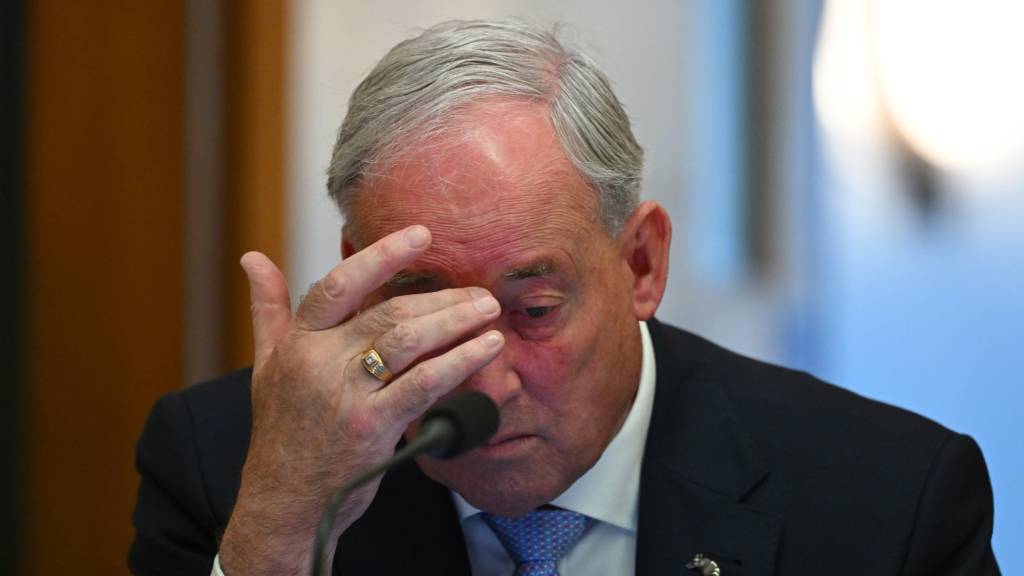
Senator Richard Colbeck quizzes TPB chair Peter de Cure. (AAP Image/Lukas Coch)
PwC Australia is the subject of two ongoing Tax Practitioners Board investigations that the tax agent regulator expects to wrap up by the middle of this year.
TPB chair Peter de Cure revealed the accounting behemoth is the subject of two further probes during his periodic appearance before Senate estimates.
De Cure reiterated his previous evidence that the nine cases that grew out of the tax leaks scandal had largely been resolved – one person is still appealing the TPB’s findings — but that they had two ongoing investigations into the firm’s activities.
He declined for reasons of procedural fairness to elaborate on what those specific investigations were all about.
The firm initially came to public attention in January 2023, when penalties for historic breaches were announced by the TPB.
Those breaches led to more than two years of PwC Australia being excluded from procuring government work, and the firm restructuring its internal governance and risk management to avoid similar conflicts.
Senator Richard Colbeck asked de Cure whether the two matters the chairman of the tax agent regulator mentioned were related to the previous issues discussed before the various parliamentary committees.
“We have some matters ongoing with PwC, yes,” de Cure said. “As I said in previous evidence, senator, the nine partner-related matters that were related to the Peter Collins leaks inquiry have been concluded from us, with one matter outstanding due to that former PwC partner using their appeal rights.”
De Cure said a range of matters related to PwC Australia have been ongoing and that he had no concerns about the TPB meeting statutory limitations on investigations.
The chair was also questioned by Senator Barbara Pocock about the removal of Michael O’Neill as TPB CEO. O’Neill was replaced by Andrew Orme this year.
Pocock asked if O’Neill had been moved on as some kind of reprisal for successfully handling the PwC matter. De Cure said the decision was made by tax commissioner Rob Heferen.
She queried the grounds for O’Neill’s move from the TPB to the Australian Charities and Not-for-Profits Commission.
Heferen told Pocock that he believed rotating staff was healthy and that O’Neill’s service at the TPB for seven years was at the higher end of the margin.
He also told Pocock that while O’Neill was significant in overseeing the PwC matter, the former chief was not the only person involved in pursuing the firm because he had a team under him working on the matter.
He said O’Neill was one of 200 people involved in ensuring that the board of the TPB got the correct information to make disciplinary decisions.
Self-styled leadership conferences usually involve some aggrandising. But even then, it’s a push for the big four consultancies to paint themselves as winners.
Big four consulting continues to be in a pretty ugly place: revenue is down, jobs are getting cut, rivals who actually know how to use AI are nabbing clients, and they are still in the doghouse in Canberra.
Interesting timing for KPMG to pop up at an event about the importance of winning. Yet there it is, one of a trio of companies involved in running a four-day schmooze fest entitled “Play to Win: The Las Vegas Leadership Experience”.
The NRL is set to play its opening round in Las Vegas again this year. With some business coaching from KPMG on the side. Getty
It (like a host of other corporate and sporting tours) is tying one on with the NRL’s opening round in Sin City later this month. All part of Peter V’landys’ attempt to grow the NRL in the US, or at least delight the teams and fans who get a pre-season vacation to Vegas.
For a cool US$8900 ($12,580) per person (plus flights), attendees can hear from newly minted KPMG local partner Luke Grima, a US KPMG partner, a “surprise NRL coach” and execs from two Aussie marketing and business coaching companies.
What on? “The difference between playing to win and playing not to lose.” They also get to hang with NRL “legends”, watch the games and play a lot of golf.
Unsurprisingly news of this (which spread mainly, it seems, because of a post Grima made on LinkedIn) went down like a lead balloon within KPMG.
On a global front, news broke last week that its international office had negotiated a price cut from its own auditor by arguing artificial intelligence would make it cheaper to do the work. Every dollar counts, even if it undercuts your own workers’ claims to clients that AI cannot replace their audit expertise.
Great timing for a post from Grima on how his “past 12 months have been full of wins personally” – even though we are told he’s paying his own way for the event and taking annual leave for it. Apparently, that might assuage the anger of disgruntled staff about how the firm spends money.
KPMG Australia also isn’t officially involved in the event, and the workshops that were meant to be held at its US arm’s Vegas office have been relocated to a hotel.
It’s a trend across PwC, EY and Deloitte as well, while at the same time rivals such as Accenture and more boutique firms clock double-digit profit growth partly by eating away at the big four. If you’re “playing to win” but still losing, is that worse than “playing not to lose”? Deep.
Perhaps attendees can ask PVL his thoughts. V’landys’ plan to bring NRL to the Yanks has all the hallmarks of a company’s pivot to AI. Just 50,000 US viewers tuned into the opening round last year and the promised uptick in stateside gambling is hard to quantify.
One for the conference session on “the parallels between elite sport and business”. Maybe there will be real gains in the future for all this investment.
It’s just they’re currently being spent in the present.
More than two dozen KPMG Australia personnel have used artificial intelligence to cheat on internal exams since July, including a partner who will be fined more than $10,000 for using the technology in a training course about AI.
KPMG monitors if personnel use AI to cheat on internal training and exams. Eamon Gallagher
The firm will break out cases of AI-related cheating when it reports its annual results – a move that that goes beyond its existing extensive disclosures and would set a new transparency benchmark in the industry.
KPMG will also check that personnel fulfil their obligation to self-report misconduct to their relevant professional bodies. Both moves will put pressure on the firm’s big four rivals to follow suit.
The 28 cases of AI-related exam cheating this financial year highlight the tricky issue of acceptable behaviour when it comes to using the technology to assist in training and education, a problem also facing companies, schools and universities around the world.
KPMG chief executive Andrew Yates during a parliamentary hearing in 2024. Alex Ellinghausen
“Like most organisations, we have been grappling with the role and use of AI as it relates to internal training and testing. It’s a very hard thing to get on top of given how quickly society has embraced it,” KPMG Australia chief executive Andrew Yates told The Australian Financial Review.
“As soon as we introduced monitoring for AI in internal testing in 2024, we found instances of people using AI outside our policy. We followed with a significant firm-wide education campaign and have continued to introduce new technologies to block access to AI during testing.”
The partner, a registered company auditor, completed AI training in July. The training material recommended they download a reference manual related to the training as part of the course. The individual violated the firm’s policies by uploading the reference document into an AI tool to answer an exam question.
The firm’s internal tools picked up the activity in August. An internal investigation determined the partner should be fined more than $10,000 of future income. The partner also self-reported to Chartered Accountants ANZ which has an ongoing investigation into the case. The remaining 27 cases involve staff at or below manager level.
The corporate regulator imposes strict rules on registered company auditors because of how important their work is to safeguarding markets.
Open-book tests
“Our tests are open-book knowledge checks following internal training courses,” Yates said. “People are allowed to download training materials to assist with the test. But they are prohibited from uploading those materials into AI tools to assist them do the test.”
The firm employs around 10,000 people, has a turnover rate of 20 per cent every year and monitors over 20,000 internal tests a year.
The new incidents follow a December report in the Financial Review’s Rear Window column revealing a handful of first-year staff used AI to collude on internal training.
Current regulations of the accounting and auditing sector dictate firms are not obligated to tell ASIC about misconduct such as exam cheating unless there is a disciplinary finding by the relevant professional body. Instead, individuals are expected to self-report misconduct to their relevant professional body.
KPMG maintains it voluntarily informed ASIC as part of its ongoing discussions with the regulator. However, in a response to queries from Greens senator Barbara Pocock, the regulator said KPMG had not “filed with ASIC a report about the instances of auditors cheating using AI” before the December Financial Review report.
That article led to ASIC contacting KPMG and the firm providing information on a voluntary basis including the new detail that a partner had been involved.
In Senate Estimates last week, ASIC commissioner Kate O’Rourke said the matter showed “the limitations associated with the work and the regulatory hooks” that ASIC has over the big four firms.
Pocock is incensed about the new cheating allegations and has called for the regulation around reporting to the corporate regulator to be tightened up.
“This is yet again another example of unethical behaviour being carried out by the big consultancy firms,” Pocock said. “Self-reporting unethical behaviour – what a joke. The current reporting regime isn’t just inadequate, it’s a joke. We need greater transparency and stronger reporting mechanisms.”
Yates said the firm already reminds personnel that have breached rules they have an “obligation to self-notify to any relevant body”.
“Now, we are finalising new processes to strengthen our approach and reinforce they need to self-report, and we’ll be checking that they have.”
Edmund Tadros leads our coverage of the professional services sector. He is based in our Sydney newsroom. Email Edmund at edmundtadros@afr.com.au
“When you leave a toxic workplace, you’re not giving up. You’re choosing to save yourself from an environment that does not support growth or happiness.”