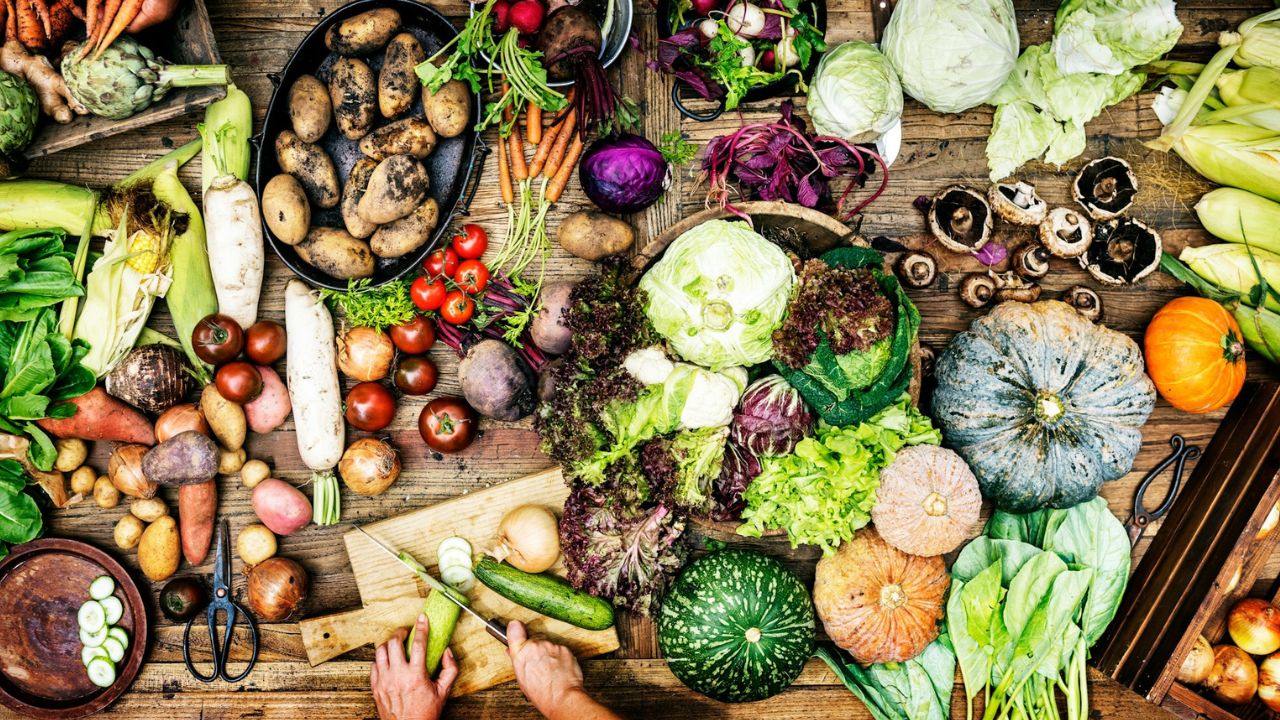
What we eat influences our health, but when it comes to protecting the brain and lowering dementia risk, nutrition advice can often feel confusing or contradictory. Which eating patterns have the strongest evidence behind them, and how much can diet really affect cognitive health over time?
Dr. Gil Carvalho is a medical doctor and scientist who has a YouTube channel called Nutrition Made Simple, where he reviews the evidence behind popular nutrition claims and explains what the studies do and do not show. His research spans genetics, molecular biology, nutrition, behavior, aging, and neuroscience.
In this conversation with Being Patient founder Deborah Kan, Carvalho said the best diets linked to better brain health are low in ultra-processed foods, high in fiber-rich foods like fruits, vegetables, whole grains, and legumes, and built around healthy fats such as nuts, seeds, fatty fish, and extra virgin olive oil. He explained why the Mediterranean, DASH, and MIND diets are close to interchangeable, what the evidence does and does not support for omega-3s, creatine, MCT oil, ketones, and multivitamins, and why the fear-mongering around seed oils is not supported by research.
Being Patient: I want to talk about dementia prevention, because I know there have been a couple of substantiated studies that tell us what we should eat and shouldn’t eat. From your vantage point, what’s the best dementia prevention diet out there, and what should our expectations be?
Dr. Gil Carvalho: In general, what we see from the research is it’s not necessarily a named diet, but a general pattern, which initially can seem annoying, but it turns out to be good news, because it gives you flexibility. You’re not tied to one exact collection of foods that you may not like. There’s a lot of flexibility, there’s a lot of ways you can personalize for your taste, for your needs.
But the general theme is basically three things: low in ultra-processed foods, so the McDonald’s and the soda and the donuts, all those things in very low amounts or absent. Number two, they’re diets that have a substantial amount of foods that naturally contain fiber. So we’re talking about fruits and vegetables, whole grains, legumes like beans and lentils, things like that are present in a substantial amount.
And number three, they favor healthy fats. So nuts and seeds and some dairy, especially fermented dairy, fatty fish like salmon or sardines and other kinds. Oils are also part of these diets, typically extra virgin olive oil and others. These are the main themes that we see consistently in the research.
Being Patient: Let’s start with oils. I’ve read a bit, and anything that has ultra-processing in it, I think, is bad for you, correct? What we want to do is go for those pressed oils, where they’re just extracting the oils and it’s not going through this convoluted process of processing that breaks down the composition. Is that a layman’s way to understand it, or am I incorrect?
Carvalho: There’s a nugget of truth to that. The label ultra-processed is a little confusing. This comes from a food classification system called Nova, and technically they don’t include oils in their ultra-processed category; oils are in another category. But leaving aside those technical aspects, when we talk about oil — so for example, olive oil, which is one oil that a lot of people try to use, especially if you’re trying to eat healthier — we do have some evidence that extra virgin olive oil has some benefits over the more refined varieties, a little bit better for blood pressure, for example, and other things. And that is because when you refine, you sometimes lose some of the beneficial compounds like polyphenols.
There are other advantages to refining. The smoke point is higher, so you can cook at higher temperatures. And there is some nuance here. We don’t have absolutely conclusive evidence on exactly what types of oils are best, and I don’t want to misrepresent that either.
Sometimes people use canola oil or other things. I know in the U.S. it’s not as common, but in parts of Europe, especially Northern Europe, canola oil is very common to use instead of olive oil. And for those, we have less evidence differentiating between the super pure versions and the more refined versions.
The truth is, we still see benefits overall when we look at run-of-the-mill oil consumption, which is not the premium extra virgin cold pressed, those things that take a little bit more searching. So they still seem to be beneficial. But it is very possible, and specifically with olive oil, we do have some evidence that the extra virgin, which is a type that does not involve heat and that is not refined, does offer some additional benefits.
Being Patient: There’s a lot of confusion around cooking oils and that high smoke point. Can we cook with olive oil, or does that ruin the composition of it that adds to our brain health? What are the oils that we should be cooking with that don’t break down and turn into something that may not be so good for us?
Carvalho: There is a lot of stuff out there on social media, a lot of fear-mongering over the so-called seed oils, and some people even spread that to any vegetable oils, and they tell you to avoid all of them. The truth is, that is not substantiated in research. In fact, we consistently see better health results for these vegetable-sourced oils.
When it comes to cooking, in general, it’s recommended to avoid very high temperatures, especially for prolonged periods of time. So things like deep frying, generally not a great staple, because at a certain time of exposure at a very high temperature, you do start to see deterioration of the oils. But I would say that is especially a concern when you’re eating these foods that are fried in industrial fryers, where often the oil is reused. You go to a Burger King or something like that, and they’re using the same oil over and over and over. So you heat it for hours and hours, then you let it cool overnight, you reheat the same batch, and you maybe change the oil once a week. That is more of a concern. Also some of the foods that are prepackaged, that are ultra-processed, sometimes they’re cooked in these conditions of industrial frying. That’s more of a concern.
For home cooking, the general guideline is to avoid these very high temperatures as a staple, like deep frying. If you do it once in a while, it’s probably not a big deal, but avoid that as a staple.
Being Patient: But stir-frying vegetables, is that okay?
Carvalho: That’s totally fine. Stir-frying with olive oil, not a problem. Or other oils. Some oils have a higher smoke point, like avocado oil, but we don’t have very conclusive evidence that that’s beneficial in the end. But stir-frying, boiling, these techniques that don’t involve very high temperatures and that are less dry and more moist techniques of cooking are generally preferable.
Being Patient: Would you be in agreement that the Mediterranean diet is the best one for our brains? And has there been research? Is that research credible?
Carvalho: Short answer: yeah, the Mediterranean diet probably has the most support. A couple of caveats there. When we say Mediterranean diet, a lot of people find that confusing, because they say, “Well, I have a cousin who lives in Italy and he eats garbage all day. So what are you talking about?” When we say a Mediterranean diet in science, we mean the traditional Mediterranean diet. It’s this pattern that has those three components that we already covered. So not necessarily whatever they’re eating in Greece now, the youngsters especially.
Being Patient: Just to recap, that’s olive oil, fish, and vegetables, correct? Those are the main three?
Carvalho: Lean meats, fermented dairy, fruits and vegetables, whole grains, legumes, olive oil. Those would be a lot of the staples.
And then another caveat that’s good to point out is all of these diets that people talk about — Mediterranean diet, DASH diet, the MIND diet. If you look into it, there’s almost no difference. They’re very, very similar. In fact, some are inspired by others.
The MIND diet started out by being inspired by the Mediterranean and DASH diets and then introduced some tweaks, some foods that seem to have more consistent data for cognitive and mental health. So things like berries and leafy greens, they made sure to emphasize those. But when you look at those diets, they’re 95 percent the same. The difference is almost hair-splitting.
So any of those dietary patterns would be supported. I would say we have more evidence for the so-called traditional Mediterranean, including a randomized trial or two, which the others have less of.
Being Patient: The other thing I’m confused about is that it’s one thing to say eat fish, but then farmed salmon could be one of the most toxic things that we could eat, right? So I’m confused about not what we can eat, but what we’re eating in terms of where it’s coming from and how industrialized, how processed it has been. So how, as a consumer, do you weed out what’s good for us and what’s not? Even omega-3 supplements, some brands apparently have very high mercury and metals levels because the sea is so polluted. As a consumer who just wants to live a healthy life, how do we even begin to parse any of this out?
Carvalho: It’s a great question. And I make a distinction between things we know with certainty from science and then educated choices that I think are reasonable to make as a consumer.
We don’t have very strong evidence on whether farmed fish is better or worse for overall health than wild caught. It’s not entirely clear. In general, we see health benefits of consuming fatty fish, for example, and it’s hard to differentiate. And there’s also an argument that those data might be from a couple of decades ago, when it wasn’t so polluted, and now maybe things will change. So these are speculative scenarios that could pan out. But what we know is that with fatty fish consumption, we consistently see benefits, especially for brain health. So that’s the science certainty side.
Now, is it reasonable as a consumer to make some educated choices, even if the science isn’t completely certain? Of course. And if you want to take some steps to minimize mercury and BPA contamination and all these things, it’s possible to do that.
You were talking about supplements. It’s obviously easier there, because you can measure these things, and because you work with specific brands, you can even look for brands that are third-party certified. And so you can get a report of the contaminants and all that.
Algae oils are another option, because those are grown in tanks that are not in contact with the seawater. And so they’re cleaner from the get-go, from the base product. With fish oil, what happens is they start out more contaminated, but the quality brands will purify them pretty well. And so by the end, the amount of contaminants is small. At least higher quality brands. But I’m sure there’s heterogeneity in the market. You can find some brands that are nastier, for sure.
Being Patient: Today we live in the world of brain and health podcasters, some of which have millions of followers around the world. As a medical doctor and a scientist, how do you judge what’s real and what’s myth? I see all the time some of these studies that are being touted, and they’ve only been tested on rodents, and we know that 99 percent of rodent studies don’t translate into humans. There are a lot of wide-sweeping claims out there, and it’s confusing. So from your vantage point, how do you decipher what’s good, take-home information for the consumer versus what’s just being inflated by a lot of hype and a lot of clicks? How do we tell the difference?
Carvalho: One thing that has changed a lot, and things have gotten a lot better, is now with AI, you can do a quick fact check. And AI is not perfect, it makes mistakes. But if you search a broad topic, or if you ask about this specific food or this specific supplement, give me the lowdown on that, it gets it 90 to 95 percent right. So just that quick check. You hear a sensational claim on a podcast, and if you don’t want to go on Claude or ChatGPT, just the Google search now has that AI field on top. And that is pretty impressive in terms of the broad strokes. Literally a 10-second search, you can do a reality check on a podcast claim pretty quick now on your phone. So that has completely changed things. And that’s going to change also the demand of how these podcasts are received. That’s one thing, surface level.
Then tips in terms of the vibe. Science hinges on evidence, not emotion. So typically with scientific content, they will mention evidence. They will say this study showed that. And there’ll usually be caveats: however, this, we don’t know that. Scientists are very annoying speakers, because they qualify everything. Whereas wellness influencers that are very successful are almost the opposite. Everything is 100 percent confidence. Everything is absolute. And we now have the solution for everyone. So just that vibe check.
Another one is the sales pitch, when there’s one magic bullet. This nutrient solves your problem, and by the way, grab it in my online store where I sell the pill. These things are almost never proprietary. If it’s one guy that has a solution, it’s almost certainly snake oil.
Being Patient: How do we connect the food that we ingest to the actions that are happening in our brain? As a scientist, what do you know in terms of how metabolism gets to the brain and impacts health?
Carvalho: It depends on the nutrient. But for example, omega-3s, which we were talking about. This is a fascinating world of different fats. These long-form omega-3s, the DHA and the EPA — our brain is very rich in those nutrients. They form part of the membranes around our neurons. And that composition of the membrane that wraps around your neuron, your brain cells, determines how your brain cells communicate with each other and how well they function. And even the receptors they have on their surfaces, their function is affected by this composition of the membrane. So this is one way that you go from a nutrient that you can literally get from a piece of salmon or a supplement to how your brain functions. There’s a direct link there.
There is some nuance in the literature in terms of the effect of omega-3s for cognitive function, but we have enough studies, including randomized trials, showing a signal of improvement, particularly for people who don’t get enough omega-3s in their diet, which tends to be Westerners, because people usually don’t eat a lot of fish and seafood in the standard Western diet. Algae, forget about it. Those are the sources of the EPA and DHA, which originally come from algae, and then the fish take those, and so that’s where the fish get them. So individuals typically with low intake and low status in their system, in their blood, of EPA, DHA, of these long-form omega-3s — it’s more common that we see a cognitive benefit of supplementing with omega-3s in those populations. Whereas when someone is already getting plenty from their diet, generally less of an effect.
Being Patient: I want to hit supplements next, because there’s a lot of confusion out there. What should we be taking? Let’s take creatine as an example. What do we know about it? Should we be taking it? Do we believe the studies that say it’s damaging our kidneys? Is it good for our brains? Does it help us put on muscle? Enlighten me.
Carvalho: We’ve done some deep dives on creatine. So three chapters here that you touched on: one, the effect on muscle and athletic performance. That’s one chapter. Another, effect on cognitive function, that’s a different chapter. And then fear of side effects, like the kidney function. So we have a lot of evidence, particularly on one and three.
For the athletic side and the muscle growth side, we have a lot of data showing that it can help. It can help grow muscle a little faster, and it can help with athletic performance as well. And the way that works: creatine is a molecule that’s produced from some amino acids. And your cells, your muscle cells, your brain cells use ATP for energy. That’s sort of the internal molecular fuel. And every time they use that, they break it down for energy, and then it needs to be reassembled so you can use it again. And what creatine does, it allows your cell to recycle that faster. So it’s allowing you to last a little longer in your workout, for example. So you can squeeze out a couple more reps in your bench press, and that grows muscle a little faster.
Let’s talk about the side effects, because we also have substantial data on that. For the vast majority of individuals, creatine has not been shown to cause kidney damage. So it is safe based on the data that we have, at least for the duration of those trials. They go up to about five years. One caveat I would put is someone who already has established chronic kidney disease, just because we don’t have a lot of studies for that population, it’s less common. And so it’s a formal possibility that it could be a strain on a kidney that’s already diseased to be processing and excreting that extra creatine. But even in those cases, we don’t know that it is a problem. It’s just a possibility. But that’s going to be a minority of people. For a healthy individual with no existing kidney issues, in general, not a concern.
And then the third chapter we have is the cognitive benefits. Not nearly as strong evidence-wise as the athletic side and the muscle side, but there is a growing body of evidence showing a signal of some benefits for things like memory, especially in specific populations. Not so much if you’re a healthy individual without issues, well-rested — we see little to no benefit of creatine. But in situations of stress, if you are sleep deprived, or situations like that where you’re pushed to the extreme. Some trials of older individuals as well, we do see a benefit there. It’s not entirely consistent, but there’s a signal.
Being Patient: Does creatine help supply energy? What would be the interaction with the brain, if there is a benefit? What is that interaction?
Carvalho: It helps you recycle those molecules and reuse them faster, so you don’t run out of energy as fast. And especially if you’re running short, if you haven’t had any sleep, or you’re under chronic stress, that’s when we see it, because you have kind of an energy deficit. So that’s where we see that benefit pop up. And in people who are already healthy overall, we don’t really see that. So it’s kind of topping up that deficit that you have when you’re sleep deprived, for example, or exhausted. And possibly, although this is less clear, in an older population we see that as well. It’s not entirely clear if it’s just correcting nutritional deficiencies, because we know that in older populations, people often have diets that are more impoverished and they have absorption issues. So it might just be doing that.
So I would say individual results may vary, as always. But for someone, let’s say you’re 60 or 70 and you’re feeling some memory gaps, I would have no problem recommending someone try creatine and see if they experience an improvement. It might not work, but it might deliver some benefit.
Being Patient: What about the benefits of MCT oil?
Carvalho: Those are medium chain triglycerides. And the idea is that they allow your body to produce ketone bodies. So those are metabolized in your liver to ketones. There are some studies suggesting a benefit for cognitive function. It’s pretty unclear. It’s not something that’s well established, but there is a possibility. We have a video going over all that. It is possible that MCT oils may provide a benefit. It’s not something that research has quite nailed yet, because most of those trials are small and there are technical issues, but I think it’s an area that’s being studied, and it’s a possibility for some people.
Being Patient: Just on the background of ketones, it’s an alternative source of fuel for our brain, stored in fat, right? And so we burn energy from fat instead of glucose, which comes from carbohydrates and sugars. So the question is, how about supplementing ketones? Because I guess the premise of brain health is that, as we age, as I understand it, we metabolize glucose less efficiently. And so boosting the energy in your brain is a good thing. It means there are less likely to be things that go wrong if you boost that energy. So ketones cross the blood-brain barrier and are able to be an energy source for the brain, an alternative energy source. What about supplementing ketones? Because I’ve talked to scientists who want to run these trials with a special type of ketone, beta-hydroxybutyrate, BHB, I think it is, as an articulated study for boosting the energy in your brain for brain health. What do we know about that today?
Carvalho: That’s the general rationale, that it might be providing additional fuel. There’s also some interesting, I would say, preliminary research. Well, ketones have an established role for epilepsy. So specific children with epilepsy who do not do well on epileptic drugs — ketogenic diets have an established therapeutic role there. So that has led to all of these ideas that ketones might help in other aspects of mental health. There’s a lot of ongoing research looking at depression and schizophrenia, lots of these things.
The bottom line is that this is very preliminary. We don’t have large, convincing clinical trials showing a clear benefit. So in general, you won’t see this being used, just because it’s not quite nailed yet. But I think it’s very encouraging, very promising. I think it could easily deliver benefits in specific situations. I would be cautious with the blanket claims that you’ll see in podcasts, that this solves psychiatric disease or that this solves brain cancer. Some of these things are a million miles ahead of the data. I think it’s very promising, but preliminary is the word I would emphasize.
Being Patient: So what would you suggest? I’ve seen all the ads for NAD, all of these brain health supplements. We’ve talked a little bit about creatine. We’ve talked about ketones. What else is there? Is there anything with proven benefit? Are there supplements we should be taking for our brain?
Carvalho: Another one that I would bring up that has very interesting data emerging is multivitamins and multi-mineral supplements. So there is a large trial called COSMOS, where they took elderly patients and they gave them a multivitamin and multi-mineral supplement. And they did see an improvement in general aspects of cognition, like memory, in older adults. So this is a really interesting one.
Being Patient: Do we know what was in it that was helping? A multivitamin is a lot of vitamins, a lot of different ones.
Carvalho: That’s the issue, right? When you have a multivitamin with 20 different vitamins, you can’t, from that trial, pin down what the exact — was it B12? Was it B9? There’s no way from that trial, it doesn’t give you that answer. But it’s pointing to a possible role of a multivitamin, again with the murkiness that comes with that word.
And another source of uncertainty is: is this just correcting a baseline deficiency because of a diet that is suboptimal? Or if you are a healthy individual on a diverse, well-put-together diet, would you still benefit by adding that multivitamin on top? Not completely clear, but this was a trial that was kind of surprising, because multivitamins have generally been poo-pooed as not doing much, especially if you’re on a healthy diet. They’re generally not advised anymore, kind of a blanket approach. But this trial was like, well, hold on, not so fast. Maybe this is still doing something, at least in some cases. So something to keep an eye on.
Being Patient: What is your routine? What do you do for yourself that we should all know about? What’s your dietary health regime?
Carvalho: Very similar to what we covered, with some personal preference tweaks, but very aligned with the modified traditional Mediterranean diet. A lot of fruits, vegetables, whole grains, some seafood, some fermented dairy. Those are the staples. A lot of beans and lentils. I take protein powder after I work out. That’s something that’s not kind of that purest approach. I take some supplements. I take an omega-3 supplement from algae, for example, to supplement with long-form omega-3s. Yeah, those are the main things. Tea, green tea, I add that. There are some interesting results showing that green tea can help reduce visceral fat. Matcha is another drink that has interesting data, because matcha is a very concentrated source of these polyphenols called catechins that help your liver metabolism. And those are also concentrated in green tea.
I avoid adding refined sugar to my drinks or foods. Normally, I don’t need a lot of sugary taste, but if you need to sweeten it up, stevia and monk fruit are two great options of sweeteners that have no calories and no refined sugars. Adding slices of fruit works well as well, for tea or for water. There are other options, but those are some hacks