Thursday, September 29, 2022

TikTok’s $2 billion fraud challenge for the ATO

 Optus Data Breach: Six Scams To Watch Out For


TikTok’s $2 billion fraud challenge for the ATO

This is the Tax Office’s social media nightmare dilemma: you can’t take 40,000 people to court.

Neil ChenowethSenior writer

The muted alarm that Tax Office officials began sounding two weeks before the federal election over the billion-dollar TikTok fraud is probably as close to panic as public servants get.

In its May announcement the ATO said it was cracking down on an $850 billion GST fraud by 40,000 Australians.


By June, the Serious Financial Crime Task Force’s Operation Protego was executing search warrants targeting 19 people, while estimates of the fraud had risen to $1 billion involving up to 70,000 people.

Today the ATO says the number of people is probably less than 40,000, but it says it has stopped more than $2 billion in fraud payments. That’s in addition to hundreds of millions of dollars of payments that have not been retrieved. And the fraud is ongoing. The ATO discovered the latest variant of the scam on TikTok just a fortnight ago.

It’s been curiously low-profile – though at the end of the day it’s not a federal government loss because GST money goes to the states. Still, the numbers are staggering.


The fraud has been promoted on TikTok as a way to get a “loan” from the government. You register a fake business, get an ABN, register for GST and then immediately file a Business Activity Statement claiming a credit for previous (fictitious) GST payments.

New businesses need quick GST refunds for their cashflow, which the system is programmed to provide, without checks. The average take is $20,000, and people are making repeated claims.

It’s an unsophisticated fraud but that just means it’s hard for the ATO to pull money back, when many of the recipients are on welfare or have no fixed address.

The fraud exploits a loophole in the software that, to date, the ATO has been unable to close.

The scam isn’t even new – it was the scale and rate of proliferation that took the Tax Office by surprise, though that begs the question, why did it take off if it was already aware of the loophole?

Now the ATO is making it harder to get an ABN, using algorithms to flag “high-risk applicants”, while flooding the zone with personnel to personally vet ABN applications, a bit like playing Whack-a-Mole.


The Tax Man is also watching a lot of TikTok. It claims it has pulled fraud levels back close to normal, though new versions of the scam continue to evolve.

How did it get to this? And who could have sounded the alarm?

ABNs and GST registrations are overseen by the ATO’s Small Business division and Australian Business Registry Services. In theory there’s also oversight by the ATO’s enforcement arm, Integrated Compliance, headed by Deputy Commissioner Will Day, who is running Project Protego.

The ABRS Registrar is Commissioner Chris Jordan, but in practice the ABRS was run by Deputy Registrar Michelle Crosby, who has had the task of developing the registry, which has blown out to $1.5 billion, with perhaps another $1 billion still to spend. She left the ATO this month to become chief operating officer at Charles Sturt University.

Small Business was run by Deputy Commissioner Deborah Jenkins who, like Jordan, is ex-KPMG. In August, she was transferred to become acting Commissioner of the Australian Charities and Not-for-profits Commission after Gary Johns resigned.

The ATO has parachuted in Day, its most senior compliance officer, as temporary head of Small Business, while Assistant Commissioner John Ford is keeping Day’s seat warm as head of Integrated Compliance. The ATO says these changes are unrelated to Protego.


The crisis came as ATO overall debt jumped to $60.7 billion in January from $39.5 billion three years earlier.

Unsophisticated as it is, the number of participants in the TikTok fraud arguably make this one of the biggest challenges the ATO has faced in 40 years. You can’t take 40,000 people to court.

For decades, the horror of Bottom of the Harbour schemes of the 1970s – when criminal tax evasion threatened to become mainstream – was written deep in the Tax Office’s DNA.

Today, not so much. While the public face of the ATO has come to be typified by its own research that shows how successful it has been at closing the tax gap, the Tax Office is now struggling with the limits of its technology. And social media is not the tax man’s friend.

The country’s most expert opinion and analysis. Sign up to our weekly Opinion newsletter.

Neil Chenoweth is an investigative reporter for The Australian Financial Review. He is based in Sydney and has won multiple Walkley Awards. Connect with Neil on Twitter. Email Neil at nchenoweth@afr.com.au


First hearing in Lachlan Murdoch and Crikey defamation case

 We’re all wind and dust anyway… We don’t even have any proof that the universe exists. We don’t have any proof that we are even sitting here. We can’t prove that we’re alive.


The Eternal Lyric of Love and Loss: “Goodnight Moon” Author Margaret Wise Brown’s Little-Known Poems for the Tragic Love of Her Life

“One who has dared to be gloriously good and gloriously bad in one life. No Limbo for her. Rather let life itself grow living monuments out of trees and living words so that death can never take from our half-lives this radiant living that was lived among us.”


Just before Christmas in 1977, the thirty-six-year-old Bob Dylan sat down for a long conversation with Jonathan Cott. Included in Cott’s endlessly wonderful book Listening: Interviews, 1970–1989 (public library), it remains Dylan’s most soulful and deepest-fathoming interview, replete with his reflections on vulnerability, the meaning of integrity, and the power of music as an instrument of truth.


Nathaniel Hawthorne on How to Look and Really See

“The mystery is revealed, and after a breath or two, becomes just as great a mystery as before.”


Tax chiefs meet in Sydney to address multinational tax issues

Tax chiefs meet in Sydney to address multinational tax issues


Big Four accounting firms dodge a bullet


Tax chiefs meet in Sydney to address multinational tax issues


Ex-AFP officer warned alleged NAB fraudster her home may be bugged, court told


The $8.6 Billion Startup That Helps Governments Trace Crypto Bloomberg


The Most Stinging Resignation Letter Ever Written The Atlantic


 Beware Italy’s ‘Mafia Entrepreneurs’ Bloomberg


Beware the rise of the black box algorithm FT. “The factors underpinning the Compas system, used in the US to measure the likelihood of reoffending, are not publicly available because they are treated as company property.” 


How to Ditch Facebook Without Losing Your Friends (Or Family, Customers or Communities) Electronic Frontier Foundation


Fifth Circuit Upholds Texas Social Media LawLawFare. NetChoice v. Paxton (PDF). Czech out the opening salvo


Trouble in paradise Times Literary Supplement. The deck: “Why is economic progress so little cause for celebration?” Review of DeLong’s book.


Reading Betty Friedan After the Fall of Roe Men Yell at Me


Algorithms and the Future of Work NIOSH Science Blog, CDC


The Easiest Ways to Open a Can Without a Can Opener LifeHacker


Kia and Hyundai Are Being Sued Because Viral TikToks Showed How Easy It Is to Steal Their CarsVice


Rattling the Cage The Baffler


A man who was part of a syndicate that stole identities before laundering millions of dollars through jewellers and a coffee shop has been sentenced to six years in jail.

Karthik Pappu, who pleaded guilty to one charge of money laundering, was identified by police investigating a cold calling scheme in which victims provided offenders with access to their computers before being tricked out of money, a Brisbane court was told on Wednesday.

The now 36-year-old admitted being part of the group that transferred money into accounts they opened using the details of 190 identity theft victims.

Chief judge Brian Devereaux said Pappu could be linked to the laundering of $562,490, but it was impossible to determine how much he made.


Pappu was “not at the helm” of the operation, but in the middle, active in most stages, Devereaux added.

He answered to syndicate members overseas, but also directed others in Australia and once sent a summary of the day’s transactions to another person.

Man jailed over involvement in identity theft syndicate that laundered millions of dollars


Wednesday, September 28, 2022

The (not so) quiet first steps towards Australia’s republic shift

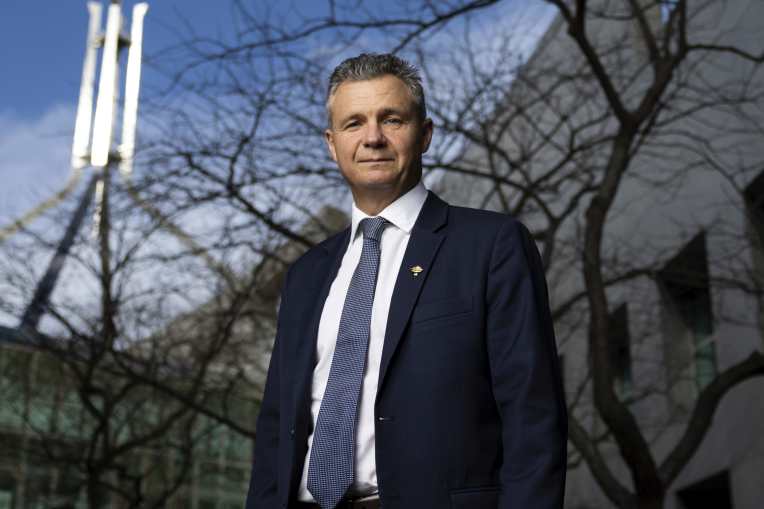
 Matt Thistlethwaite’s three-step Revolution


The road to an Australian republic – with Lenore Taylor


The (not so) quiet first steps towards Australia’s republic shift

Tom McIlroy
Tom McIlroyPolitical reporter

Labor will consider convening a constitutional convention or holding a plebiscite to advance plans for an Australian republic, Assistant Minister Matt Thistlethwaite says, as part of a push for a homegrown head of state during a second term.

Preparing to consult multicultural leaders and young people about a possible referendum after the next election, federal Labor’s assistant minister for the republic said a significant education campaign was needed on what cutting ties to the British royal family would mean.

Matt Thistlethwaite says the Elizabethan era is over and its time for an “Australian era” Alex Ellinghausen


“If you’re under 40, you’ve never voted in a referendum. If you’re under 60, you’ve never voted in a successful referendum,” he told The Australian Financial Review. 

“This is the era where we start to consider a journey about our maturity, our independence and recognising a unique identity and culture in our Constitution.

“I think it’s fair to say it’s the end of the Elizabethan era, and we very much see it now as moving into the Australia era.”

Although Prime Minister Anthony Albanese has committed to advancing a referendum on an Indigenous Voice to parliament in the current term, quiet planning is under way for what comes next. Republicans think King Charles III’s ascension to the throne will speed up public support for an overhaul of the Constitution.

Mr Thistlethwaite wants to talk to younger people about the existing constitutional arrangements and Australia’s ties with Britain. He will meet multicultural leaders in coming weeks.

In addition to talks with Australian Republic Movement, the Kingsford Smith MP has also met organisations including the Australian Monarchists League.

Past defeats

Australia’s first republic referendum was defeated in 1999, with 54.87 per cent voting no and 45.13 per cent voting yes. The result was partly blamed on divisions over the model Australia should adopt. The ACT was the only jurisdiction where majority support was recorded, with support as low as 37.44 per cent in Queensland.

Mr Thistlethwaite concedes a defeat in the Voice referendum would be a major setback for the republic push.

“If you look at a constitution, it really is a set of rules that protect the rights of citizens in that nation. And the notion that First Nations Australians can have inherited these lands and survived on the toughest continent in the world for 60,000 years, but they don’t have the right to be consulted about decisions that affect them in the Constitution, is outdated.”

Public support for a republic dropped after the Queen’s death. A Resolve Political Monitor poll showed 46 per cent of respondents supported the move, while 45 per cent said they thought King Charles would perform well as Australia’s head of state.

An Essential poll found 50 per cent support for the new monarch, and 43 per cent support for the move to a republic.

Last month, the Australian Monarchist League announced former Liberal senator Eric Abetz as its new chairman. The Tasmanian conservative was picked for his “fighting spirit”.

Labor will not finalise its preferred model or discuss a possible constitutional convention unless it wins the next election, expected sometime around early 2025.

Mr Thistlethwaite said Labor was planning for a five-year journey.

“We want to make sure that whatever we take to a referendum is something that unites Australians rather than divides us, as it did in ’99. The policy and the model will be determined by the Australian people,” he said.

Tom McIlroy reports from the federal press gallery at Parliament House. Connect with Tom on Twitter. Email Tom at thomas.mcilroy@afr.com