Elon Musk offered his ex $40m to not take part in a new doco about him. She did it anyway
September 9, 2026
Venice: A four-hour documentary tracing the life and work of Elon Musk – maker of electric cars, rockets, Starlink satellites, right-wing propaganda and “a legion of children” from his own loins – has proved the pivotal talking point of the Venice Film Festival.
Alex Gibney, the prolific director of documentaries about subjects including Enron, Edward Snowden and Scientology, tells the story of his rise to dizzying power – and phenomenal riches – in Musk, which confronts the question of how and why anyone has been allowed so much influence. Gibney usually interviews his subjects, but Musk refused to participate.
It wasn’t easy to find other willing interviewees.
“There was a fear of talking. Among his critics, his business colleagues and his friends, very few agreed to speak,” Gibney said at a festival press conference. One exception was the film’s trump card, a former MAGA influencer and Musk’s ex-girlfriend Ashley St Clair, who gave birth to one of Musk’s 14 children in 2024.
St Clair was close to Musk during the heady few months when he was head of US President Donald Trump’s newly minted Department of Government Efficiency, striking out entire project budgets and sacking thousands of government employees.
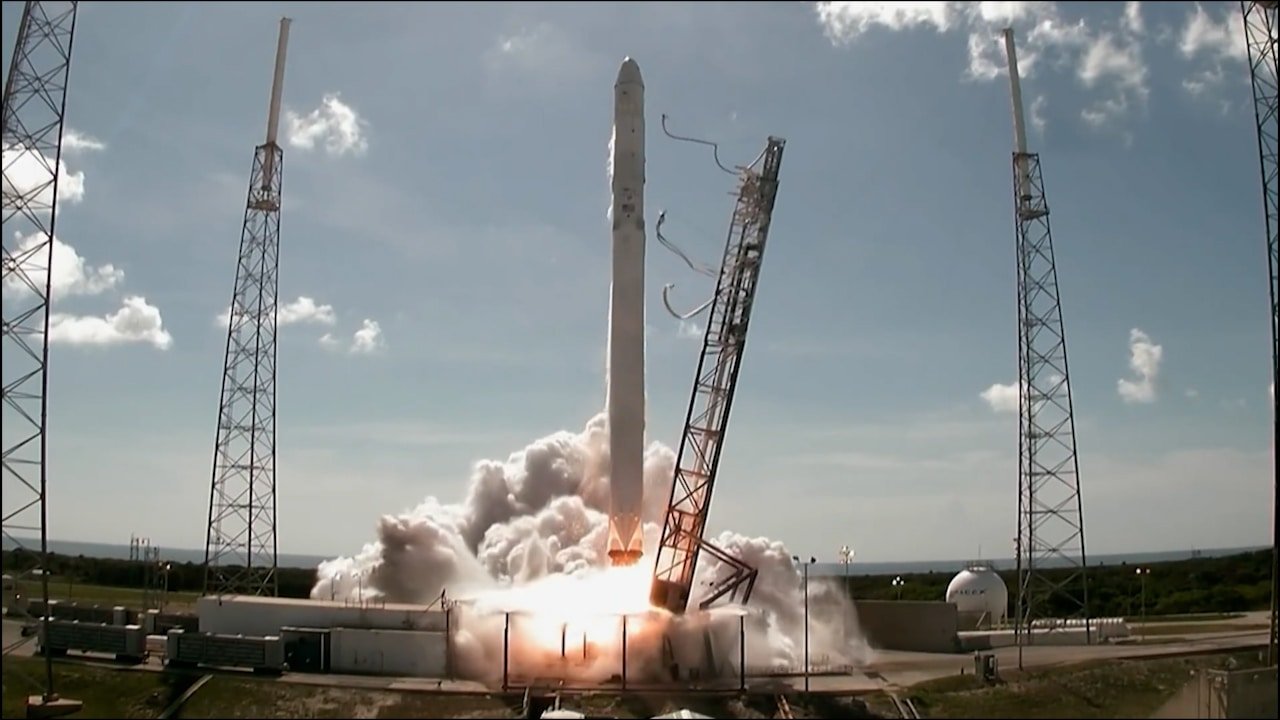
A new documentary called Musk, by filmmaker Alex Gibney, tells the story of Elon Musk's rise and influence.
“Elon is a nuke,” St Clair told the cameras. St Clair, who was in Venice with the film, alleged he had offered her $US40 million not to participate in the documentary. “When you’re offered something like that it really causes a debate in your head about what your speech means,” she says.
“How valuable that is – and why do they want to offer me that much money not to speak?” She has her own answers. “It has to do with his sense of unreality, Elon’s relationships are complicated in general but, especially, he has a complicated relationship with the truth.”
Gibney put his own spin on this by putting Musk’s extreme pronouncements into the mouth of a graphic avatar in a space suit. He says he was picking up on Musk’s obsession with video games.
“But also, so much of what Elon Musk says has an air of unreality to it.” He soon realised that what looked like a story about new technology and its overlords was “the story of old wine in a new bottle, the story of the confidence man. His wealth and power come from inflated stock.”
It was Enron all over again. He maintains a measured tone, however, as he covers the tech lord’s troubled South African childhood, his command over the satellites crucial to many countries’ military operations, his acquisition and manipulation of Twitter, now called X, his alliance – and fall-out – with Trump and his$US158 billion Tesla remuneration package.
We see his beginnings, devising and then selling an online business directory, then taking and selling a slice of Peter Thiel’s Paypal, which provided him with working capital. Gibney spends a good deal of time debunking Musk’s promise of an imminent life on Mars. The research is meticulous, even if nothing is new.
“I think it’s bearing witness and reaching out to witnesses,” says Gibney. “And also trying to understand. Particularly in this bewildering world of inputs from social media and 24-hour news access. There are so many trees that I think it’s worth stitching together a narrative that shows the forest. The film attempts to reframe the story.”
There were mutterings before the press screenings about the prospect of having to watch a four-hour documentary half-way through an exhausting festival, but the film proved a literal eye-opener that drew an energetic critical response.
“A chillingly forensic hatchet job,” said the London Telegraph; “a poleaxing portrait of the tech titan as a con man,” read the Hollywood Reporter’s headline; “an epic study of the world’s richest and dullest man … excellent”, according to The Guardian.
It is Musk’s involvement in political influence, especially on the eve of the midterm elections in the United States, that feels least transparent and thus the most troubling aspect of his influence.
“We know during DOGE, the boys [Musk’s team of very young men who carried out mass sackings from government departments] had super administrative status at all agencies,” says Gibney.
“That meant they had access to an extraordinary amount of data on American citizens - and moving that data would be as easy, as I understand it, as copying a file into a folder.
“Would that folder be at Space X and might he be using that information for an AI [tool] to influence the election? Yes. I don’t know that it will happen but it might happen. It was a warning.”
So, asks one journalist at the press conference, one short answer: is Elon Musk dangerous to democracy?
“Extremely,” says Gibney. “There’s your short answer. He’s very dangerous.”

