Saturday, July 30, 2022

Bundanon Art Museum

A rich man is either a scoundrel or the heir of a scoundrel. 
-Slavic Proverb

The purpose of life is not to have a car number plate with my surname on it …

I don't want to own anything that won't fit in my coffin.
Fred Allen

 Jozef Imrich  (last name rhymes with “lochish Lich”)


Most of us already know the neuroscience research, that curiosity is related to lots of good brain and learning outcomes: better memory, problem-solving, creativity, and intelligence


MARK JUDGE:  Honest Talk about Politics and Male Suicided


The native language of Pushkin, Tolstoy, and Dostoyevsky is also the language of war criminals. But don’t blame artists for the sins of the state  Russians  


”We’re currently running a prize at Open Philanthropy (https://www.causeexplorationprizes.com) for people to suggest new cause areas for us to explore on the global health and wellbeing side. We’ve extended the deadline for submissions to August 11th, and we’d love to see as many people applying as possible!”
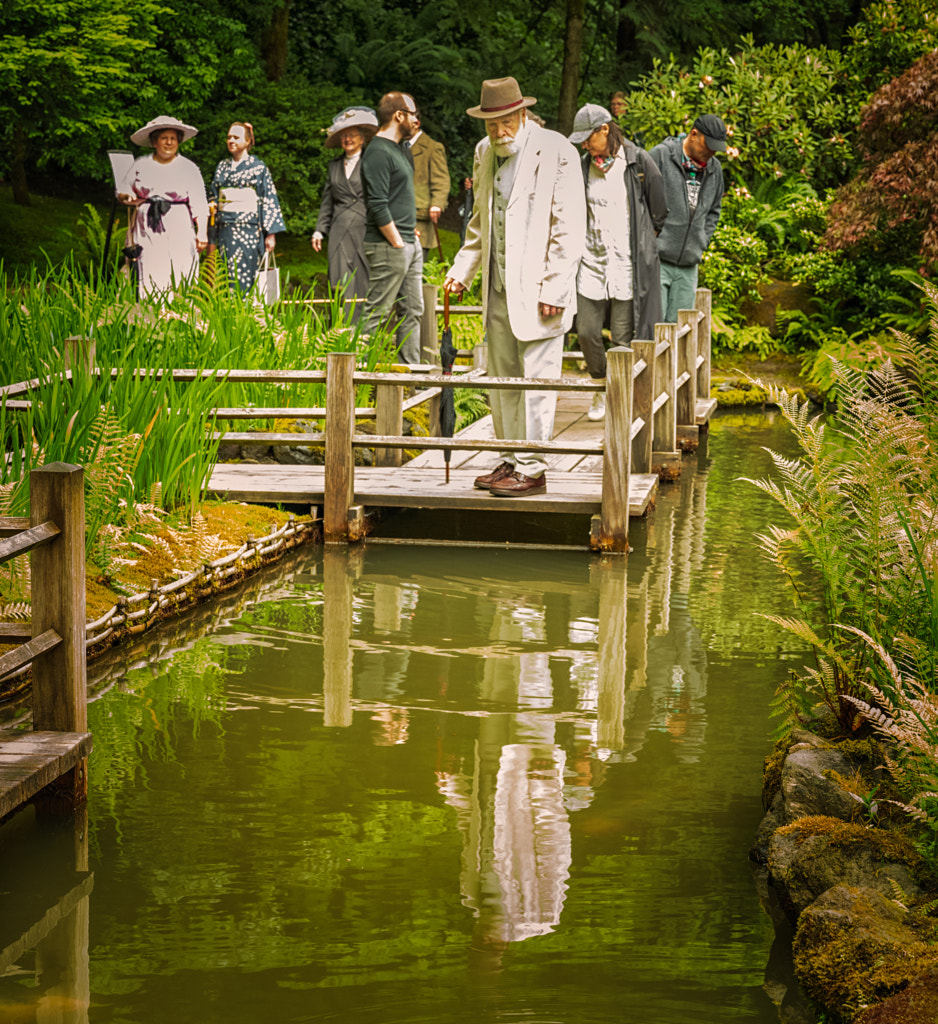


KTA completes Bundanon Art Museum in Australia with inhabitable flood bridge


Australian practice Kerstin Thompson Architects(KTA) has completed a cluster of buildings for the Bundanon Art Museum in New South Wales, including an inhabitable flood bridge containing residences and educational spaces.

Originally gifted to the Australian people by artists Arthur and Yvonne Boyd in 1993, the Bundanon site comprises 1,000 hectares of bush and parkland overlooking Shoalhaven River near the city of Nowra.

The rural site has long been subject to both flooding and fire, and Melbourne-based KTAdesigned the new facilities to be resilient and sensitive to this landscape, pushing the museum underground and raising the education centre on a flood bridge.

Exterior image of the Bundanon Art Museum bridging the hilly terrain
Kerstin Thompson Architects built the cluster of buildings for the Bundanon Art Museum

"The design seeks to heighten one's appreciation for the sights, sounds, textures and ecological workings of the landscape," explained the practice.

"[This] enables a significant shift in thinking about how we respond to a significant landscape: from a purely picturesque or visual understanding to an ecological one that takes account of the natural and extended environmental systems," it continued.

Organised around a stepped concrete forecourt, the new complex incorporates an existing cluster of buildings, including the Boyd Education Centre, designed by Australian architect Glenn Murcutt in 1999, as well as Boyd's original homestead and studio.

Exterior image of Bundanon Art Museum's flood bridge education centre
It placed an education centre on a flood bridge

The existing studio buildings – now housing a visitor centre – sit opposite a new gallery and museum space, buried underneath the sloping site to help protect it from the risk of fire and to not impact views of the Boyd Education Centre to the south.

Two exhibition spaces and a collection store sit beneath a sloping concrete roof, with deep skylights that allow for a choice of natural or artificial lighting.



Long live the Queen but bring on the republic

For starters, many Australians voted no despite actually wanting to cut ties with the British monarchy. That’s because people were only given the option of Australia becoming a republic with a President that would be selected by Australia’s ruling Parliament. At the time, The New York Times referred to this catch as a “politicians’ republic.” 

And in fact, Ted Mack, leader of the “No” campaign, supported a republic but wanted it with a leader elected directly by the people — not someone by the Parliament. Our very own Prime Minister at the time being against the change was another major hurdle to successful national campaigning. But Australian Barrister Greg Barns said that one of the “most potent elements of the campaign” in 1999 was the line that “republic was a matter for elites”.


Matt Thistlethwaite: Undemocratic’: Monarchist fury over republican ministry appointment


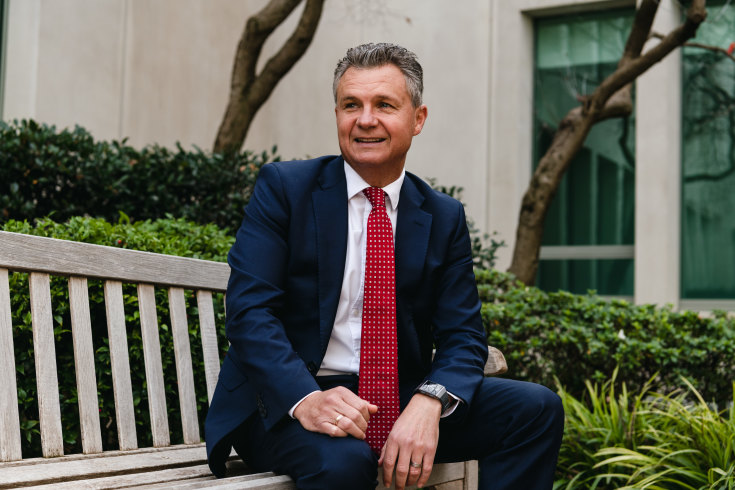
Almost three years after his address to the Australian Republic Movement (ARM) dinner in November 2019, Anthony Albanese, then leader of the opposition and now prime minister, has created within his cabinet the portfolio of assistant minister for the Republic. Appointed to this post is Sydney Labor MP Matt Thistlethwaite, who had been a young republican campaigner in the lead up to the 1999 referendum on whether Australia should sever its constitutional ties with the monarchy.

Czech Lowy Institute: Becoming a republic will improve Australia’s image in Asia JOHANNES NUGROHO


London: Assistant Minister for the Republic Matt Thistlethwaite says requiring Australian MPs to swear allegiance to the Queen is ridiculous and shows why another republic referendum is needed.

The 47th parliament, sworn in on Tuesday, is Australia’s most culturally diverse due to the fact it has more MPs from non-European backgrounds than ever before.


Matt Thistlethwaite says MPs should be pledging to serve the Australian people who elected them and not the British royal family.

Matt Thistlethwaite says MPs should be pledging to serve the Australian people who elected them and not the British royal family. JAMES BRICKWOOD

Those born overseas have to relinquish their first citizenship to comply with section 44 of the Constitution, which says anyone who is a citizen or entitled to the rights or privileges of a subject or citizen of a foreign power is incapable of sitting in parliament.

Thistlethwaite said MPs should be pledging to serve the Australian people who elected them and not the British royal family.

“Ironically, under section 44 of the Constitution, you cannot run for parliament if you hold allegiance to another country, yet the first thing we do in parliament is promise to serve a foreign monarch,” he told this masthead.

“It’s archaic and ridiculous. It does not represent the Australia we live in and it’s further evidence of why we need to begin discussing becoming a republic with our own head of state. We are no longer British.”

Section 42 of the Constitution says every senator or member must swear an oath or affirmation to the monarch and their heirs and successors before taking their seat.

Technically, section 42 and the schedule in which the oath is set out could be changed by a referendum without moving to a republic, but it is highly unlikely the government would try to push for this on its own.

Instead, it would be just one of many clauses that would be rewritten if Australia ditched the Queen and her immediate heirs Prince Charles, Prince William and Prince George.

While Thistlethwaite has been appointed Australia’s first-ever assistant minister for the republic, Labor says it will not hold a republic referendum until any second term. It wants to hold a referendum this term asking the Australian people to enshrine an Indigenous Voice into the Constitution.


Thistlethwaite said the document had not been updated since 1977 and it was time for a constitutional refresh, first with recognition of an Indigenous Voice, then a move to a republic.

“We are now a much more mature and independent nation and we should reflect that in the document upon which our democracy and our laws are based,” he said.

Shadow attorney-general Julian Leeser said Thistlethwaite and the government should be more focused on the challenges facing Australians “instead of undergraduate stunts railing against our system of government that has served us well”.

Philip Benwell from the Australian Monarchist League said Thistlethwaite was wrong to say MPs swore allegiance to a foreign monarch.


The Queen, by right of the Australian Constitution and by act of the Australian parliament implemented by his Labor predecessors in 1973, is Queen of Australia,” Benwell said.

“The Australian Constitution specifies that she is the head of the parliament in which he serves.

“She is not a foreign monarch and neither, as he says, does he or anyone else pledge allegiance to the royal family as the assistant minister for ‘the’ republic, he should know full well.

“Constitutionally we have the Queen and the heir to the throne. We do not have a royal family as such.”

Referendums have had limited success in Australia, partly because of the high bar required to approve changes to the Constitution.


Under section 128 of the Constitution, any constitutional amendment must be passed by both houses of parliament. It can then succeed only if approved by a double majority, that is the national majority of the Australian public along with the majority of votes in four of the six states.

Just eight of the 44 referendums in Australia’s history have been approved.

In 1999, a republic referendum was lost 55 per cent to 45 per cent, largely because republicans could not agree on the model for choosing the head of state. Every state voted no. The ACT, which counts only towards the national total, was the only jurisdiction to vote yes.

A Resolve Political Monitor survey for this masthead in January found that 36 per cent of voters were in favour of a republic, 38 per cent neutral and 27 per cent against.

Cut through the noise of federal politics with news, views and expert analysis from Jacqueline Maley. Subscribers can sign up to our weekly Inside Politics newsletter here


Latika Bourke is a journalist for The Sydney Morning Herald and The Age, based in London

Swearing allegiance to the Queen ‘ridiculous’: Republic minister


Australia’s quest to become a republic Courtesy of London Financial Times


Albanese’s words ‘lifting spirits’ of Indigenous people - After more than 200 years of waiting, Albanese puts forward a 'simple' proposition for an Indigenous Voice to Parliament


33 problems with media

Exhibition shows birth of art in Slovakia


ZeroHedge – One of the hallmarks of democratic society is a healthy, free-flowing media ecosystem. In times past, that media ecosystem would include various mass media outlets, from newspapers to cable TV networks. Today, the internet and social media platforms have greatly expanded the scope and reach of communication within society. 

Of course, journalism plays a key role within that ecosystem. High quality journalism and the unprecedented transparency of social media keeps power structures in check—and sometimes, these forces can drive genuine societal change. Reporters bring us news from the front lines of conflict, and uncover hard truths through investigative journalism. 

That said, as Visual Capitalist’s Nick Routley and Carmen Ang detail below, these positive impacts are sometimes overshadowed by harmful practices and negative externalities occurring in the media ecosystem. The graphic above is an attempt to catalog problems within the media ecosystem as a basis for discussion. Many of the problems are easy to understand once they’re identified. However, in some cases, there is an interplay between these issues that is worth digging into. Below are a few of those instances.” [h/t Pete Weiss]


Pete Recommends – Weekly highlights on cyber security issues, July 23, 2022 – Privacy and cybersecurity issues impact every aspect of our lives – home, work, travel, education, health and medical records – to name but a few. On a weekly basis Pete Weiss highlights articles and information that focus on the increasingly complex and wide ranging ways technology is used to compromise and diminish our privacy and online security, often without our situational awareness. 

Four highlights from this week: Report: 47% of orgs experienced a voice phishing attack last year; Rising Cyberthreats Increase Cyber Insurance Premiums While Reducing Availability; FTC explains ‘reasonable’ cybersecurity; and Facebook has started to encrypt links to counter privacy-improving URL Stripping.


ZDNet: “I depend on Google Drive. I use it every day and am in and out of it from morning till night. Because I spend so much time working within the cloud storage system, I’ve come up with a few “tricks” for making my experience more effective and efficient. 

Before I get to these helpful tips, know that these aren’t about the individual apps within Google Drive (Docs, Sheets, Slides, and Forms). These tips are about Drive itself and getting the most out of the platform. So, if you’re looking for tips specific to one of the included tools, you’ll want to continue your search. However, if you want to improve your daily Drive work, you’re in the right place. With that said, let’s get to the tips…”


10 commandments for social media success


The Perry Recipe for Success: Katy Perry’s Rise to the Top of the Social Media Charts


The World’s First Graphic Memoir Has Been Found — And It Dates From World War I

Until now, the earliest example of the genre was thought to be Will Eisner's 1978 A Contract with God. What's just turned up is Voyage and Adventures of a Good Little German in Kangarooland, by a new immigrant in Australia sent to an internment camp there during WWI. - ArtsHub (Australia)

Memoirs

Albanese’s words ‘lifting spirits’ of Indigenous people - After more than 200 years of waiting, Albanese puts forward a 'simple' proposition for an Indigenous Voice to Parliament

 The Voices and Hands of God: At approximately 11.30am eastern time on Saturday  Joining the PM will be my father in laws mate, Linda Burney, Minister for Indigenous Australians (Linda has a knack for dancing 💃)


 ‘Momentum is building’: high hopes for an Indigenous voice to parliament as Garma festival starts


Garma Live Streaming and Blogging 

the prime minister will deliver a powerful and informative speech on the Voice to Parliament. He is appealing to Australians to be as generous in accepting this constitutional change as the those who proposed it at Uluru.


The world is being undone before us. If we do not reimagine Australia, we will be undone too

This article is more than 3 years old


“We recognise the risks of failure but we choose not to dwell on them, because we see this referendum as a magnificent opportunity.”

Anthony Albanese's speech at Garma on The Voice


Albanese releases draft wording for Indigenous 'Voice to parliament' referendum


SPEECH IN FULL: PM Anthony Albanese unveiled proposal for Indigenous Voice to Parliament | ABC News


It is difficult to articulate the level of collective frustration and anxiety that has built up in Aboriginal and Torres Strait Islander Australia as government after government has kicked the can down the road — talking big but delivering little to empower First Australians in the Constitution.

Report after report, consultation after consultation, more talks, empty rhetoric, and policy paralysis has been the hallmark of Canberra. There's been a cognitive dissonance — a lot of talk about the plight of the world's oldest surviving culture but little, materially, to rectify it.


The last prime minister to come to the Garma Festival before Anthony Albanese's arrival this weekend was Malcolm Turnbull, who broke hearts when he described a Voice to Parliament as a so-called "third chamber". As a moderate Liberal prime minister, there was great hope that he would deliver.

After more than 200 years of waiting, Albanese puts forward a 'simple' proposition for an Indigenous Voice to Parliament


Anthony Albanese to reveal ‘simple and clear’ wording of referendum question on Indigenous voice


It is time to recognise the Voice, and it should be bipartisan (“A broken Voice is no option”, July 30). As the PM says, there is nothing to lose but everything to gain. Indigenous people deserve a voice, and it is not taking away any current rights under the Constitution. It is not a third chamber, as described by Malcolm Turnbull and Barnaby Joyce. It may be symbolic but it is important. When you salute a flag, it is symbolism but it carries that patriotic feeling in us. We should have the same symbolism in the Constitution so Indigenous people won’t be forgotten when the government of the day is making decisions about them. Mukul Desai, Hunters Hill

For the Indigenous peoples, the Voice needs to be thought through in relentless detail. Who would the Voice consist of? Would members be elected or selected? How would it authentically and equally represent the many diverse and individual Indigenous groups? Or would it be a conduit through which disparate groups would be consulted, as and when local issues pertaining to them arose? If so, who would determine when an issue applied to them and required consultation? Since it is to be advisory, with no power to legislate, what happens when the parliament can’t follow the advice?
If, as a result of consequent frustration, it was later made legislative, would that not lead to new and unresolvable conflict? These matters must be clarified to referendum voters quickly, so that “Yes” can win with confidence. Peter Fleming, Northmead

I look forward to voting in the Aboriginal Voice in parliament referendum. While the PM’s proposed wording is a start, it is not enough. It needs to be followed in the referendum with the exact wording of the amendment proposed to the Commonwealth Constitution, as well. I remember that the “preamble” proposed for the last referendum more than 20 years ago failed, as it was too vague. Adrian Jackson, Middle Park (Vic)

I suggest putting the goal “to establish an Aboriginal and Torres Strait Island Voice” first, and the process of “an alteration to the Constitution” second. Also, if it is a “representative” Voice, then add that for clarity, but only after appropriate consultation. I thank the PM and the government for working to enact the Uluru Statement from the Heart. Jennifer Fergus, Croydon


Uluru statement campaigners welcome Albanese’s referendum commitment


Garma: Voices speech 2019


Aboriginal History, English literature, piano lessons …


Richard Flanagan delivers acclaimed speech at Garma festival