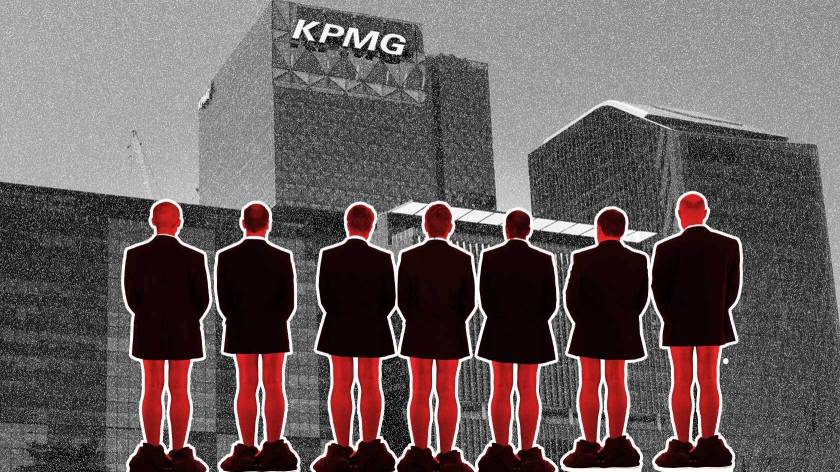
Accounting firms like KPMG Australia are at their most uncomfortable when they have to drop their pants all the way to their ankles in public. Sometimes avoiding transparency is difficult.
The Big Four firm has been mired in controversy since its treatment of a whistleblower who revealed multiple breaches of ethical standards, auditing standards and other legal rules by sharing confidential audit client information with colleagues who were chasing large audits.
KPMG Australia’s audit team for Lendlease, for example, had access to information about audit tender pricing from its competitors. That information made its way into the hands of the audit pursuit team working on winning the Westpac audit — an audit that became available because Westpac’s previous auditor found itself in a tax policy confidentiality breach scandal.
Lendlease executives told a parliamentary committee earlier this year that KPMG will no longer be its audit firm after having the firm run its eyes over the company’s books for many decades following the confidentiality breach.
Senior KPMG partners could have taken actions to deal with what was one of the most significant series of ethical breaches from within one practice in decades. Rather than deal with serious breaches of ethical, professional, and audit and assurance standards, as well as possible breaches of other laws or regulations, bosses gave preference to chasing millions in audit fees.
The firm will continue to bleed audit clients such as ANZ because companies — and, indeed, governments — generally stop having a fetish for a firm logo when the firm’s partners crap in their own nest by breaching standards.
KPMG Australia now finds itself licking wounds internally, while also being under attack by media and politicians from the outside. All this forces the firm to make itself vulnerable and publicly release internal reviews. There are several reasons for this that should be obvious to those with a keen eye for crisis management, but let’s go through them for old time’s sake.
The first reason to release documents publicly is to avoid looking like an institution that has an absence of discipline within its professional ranks. Leaking to business journalists writing about the accounting world or gossip columns will naturally occur. Angry partners will want to express their anger publicly via proxy, and who better than a media megaphone to amplify issues a firm may otherwise wish to bury.
It is standard operating procedure for people within accounting firms who want to keep a professional image, while quietly shuffling out things their colleagues might prefer to remain hidden, to let the world know things are not that great in the state of Denmark. Releasing reviews or pre-empting leaks from a firm is one way of emphasising the company is maintaining control even in a time of crisis.
This is a lesson KPMG has obviously learned from PwC Australia, after it failed to handle the media and public relations well during the early part of its tax leaks scandal.
KPMG’s circumstances are far worse — one of the worst this author has seen in three decades — and the gradual release of reports is designed to ensure that the firm attempts to control the message as best as possible.
The reports released so far are a mixed bag: some good, and some much less flattering. KPMG has attracted a mix of commentary from people for whom some of the language and process of the accounting profession is clearly foreign.
A recent report by Chartered Accountants — Australia and New Zealand (CAANZ) looked solely at KPMG’s processes and procedures to deal with confidentiality and ethical training. It was not a report that was destined to find people guilty of breaches of standards nor name people that should be thrown out of the profession. CAANZ has a disciplinary process for that more delicate of processes, and those disciplinary investigations are ongoing. Watch this space.
Another report also recently pushed out by KPMG was the governance consultancy company Principia’s deep dive into KPMG’s culture. It found that the firm had a rotten attitude up at the top among partners who opted to stop polishing their ethical halos and replace that with chasing new audit clients, as well as not walking the walk when it came to ethics and making it very difficult for people to raise issues.
The report also found a culture of retribution rather than self-review or introspection when it came to people wanting clear breaches of ethics to be dealt with by the hierarchy, including the now-admitted failure to properly treat the whistleblower involved in the KPMG revelations.
These two reports provide different perspectives on a firm that is troubled, while also providing some evidence that KPMG Australia is attempting to rehabilitate its reputation. Publicly releasing these reports, of course, comes with additional risks that the firm will have considered before releasing these documents into the wild.
The first issue is that they provide ammunition for Senate estimates, due to take place in the next week. Expect the Department of Finance, Department of Defence and any other folks that have contracts with KPMG to get asked whether a firm that received such an unflattering assessment from Principia should continue to receive taxpayer dollars.
The reports will be used by the Australian Greens to further pursue the cause of a debarment regime so that firms found to have questionable ethical cultures are banned from providing government services until they clean up their act.

Regulators such as the Australian Securities and Investments Commission and the Tax Practitioners Board will need to craft cheat notes for their bosses, just in case they get asked what they can do about unflattering assessments of KPMG in those reports.
The two reports mentioned above, and others that will subsequently be released by the firm and Department of Finance, will also be used by the accounting profession’s harshest critics to argue for tighter regulation of the profession, structural separation of accounting firms, downsizing of accounting partnerships to a smaller size, and for corporate regulators to do more work to scare accountants into doing the right thing.
KPMG Australia is doing the right thing in trying its best to be open — as far as the processes of opaque partnerships allow it. But the consequences of the negative assessments of the firm’s character will have wider implications for the accounting world.

