Tuesday, August 01, 2017

Mokshva of Heavens


Local - More troubles for Salim Mehajer


State - NSW premier says homeless people in Martin Place make her 'completely uncomfortable'


Federal - Labor MP suggests Sydney terror raids timed to boost PM in polls


Theme-based restaurants and parks are passé. A theme-based crematorium is the latest talk of the hour, both online and offline. Antim Udan Moksha Airport in Gujarat, the first of its kind in India, puts the departing souls of the dead cremated here on international flights to the heaven for ultimate salvation or moksha: freedom from the cycle of birth and death.
Located in Gujarat’s Bardoli on the banks of Mindhola River, the crematorium is modeled on an airport and equipped with two giant replicas of aircraft. The airplane replicas at Antim Udan Moksha Airport in Gujarat are named Moksha (salvation) airlines and Swarga (heaven) airlines which seem to transport the souls from the earth to the heaven on cremation of dead bodies here.
What’s the most interesting about Antim Udan Moksha Airport in Gujarat is the airport-like announcement which is made to guide funeral parties on entry into the crematorium and instruct them where to keep the body, how to proceed for cremation, etc. There is very little difference between the announcement made at the crematorium and that at airports as well as in planes.
What makes the crematorium more like an airport is the typical noise that an aircraft makes while taking off. A similar noise is created when dead bodies are placed in furnace at Antim Udan Moksha Airport in Gujarat. The atmosphere of the airport-themed crematorium is intended to soothe the mourning family members under the impression that the dead depart for salvation in the heaven.

1 August 1975 aka s(*)x January 1977

Solidarity Movement. Perestroika and Glasnost. The fall of the Berlin Wall. All of these movements, policies, or events had a tremendous influence on the dissolution of communism in Eastern Europe and the end of the Cold War. While not attributed the same attention and certainly less well known, many diplomats operating behind the Iron Curtain recognized that the Helsinki Final Act, signed August 1, 1975, was a crucial step towards the fall of communism...


Nazism and the supernatural. Of all the Third Reich’s bizarre experiments with the occult, none was embraced as effusively as World Ice Theory. Hitler thought it would replace Christianity...  Secret Pi 

Roombas have been mapping your homes for years, and that data’s about to be sold to the highest bidder BGR ).I had thought about getting a Roomba, half as a cat toy….scratch that.
The Soviet InterNyet aeon (micael). Key quote:
…the story of the Soviet internet is a reminder that we internet users enjoy no guarantees that the private interests propping up the internet will behave any better than those greater forces whose unwillingness to cooperate not only spelled the end of Soviet electronic socialism but threatens to end the current chapter in our network age.
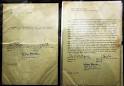
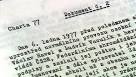
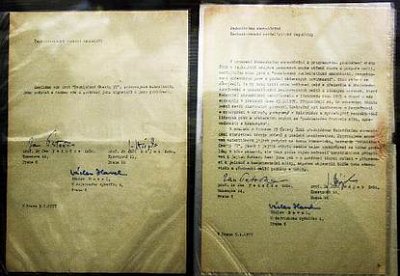
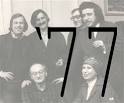
Prague, Czech Republic. 06th Jan, 2017. The exhibition on People of Charter 77 (Charter 77 anti-communist movement), - Stock Image

“Whistleblowers throughout the federal government face a patchwork of legal protections. It can be difficult to know what the law protects and what it doesn’t. POGO’s new “Know Your Rights: Whistleblower Protections for Federal Sector Employees” tool is a starting point for figuring it out. In anticipation of National Whistleblower Appreciation Day this weekend, POGO is unveiling the new tool. It can be used to learn more about the legal protections and disclosure rights for the various types of federal sector employees, who are covered by different Charter77Charter77“When Jan Patocka wrote about Charter 77, he used the term ‘solidarity of the shaken’. He was thinking of those who dared resist impersonal power and to confront it with the only thing at their disposal, their own humanity.” ( V.  Havel, Politics and conscience, 1984)


Vaclav Havel, Part III: Helsinki and the Charter 77 Declaration


On the morning of January 6, 1977, in Prague, Czechoslovakia, the StB (secret police) surrounded and swarmed a car driven by the actor Pavel Landosky (if you’ve seen The Unbearable Lightness of Being, he plays the farmer with the pig who befriends Tomas and Tereza). In the car with Landosky were Ludvik Vaculik and Vaclav Havel, but to the secret police the people were the least important targets that day. They could be dealt with later and were – literally – tossed aside.
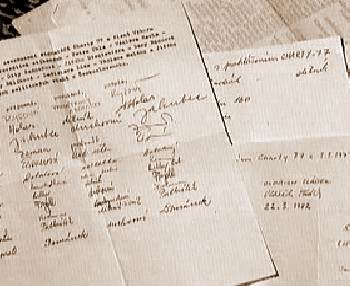
What concerned the secret police was a document in the car written by a group of dissidents and signed by 243 very brave people.You can see the document here. It was the declaration of a group identifying itself as Charter 77. The occupants of the car had been trying to deliver the declaration to the Federal Assembly; the secret police knew all about the group’s plans and were lying in wait. But what the police did not know was that the delivery of the declaration to the Federal Assembly was a sideshow; another copy already had been smuggled out of the country, and was to be published the next day in four leading daily European newspapers, from which it would inevitably make its way back into Czechoslovakia.
 
Two seemingly contradictory things about the regime’s response to the Charter 77 declaration are impressive: its severity, and its leniency. The severity of its response is remarkable because on its face, the declaration could hardly have been less revolutionary or more innocuous. Reading it today makes you wonder if you are reading the correct document – this caused all that fuss? The leniency of the regime’s response is remarkable because its clear preference would have been to kill the group’s leaders, or at least crush them, and it was quite capable of doing it. And yet, for perhaps the first time, the regime felt constrained in its response to domestic dissent by both the weight of world opinion and the logic of its own decisions.
The regime felt constrained because the Charter had framed its declaration, in its very first sentence, not as a complaint but as a celebration of Czechoslovakia’s adoption of the 1975 Helsinki Accords – formally, the International Covenant on Civil and Political Rights — into its domestic law. The declaration then stated that the basic human rights protected by the Covenant were routinely violated in Czechoslovakia (listing several examples), and that, in the future, the Charter group and other like-minded citizens should and would accept responsibility for fulfilling the aims of the Covenant and Czechoslovak law by “drawing attention” to violations of basic human rights.
The Helsinki Accords were the product of an intense and long negotiation process, the Conference on Security and Cooperation in Europe (CSCE), involving all of the independent countries of Europe, the United States and the Soviet Union. The purpose of the Conference in the eyes of the United States and its West European allies was primarily security – it hoped to get the Soviets to recognize permanent and inviolable borders between East and West, particularly in divided Germany; and the Soviets wanted the borders redrawn by Stalin after World War II recognized as well. The primary purpose of the conference in the eyes of the Soviets and their East European allies was cooperation – they wanted to secure badly needed trade and investment for their teetering economies. But the Accords also included the recognition of transnational individual civil and political rights, the positive obligation of governments to protect those rights, and the obligation of other states to monitor each state’s compliance with that obligation. And, because recognition of those rights was included in the Accords, compliance with that obligation was tied to badly needed trade and investment.
The recognition of transnational civil and political rights was included primarily at the insistence of West European countries. In his excellent analysis of the importance of the Helsinki Accords in the development of international human rights law and advocacy, The Helsinki Effect, Daniel C. Thomas notes that the Soviets and the United States were equally impatient with the European countries insistence on including a transnational ‘human rights’ agenda – President Nixon went so far as to scold his European partners that “We would not welcome the intervention of other countries in our domestic affairs and we cannot expect them to be cooperative when we seek to intervene directly in theirs.” And, as you can learn by watching the proceedings of the Woodrow Wilson Center’s conference Helsinki 1975 and the Transformation of Europe, Henry Kissinger and Leonid Brezhnev privately agreed that the human rights provisions of the Accords were meaningless and that nothing would change in practice. East German leader Erich Honecker reassured advisors worried about the adoption of human rights principles that “there will always be the Stasi.” In other words, the major players in the adoption of the Accords regarded the human rights provisions cynically and as an after-thought.
Dissidents in Eastern Europe, however, did not. A small group of dissidents in the Soviet Union started the first Helsinki monitor organization, claiming the privilege of monitoring whether the Soviet Union was meeting its Helsinki obligations domestically. In Czechoslovakia, concurrently, Vaclav Havel was organizing a group of dissidents who had decided to risk all by advocating for basic human rights. Three members of that group in particular — Zdenek Mlynar, Jiri Hajek, and Ladislav Hedjanek — seem to have developed the strategy of tying their advocacy directly to the Czechoslovak regime’s adoption of the Helsinki Accords into domestic law. The group called itself Charter 77, and its declaration expressly invoked both the human rights obligations the regime had agreed to as an afterthought, and the right of citizens themselves to monitor compliance with those obligations and report their findings to the world at large.
Framing Charter 77 as a supportive response to Czechoslovakia’s adoption of the Helsinki Accords was both tactical and substantive. Tactically, it was a masterstroke. The regime found itself practically check-mated before the game had begun, because it had already agreed to everything Charter 77 demanded. Western European governments, and human rights advocates, could and did insist that Eastern European governments meet their obligations under the Accords – or, if they were forswearing the Accords, the West could do the same and cut off trade and border recognition. And, since groups like Charter 77 were only helping to fulfill those obligations, and were very much in the Western eye, they could not be easily destroyed.
The Charter’s model of dissidence – using international human rights law as a lever against domestic repression – quickly spread across Eastern Europe and the world. In addition, the Charter’s insistence on a role for private citizens in monitoring respect for human rights – what Havel called civil society – helped create a model so ubiquitous today that it is hard to believe it was once an innovation: today we call such organizations NGOs. In direct response to Charter 77 and other similar groups in the East, civil initiatives such as Helsinki Watch – later Human Rights Watch – developed in the West. And as we’ll see, those initiatives eventually played an important role in bringing down the regimes of Eastern Europe. Indeed, it was the work of such initiatives, that simply took cynical governments at their word and insisted on respect for human rights, that created the practice of transnational human rights law and advocacy. That legacy obviously continues to reverberate in the world today.
A long, dark road lay ahead for the declaration’s signatories.  All were arrested and repeatedly interrogated;  many were imprisoned, beaten, harassed and placed under constant surveillance.  Vaclav Havel spent almost five of the next seven years in prison.  One of the three intial spokespeople for the group — philosopher Jan Patocka — would be dead at the hands of the secret police within a few weeks.  But more on that in future installments.


Taxing Matter and Health Privacy

Chinese woman undergoes plastic surgery to evade £2.8 million debt

Labor promises to tackle the family trust tax problem ABC 7:30 31 Aug 2017

Harmonising Australia’s privacy regime. Privacy by Design is picking up steam, with advocates emboldened by the new reality of a growing data-driven economy. Victoria Draudins maps how Australia's public sector privacy bodies are responding to the challenges from both home and the world.

David S. Miller (Proskauer), The Tax App: Eliminating Tax Returns Entirely:
Congress could very easily achieve return-free filing — without IRS involvement or any substantive changes to the tax code — by simply requiring all tax information providers (such as employers, banks, stock brokerage firms, and charities) to make the tax information they hold (e.g., IRS Forms W-2s, 1099s, 1098s, and charitable donation information) available electronically in a single accessible format so that a taxpayer could receive all of his or her tax information electronically.

ATO assistant commissioner Tony Poulakis returns after being stood down 


Should The Government Continue To Exempt Churches From Taxation?


Foxconn’s plan for a $10 billion factory in Wisconsin is certainly good news for President Trump and Republican politicians Gov. Scott Walker and Speaker Paul D. Ryan, whose district the plant would call home.
But the deal with Foxconn, the Taiwanese electronics supplier, comes with a heavy price tag for Wisconsin taxpayers: $3 billion in state tax credits that dwarf the typical incentive package companies receive from local governments.
Even as Mr. Walker celebrated the news with Foxconn executives at a rally at the Milwaukee Art Museum on Thursday, experts on the political left and right alike said the rewards were not justified by the cost of the tax breaks.


The Front Door Opens Wide for the Backdoor Roth IRA, by Philip Manns (Liberty) & Timothy Todd (Liberty)

The U.S. Department of Health and Human Services (HHS), Office for Civil Rights (OCR) today launched a revised web tool that puts important information into the hands of individuals, empowering them to better identify recent breaches of health information and to learn how all breaches of health information are investigated and successfully resolvedThe HBRT may be found at: https://ocrportal.hhs.gov/ocr/breach/breach_report.jsf.  For additional information on HIPAA breach notification, visit:  https://www.hhs.gov/hipaa/for-professionals/breach-notification” 


Memo to Republicans in Congress: It’s time to move on.
Your efforts to strip insurance away from millions of Americans — I mean, reform Obamacare — are only making you look bad. And I’m not talking about the “mean” plan that the House passed that shows how many in the GOP lack basic compassion for their fellow Americans, or the infighting that’s making your party look directionless and weak-willed.


Stanford University researchers used smartphone data to obtain data on the amount of steps we take ever yday. Australia just managed to be included in the top 20 laziest coming in at 19


“A decade after the housing bust upended the lives of millions of Americans, more U.S. households are headed by renters than at any point since at least 1965, according to a Pew Research Center analysis ofCensus Bureau housing data. The total number of households in the United States grew by 7.6 million between 2006 and 2016. But over the same period, the number of households headed by owners remained relatively flat, in part because of the lingering effects of the housing crisis. Meanwhile, the number of households renting their home increased significantly during that span, as did the share, which rose from 31.2% of households in 2006 to 36.6% in 2016. The current renting level exceeds the recent high of 36.2% set in 1986 and 1988 and approaches the rate of 37.0% in 1965…”  


Take vacations.
Next Leap for Robots: Picking Out and Boxing Your Online Order WSJ (Re Silc). Re Silc: “Zero jobs except prison guards and cops soon.”

It has been suggested that there should be a royal commission into the Australian Public Service to review its role and how it delivers services. The review is being called for as the world has radically changed since the last review of the public service in the 1970s Public Service Review


Adam Thimmesch (Surly Subgroup): Online Shopping and Tax Privacy

The privacy implications of online commerce are complicated and fascinating. On the one hand, it allows individuals to protect their privacy by shopping for sensitive items without the knowing glances of store clerks, fellow patrons, or those passing by. On the other hand, it creates a digital trail that can connect them to a particular vendor or purchase in perpetuity. This can occur with respect to items that are politically, medically, or sexually sensitive and with respect to items that they’d just prefer to keep a secret. (For example, if you forget to browse in private mode, you might find that your wife’s Facebook feed now includes ads for the items that you were searching out for her birthday. Woops. Sorry dear.)


A new piece in the Guardian gives us a fascinating insight into changing attitudes amongst the 1%.

The newspaper interviewed several high net earning individuals for their views on tax avoidance. Those interviewed by the Guardian at least were not fans. One corporate lawyer on £300k a year said:

“The position of the UK as a major player in the global financial secrecy world, presumably through crown dependencies such as the British Virgin Islands and the Caymans, is disgusting.”

A number advocated taxes on wealth to rebalance economic inequality.

The article is particularly interesting in the context of the recent general election in the UK, which saw a marked shift in the political makeup of the country. The result of the election saw a clear split in the electorate along educational levels, with higher earning university graduates voting for the left wing Labour party by a clear majority, with voters with fewer educational qualifications voting Conservative by a large majority. This result slightly surprised pollsters, given that the Labour manifesto focused tax raises on higher earners.
The full article is available here – and is topped by a video on jurisdictions ranked within Tax Justice Network’s 2015 Financial Secrecy Index, which is a good watch.


The article lists fourteen of Australia’s most obscure laws by state. This list was compiled after a Brisbane man was fined for taking a fridge on a train. Don’t ask I have no idea why anyone would want to take a fridge on a train, however  according to this report he isn’t the only person to use trains to carry furniture.


Do we need cash? Humans have used all sorts of things to exchange items of economic value -- rare metals, strings of shells and even sunken boulders. Those objects have gotten more ephemeral, with paper money replacing most coins, and digital forms increasingly supplanting paper. Could physical cash go away entirely? Economists see great payoffs in a cashless society: lower transaction costs, new tools to manage economic growth and an end to tax evasion and money laundering. Critics see an end to privacy, frightening new powers for tyrants and costs that would fall disproportionately on the poor. The giant, if unintended, experiment that followed India’s attempt to withdraw 86 percent of cash in circulation showed one thing clearly: The end of cash is not likely to be a neat or simple process.