Monday, January 02, 2017

Panama Papers and Data – Total Tax Revenues 1980 to 2013

14 Amazing Thomas Sowell Quotes in Honor of His Last Column

DOJ issued a press release regarding the status of the Swiss Bank Program:  Justice Department Reaches Final Resolutions Under Swiss Bank Program: Information Received Continues to Drive Civil and Criminal Enforcement Efforts (12/29/16), Cryptic Stories Under Swiss Bank ...

Year End Review of A Top News Story on Panama Papers 


It is the time of year for media outlets to start recycling their choices of top news of the year.  Here is one from BBC on the Panama Papers disclosures.  Panama Papers: What happened next? (BBC 12/26/16), here.  This is a pretty good, if brief, article summarizing the global fall out from an interview with the two top journalists originally accessing the data and pulling together the consortium of journalists to analyze it.  The article focuses not just on hiding for tax purposes but for all sorts of nefarious -- aka illegal -- purposes.

Some excerpts:
Mr Obermaier said the Panama Papers had shown how the offshore world could be used to help aid terrorism... 


Over the break observation was made how old retiring Commissioners used to stage Thank You Tour around different sites the trend is now for A different ***** tour in the P S ...


If you believe, as The Economist does, in open economies and open societies, where the free exchange of goods, capital, people and ideas is encouraged and where universal freedoms are protected from state abuse by the rule of law, then this has been a year of setbacks. ... As globalisation has become a slur, nationalism, and even authoritarianism, have flourished. 

The Economist finds the root of the problem in "the loss of faith in progress. Liberals believe that change is welcome because, on the whole, it is for the better."


Finance Ministry chases Uber on tax evasion

A crackdown on welfare while the richest pay no tax? It's one promise the Liberals kept

David Herzig, The Amazing Section 1202 (Surly Subgroup). “Let me start with the big lead:  You can exclude from capital gains taxation the GREATER of $10,000,000 or 10 times the taxpayer’s aggregate adjusted basis.  Yep, if your basis was $40,000,000, then your excludible amount is $400,000,000!”


In a year when populist voters reshaped power and politics across Europe and the U.S., the world’s wealthiest people are ending 2016 with $237 billion more than they had at the start... 

U.S. billionaires -- including Buffett -- favored Trump’s rival Hillary Clinton. Still, they profited from his victory when they added $77 billion to their fortunes in the post-election rally fueled by expectations that regulations would ease and American industry would benefit. 

The New York real estate mogul is building a cabinet heavy on wealth and corporate connections, and light on government experience, a mix that hedge fund billionaire Ray Dalio said last week would unleash the "animal spirits" of capitalism and drive markets even higher

Australia: Ikea pays just $10.7m tax on nearly $1bn in sales 


HeintzNew York Times Wealth Matters:  Family Cemeteries Bind Generations, for Remembrance and Tax Reasons, by Paul Sullivan:

As much as their personal relationships, it is the family cemetery that binds the descendants — not merely to honor and remember their forebears but also for tax reasons. ... Family cemeteries, a relic of another age, continue to bind relatives in ways that today’s wealthy might wish for. ... Some cemeteries have also become the connective tissue for families of far more modest means.

Part of this results from rules of the Internal Revenue Service, which grants nonprofit status to these cemeteries under section 501(c)13 of the Internal Revenue Code. The rules require families to maintain a detailed list of all descendants eligible to be buried there. ...


Via Out World in Data – Taxation – by Esteban Ortiz-Ospina and Max Roser
“The way in which governments raise and spend revenue has a substantial impact on the economic and social development of nations. In this entry we analyze available data and empirical research on a prime source of government revenue: taxation. While taxation is not the only source of government revenue, it is by and large the most important source in nearly all countries. According to the most recent estimates from the International Centre for Tax and Development, total tax revenues account for more than 80% of total government revenue in about half of the countries in the world – and more than 50% in almost every country. We begin this entry by providing an overview of historical changes in taxation patterns, and then move on to an analysis of available data from the last couple of decades, discussing recent trends and patterns in taxation around the world. From a historical perspective, the growth of governments and the extent to which they are able to collect revenues from their citizens, is a striking economic feature of the last two centuries. The available long-run data shows that in the process of development, states have increased the levels of taxation, while at the same time changing the patterns of taxation, mainly by providing an increasing emphasis on broader tax bases. Taxation patterns around the world today reveal large cross-country differences, especially between developed and developing countries. In particular, developed countries today collect a much larger share of their national output in taxes than do developing countries; and they tend to rely more on income taxation to do so. Developing countries, in contrast, rely more heavily on trade taxes, as well as taxes on consumption. Moreover, the data shows that developed countries actually collect much higher tax revenue than developing countries despite comparable statutory taxation rates, even after controlling for underlying differences in economic activity. This suggests that cross-country heterogeneity in fiscal capacity is largely determined by differences in compliance and efficiency of tax collection mechanisms. Both of these factors seem to be affected by the strength of political institutions. In the last part of this entry we provide an overview of empirical evidence regarding the equity and efficiency implications of taxation. In particular, we show that taxation does have a powerful redistributive effect, but it is important to consider how taxation also affects behavior of individuals, by changing economic incentives. For example, recent studies have found that taxation may lead to efficiency losses by inducing migration of ‘super stars’. These potential efficiency losses highlight the importance of designing taxation systems that achieve redistributive objectives at the smallest possible cost…”

Sunday, January 01, 2017

Happy New Year MMXVII: New Lines from the Horizon

Cryptic Sylvester at the Rogue movies ... New beginnings, fresh starts, reaffirmations of love and promises for a brighter future all come to mind as we ring in  A New Year


“Hope smiles from the threshold of the year to come, whispering, ‘It will be happier.’” -  Past Sydney circa 1950s


Tip you might need to exploit in 2017 - How To Make Friends Faster

Around that time Oscar,Tony and Grammy award-winning songwriter Frank Loesser, wrote “What are you doing New Years Eve?”’

  • Click to enlarge image LeavingHome_h1a.jpg
We only know Sydney in those precious 1980s and 1990s ( we even recognise some of the cabinet papers ;-) when sun rarely went down and night was always young at 4 am ... Then there was that rare live duet of George Michael and Elton John singing "Don't Let the Sun Go Down on Me" hit No. 1 on the pop charts in Feb. of 1992, it was  our dad's last birthday on this earth and  GI was mapping her way to Paddington birth centre.  "Freedom" on George Michael's 1990 album Listen Without Prejudice reflected the birth of the first Child of Velvet Revolution. Those lyrics still have a power to transform caring bohemian strangers  ....

"Caring is one of the most intimate and human ways to connect with others. And it can be expressed in multiple ways — from helping an elderly person cross the street to fighting a house fire. But certain parts of America practice this virtue more than others. In order to identify those areas, WalletHub’s analysts compared the 100 most populated cities across 32 key indicators of a compassionate spirit...

In Bra and Bondi Iceberg circle, New Year’s Eve was known as Amateur’s Night, the one time each year when hobbyist drinkers indulged in what they imagined was depraved Bacchanalia. It was a grim spectacle. I remember one Dec. 31 in Boston seeing half a dozen women leaning against the wall in an alley, all moaning and vomiting, and it wasn’t yet midnight. Proficient drinking, as with writing sonnets or mastering Chopin’s etudes, calls for discipline and years of practice. Now I stay home and wake up without a hangover. In his first collection, Dying: An Introduction (1968), L.E. Sissman includes a sequence of four sonnets, “The Tree Warden.” The third is “December Thirty-First”: 

“The days drew in this fall with infinite art, 
Making minutely earlier the stroke 
Of night each evening, muting what awoke 
Us later every morning: the red heart

“Of sun. December's miniature day 
Is borne out on its stretcher to be hung, 
Dim, minor, and derivative, among 
Great august canvases now locked away.

“Opposed to dated day, the modern moon
Comes up to demonstrate its graphic skill:
Laying its white-on-white on with a will,
Its backward prism makes a monotone.

“In the New Year, night after night will wane;

Color will conquer; art will be long again.”


Don’t let the sun go down on me...
Although I search myself, it's always someone else I see...
I'd just allow a fragment of your life, to wander free...
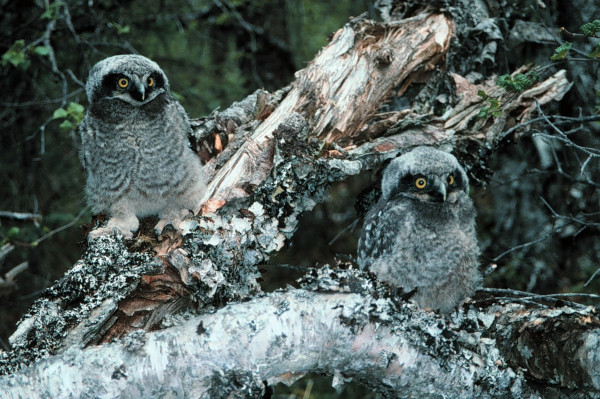
northern_hawk_owl_owls_bird


 Child prodigy’s Cinderella opera thrills Vienna BBC

There are two - dva -  GIs Gitka and Gabbie in the Bohemian world, speaking of Cold War - via a warrior -  29 incredible close-ups of snowflakes shot with a homemade camera rig Business Insider


Come, children, gather round my knee;
Something is about to be.

Tonight’s December Thirty-First,
Something is about to burst.
The clock is crouching, dark and small,
Like a time bomb in the hall.
Hark! It’s midnight, children dear.
Duck! Here comes another year.
- Wishful Jozef Imrich after 
(via fonetik Havel Avenue) Sparkling Pinot Noir


"We are hoping to make it rain purple this year for the first time, not only off the barges, but also off the Sydney Harbour Bridge:"  Fortunato Forti Antipodean Fortunes:

Media player: "Space" to play, "M" to mute, "left" and "right" to seek.


Families in Sydney are treated to an early fireworks display, featuring a dazzling homage to beloved musician Prince
Sydney's Sylvester


“I hope that in this year to come, you make mistakes. Because if you are making mistakes, then you are making new things, trying new things, learning, living, pushing yourself, changing yourself, changing your world. You’re doing things you’ve never done before, and more importantly, you’re Doing Something. So that’s my wish for you, and all of us, and my wish for myself. Make New Mistakes. Make glorious, amazing mistakes. Make your mistakes, next year and forever.”
-Neil Gaiman


To begin, begin ...
~ William Wordsworth (What Did WW mean ... what the quote literally says: to start something, you must actively engage it. It means that sometimes the hardest step is the first one, but you need the courage and will to be able to take it.  What Wordsworth said is as simple as that, yet the action itself is much more difficult when you think about it which is why it is such a well-known quote...


The retirement wave changing Sydney ... Most of Sydney is 
heading to the waiting room for God 


Imagine if you didn't have to battle other commuters to make it here every day?


MANY companies are releasing technology to make working from home easy. If you find one that works, pay very close attention. If working from home becomes functional, many office workers may no longer have to live near their offices, or even in the ...


In my circle, New Year’s Eve was known as Amateur’s Night, the one time each year when hobbyist drinkers indulged in what they imagined was depraved Bacchanalia. It was a grim spectacle. I remember one Dec. 31 in Boston seeing half a dozen women leaning against the wall in an alley, all moaning and vomiting, and it wasn’t yet midnight. Proficient drinking, as with writing sonnets or mastering Chopin’s etudes, calls for discipline and years of practice. Now I stay home and wake up without a hangover. In his first collection, Dying: An Introduction (1968), L.E. Sissman includes a sequence of four sonnets, “The Tree Warden.” The third is “December Thirty-First”:

“The days drew in this fall with infinite art,
Making minutely earlier the stroke
Of night each evening, muting what awoke
Us later every morning: the red heart

“Of sun. December's miniature day
Is borne out on its stretcher to be hung,
Dim, minor, and derivative, among
Great august canvases now locked away.

“Opposed to dated day, the modern moon
Comes up to demonstrate its graphic skill:
Laying its white-on-white on with a will,
Its backward prism makes a monotone.

“In the New Year, night after night will wane;
Color will conquer; art will be long again.”

That’s a Senecan spirit of hopefulness I can live with, especially coming from Sissman, who died much too soon, of cancer, at age forty-eight. For readers, the memorable death of 2016 was Geoffrey Hill’s. The leading poet of the age died June 30 at age eight-four. In the seventh section of Clavics (Enitharmon Press, 2011), he too reminds us that “art will be long again”:

“The enabling reader, the recusant
At my fingertips, for whom I write well
Into my scant-
Extended age
This ritual
Taking its toll
Much like saxifrage
Breaking a cold war wall”