Saturday, September 19, 2026

Achkd luys : “Light to your eye” - Norma’s 60th North of the Bridge

“Barev” (Hello)

“Shnorhakalutyun” (Thank you)

“Ayo”/“Voch” (Yes/No)


Mima’s Recipes began in my childhood, watching my mother cook from the kitchen table and meticulously recording everything she did so that, someday, I could recreate her delicious food. Over the years, I’ve added my own recipes, each shaped by the same patience and persistence she instilled in me.

“Mima” means grandmother and evokes warmth, love and comfort. Used by a small group of Armenian neighbours in Cairo, Egypt from around the 1940’s, it has stayed in our family ever since. Now, as a Mima myself, my mission is to share these treasured recipes so that they continue to be prepared and enjoyed – always with love.

Mima’s Recipes


Mima (my mum) & Me

Growing up, home cooked food shared with family and friends, was at the heart of everything. The kitchen was literally the central room of our home.


Our Family Chronicle

&

Personal Reflections

2nd Edition

With a foreword by Daniel Lauder & Julia Booth

Originally Published by Renaissance Books


As the son of an Armenian try to be the first in charities and last in politics... If you put your foot on dry land, may it flourish to a verdure."

So bestowed a tearful Hovhannes Emirzian, upon his son Margos - then just 17 years old - on November 25th, 1922. It was to be Margos last Sunday spent at home in Old Constantinople, prior to embarking on the long journey to Cairo, Egypt.

Margos' reflections on the childhood he left behind, and his illuminating retelling of the years that followed, are imbued with a wisdom that echoes across generations. One that has shaped the lives of a long line of Emirzian descendants.

As we - Daniel & Julia; two of his great-grandchildren, set about the task of assembling these memoirs into a physical publication for the very first time, we feel the profound weight of those tumultuous years, recognising - in our own contributions - the importance of diligence, prudence and conscientiousness that defined Margos' character and approach to life.

In breathing new life to the memoirs, we are also acutely aware of the custodial role we are playing on behalf of our generation, in upholding the legacy of Margos' romanticisation of the written word. Throughout his life, Margos contributed to numerous publications - both to advance the Armenian cause and out of a deep reverence for contemporaneous historical record. His daughter, Sirvart, likewise understood the importance of both, through her role as the editor-in-chief of Australia's pre-eminent Armenian newsletter, 'Mioutune' as well as in her forays as a playwright, most notably in her writing of 'Small World', which captured the poignant nuance of diasporic Armenians' experience assimilating into western society.

Now, as Margos' granddaughter, Norma, celebrates her 60th birthday, we see these proud traditions enduring through another of Margos great loves: food. Margos memoirs are enriched with references to the great food of his time; Armenian restaurants in Constantinople, feasts of meat and rice cooked by his mother in Agn. Perhaps most relevant to our experience of his granddaughter's lessons on these matters are these words from Margos; "When we finished our meals we had to help our mother, cleaning the table we were very careful never to drop any crumbs on the floor." On the one hand, given the technological advances of our time, it is hard to imagine what Margos might have thought of Mima's Recipes' - an entirely digitised record of hundreds of years' worth of knowledge in food. But one thing we can be assured of is that in this he would have felt that Norma had successfully channelled his diligence, national pride, and love of the written word into yet another coetaneous record of what it is to be Armenian - only this time in the 21st century.

It would be remiss in all of this, not to honour Margos' son-in-law, Kevork, and grandson, Noubar, for their role in furthering the cause of diasporic Armenians in Australia, most notably in their roles

- alongside Sirvart and Norma - as founding members on the board of AGBU (Armenian General Benevolent Union) Alexander school, which last year celebrated 35 years of educating young Armenian-Australians.

It is likewise befitting in this moment, to reflect on Margos' great-grandchildren. Nyree, who embodies a simultaneously calm and cheeky disposition that bears great resemblance to Margos.

Garren, whose entrepreneurial pursuit of excellence in practicing law, mirrors the self-taught nature of Margos' own experience as a jeweller. Julia, whose sense of what is "just' mirrors Margos' perfunctory manifesto on opening his first shop, where he declares his intent "to well compensate the makers of jewellery or ornaments for me." And Daniel, who shares Margos' reverence for history and his belief that its study is autotelic and inherently valuable. It is our joined hope that Margos' great-grandchildren, themselves so shaped by his legacy, carry these lessons to their own children, Audrey, Nora and Leo, and to generations yet to come.

The words ahead bear both a burgeoning national pride and the heavy weight of the historical, enduring traumas of the Armenian people. Yet in reading them today, we believe Margos would charge us to look beyond a rigid or doctrinal adherence to language, culture and faith as the sole means of protecting our heritage and national identity. He would ask us to consider that to be Armenian is to also reflect on how we move through the world:

In perseverance, discipline and industry.

In tolerance, charity and justice.

And most of all, in a deep and abiding love for the history and future of our people and for his family's role therein.

In the words of Armenouhie (Margos' closest familial connection to the famous Armenian poet Daniel Varoujan) spoken to Margos on that solemn November night in Constantinople:

"Kiss and be silent. Take this book and read it again, and be brave to avoid your mother and others to be congested from your tears."


Birds are caught with seed, men with money.

~ Armenian Proverb


The water goes, the sand remains; 
The person dies, the memory remains.

~ Armenian Proverb


If there was wisdom in beards, all goats would be prophets.
~ Armenian Proverb

CODA:


Call it a curse or call it destiny, Kardashian’s success is a fusion of Armenian folklore and the American dream. Her famous family a prophecy foretold by her very own ancestors. “Not bad for a girl with no talent,” she once quipped about her billion dollar empire. But it’s in her blood, argues Jonathan Van Meter in Citizen Kim.


Friday, September 18, 2026

Captain Corelli’s Mandolin

Love is a temporary madness, it erupts like volcanoes and then subsides. And when it subsides you have to make a decision. You have to work out whether your roots have so entwined together that it is inconceivable that you should ever part. Because this is what love is.
Love is not breathlessness, it is not excitement, it is not the promulgation of promises of eternal passion. That is just being in love, which any fool can do. Love itself is what is left over when being in love has burned away, and this is both an art and a fortunate accident.
Those that truly love have roots that grow towards each other underground, and, when all the pretty blossoms have fallen from their branches, they find that they are one tree and not two.
~ Louis de Bernières, Corelli’s Mandolin


Captain Corelli’s Mandolin 
Written By: Rone Munro (adapted from the original Louis de Bernières novel). 
Directed By: Roger Gimblett & Rose Frasca 
Playing From: 5 September – 10 October 2026

All their lovers' talk began with the phrase "After the war".
After the war, when we're married, shall we live in Italy?


“Captain Corelli’s Mandolin”, originally a novel written by Louis der Bernieres in 1994, was adapted for stage by Rona Munro. The Genesian Theatre Company are no strangers to presenting a diverse genre of plays and has been a staple in Sydney’s theatre scene delighting audiences since its first play in 1945, notably after the war and the time period this play was set. I have tremendous respect for The Genesian Theatre, having seen many of their productions at their previous home in Kent St, inside a church built in 1868, where they had performed for 70 years. Their new era began at their new home in Rozelle in 2025.

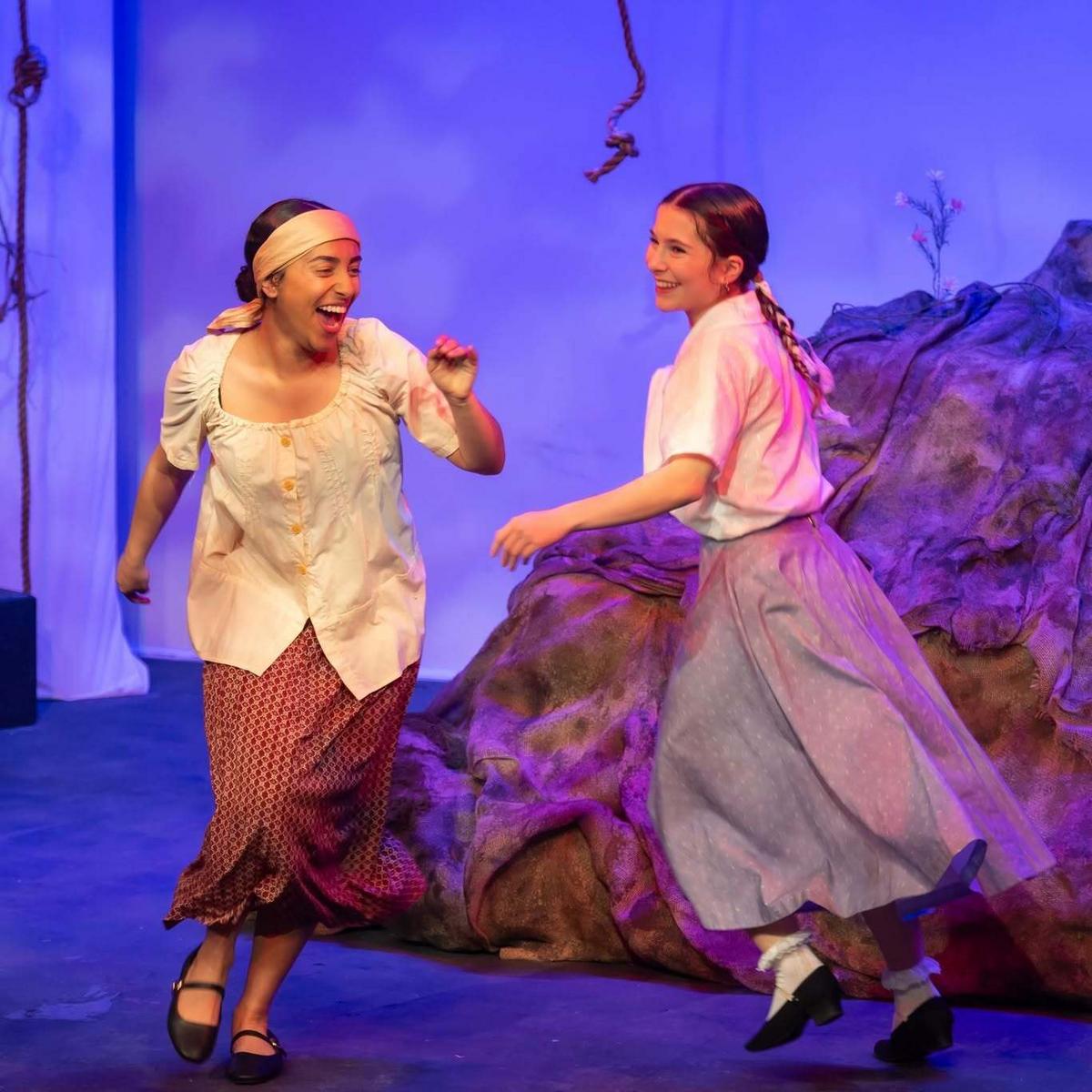
“Captain Corelli’s Mandolin” takes the audience back in history to 1941, set during the second world war on a beautiful Greek island, Kefalonia. Opening to a peaceful seaside scene, people are living a happy life, unaware that their lives are about to be changed. Dr Iannis (David Stewart-Hunter) and his daughter Pelagia’s goat (Hope Selim) are breathing in the ocean’s fresh air. The goat proceeds to nibble on his paper while Dr Iannis’ back is turned, and Selim’s wide eyed goat was very amusing as Dr Iannis continued to berate the animal, who clearly did not understand a word he was saying. I wondered if this was a prelude to the following hardships of war, where the oppression and suffering of innocent people fall on deaf ears of those responsible.

Dr Iannis’s daughter Pelagia (Isabelle Serafim) is engaged to Mandras (Maximillian Choma). Her character is feisty and headstrong; she is a character with strong opinions. The first act builds up to the arrival of Captain Corelli, and lays the historical foundation and significance of the war. It shows traditional Greek life on the island and the importance of family, with scenes showing Mandras’ relationship with Pelagia and with his mother, Drosoula (Phillipa Coleman). 

The background to the arrival of Captain Corelli and his soldiers is told through the relationships of the people living on the island and also through the character Carlo (Brodie Chong). Chong’s Brodie addresses the audience directly and through scenes onstage, and tells of his own experiences in the war as an Italian soldier, and his relationship with Francesco (David Newton). There are touching scenes showing simple joys amongst the horrors of fighting in the war, these being with Francesco keeping a pet mouse secretly in his pocket and the importance of companionship between the two soldiers, and with the pet mouse, as well.


The second act was longer than the first act, which felt like it dragged a little, and moved at a faster pace. It told the story featuring human relationship elements, with Captain Corelli and the Italian soldiers who invaded the island, and were living inside the Greek islander’s houses. Mandras had left Kefalonia to fight in the war. Captain Antonio Corelli (Dimitri Armatas) arrived with a rather easygoing manner, and appeared as a breath of positivity with his love of music and his mandolin, in a time of wartime struggles. Food was scarce and the Greek people were under occupation. At first reluctant and hostile towards Captain Correli, Pelagia begins to soften and eventually a romance begins. This of course brings complications and Stewart-Hunter embodies the caring father role fully as he delivers advice to Pelagia. He warns that although he does like Captain Corelli as a person, she is betrothed to Mandras and by her being with the “enemy” it will likely bring negative judgements and make her a social outcast in their community. One of his lines was poignant and was delivered by Stewart-Hunter perfectly. “Love is a temporary madness. It erupts like a volcano and then it subsides. And when it subsides you have to make a decision. You have to work out whether your roots have been so entwined together that it is inconceivable that you should ever part.”

Captain’s mandolin, which he named Antonio, from the play’s title, had a starring and important role, particularly towards the end which I won’t disclose. Not only was the mandolin a star, but music itself and the power of it to lighten and transport people away, if only for a short while. Well done to the sound and lighting designer Michael Schell, for creating the atmosphere of not only the sounds of the bombs and frightening aspects of wartime in red flashes and strong white headlight lighting, but also for the gentler parts of the play such as the ocean waves, and the understated spotlight on Carlo to highlight his heroism during an important scene. The music chosen throughout the play and during the many scene changes immersed the audience into the 1940’s. The song “Pelagia’s March” was touching and represented the depth of love Captain Correlli had for Pelagia. Kudos to Armatas for playing the mandolin live onstage. I liked how the song he wrote for Pelagia started so simply with a few plucks, and then we were able to hear the full orchestral song later when he became a successful musician.

Susan Carveth’s costume design brought the characters alive out of the page into wartime and showed the traditional Greek culture on the island.

The script was quite wordy and I am sure it was not an easy task to incorporate the complexities of many themes into one play. Well done to the main and supporting cast! Co-Directors Rose Frasca and Roger Gimlett pulled together both the large 24 person cast and crew cohesively to create a serious play showing the frail balance of life on a beautiful Greek island, how families and relationships are forever affected by forces out of their control and the struggles of putting love before loyalty. And music. Always the beauty of music.


Synopsis


On a sun-drenched Greek island during World War II, the lives of villagers are forever altered by the arrival of occupying forces — and the unlikely romance that blossoms between a spirited local woman and an Italian officer. Sweeping, lyrical, and achingly beautiful, this adaptation of de Bernières’ beloved novel is a moving celebration of music, memory, and the resilience of love in the face of war. Bring a handkerchief.


Disclaimer:

This play contains War Themes, including the use of explosive and shooting sound effects.

It also contains brief instances of strobe lighting.

There are occasional instances of coarse language.

It is not recommended for children.

Dates and Times

Preview: Friday, 5 September 2026
Opening Night: Saturday, 6 September 2026
Closing Night: Saturday, 10 October 2026

Fridays and Saturdays at 7.30 pm
Sundays at 4.30 pm

Running Time

TBA

Production Credits

DirectorsRose Frasca and Roger Gimblett
Costume DesignSusan Carveth
Lighting & Sound DesignMichael Schell

Cast

Dr IannisDavid Stewart-Hunter
PelagiaIsabelle Serafim
MandrasMaximillian Choma
CarloBrodie Chong
Francesco/SoldierDavid Newton
Lemoni / Young Iannis / SoldierAnnette Calleja
Captain CorelliDimitri Armatas
DrosoulaPhlllipa Coleman
Velisarios / SoldierGabriel Jab’bar
Goat / Soldier/ IslanderHope Selim
Gunter / Soldier / IslanderMatthew Cavagnino
Priest / Soldier / IslanderAlexander Chu
Soldier / IslanderAlan Barrera

This article is more than 25 years old
I didn't want to take advantage of a girl of 18, says Italian captain who inspired hit novel and new movie

The True Historical Events
  • The Italian Occupation: The Greek island of Cephalonia (Kefalonia) was indeed occupied by Italian forces during World War II, and many of the Italian soldiers were initially welcomed or viewed as relatively benign by the local population.
  • The Massacre of the Acqui Division: The novel and its 2001 film adaptation accurately depict the horrific September 1943 massacre where thousands of Italian soldiers were executed by their former German allies after Italy surrendered to the Allies.
  • The 1953 Earthquake: The catastrophic earthquake that reshapes the island's later chapters and destroys its buildings was a real historical event that devastated Cephalonia.
The Fictional Elements
  • Captain Antonio Corelli: The title character is fictional. While author Louis de Bernières drew loose inspiration from the wartime accounts of a real Italian artillery captain named Amos Pampaloni—who survived execution on the island—de Bernières denied that Corelli was directly based on him. Pampaloni also noted that his own wartime experience differed greatly from the book's romance and depiction of events.
  • Pelagia and the Romance: The central love story between Captain Corelli and the local doctor's daughter, Pelagia, is entirely invented for the narrative.