Jozef Imrich, name worthy of Kafka, has his finger on the pulse of any irony of interest and shares his findings to keep you in-the-know with the savviest trend setters and infomaniacs.
''I want to stay as close to the edge as I can without going over. Out on the edge you see all kinds of things you can't see from the center.''
-Kurt Vonnegut
Meet Rooster Girl, the rooster-crowing magpie who has won the hearts of rescue volunteers. Magpiesare known and loved for their flute-like sounds, but not Rooster Girl — the rescued magpie prefers to crow like a rooster, hence the name.
Four months after losing the leadership spill he instigated, Peter Dutton has broken his silence in an extraordinary spray at Malcolm Turnbull. Political Revenge Served Cold?
Some of y’all disappoint me. If you watched the video, as I strongly suspect some commenters didn’t, it’s about loneliness, not really about sex at all.
Should poetry be political? For the longest time, the answer was no. Then came 9/11, and a change in the artistic psyche
Although he played up his eccentricities in public, Edward Gorey was a shy, private man who took perverse pride in the dullness of his own existence Gorey
Can the moral saint, if perfect, ‘waste’ time watching films and television? How about spending any money on fine food or travel? Or expending energy on sport rather than seriously important causes? Or going birdwatching or hiking? No time either for theatre or the pleasures of curling up with a good book. The problem with extreme altruism, as Oscar Wilde is reported to have said about socialism, is that it takes up too many evenings. –Aeon
Pleasure and expertise. Those who play tennis well or cook well experience a kind of pleasure unavailable to others. Is the same true for those who read well? Well Who Knew?
The shackles of moral perfection. Both utilitarianism and rationalism, embraced fully, create servants. The nonmoral parts of life make us who we are Who Are We
This quote is from Swearingen. "Pain or damage don't end the world. Or despair or f****** beatings. The world ends when you're dead. Until then, you got more punishment in store. Stand it like a man... and give some back." First anniversary of blogger Wu Gan’s conviction | RSF
Not only dissidents and activists, but high-level officials, Marxists, foreigners and even a movie star have been whisked away to unknown destinations.
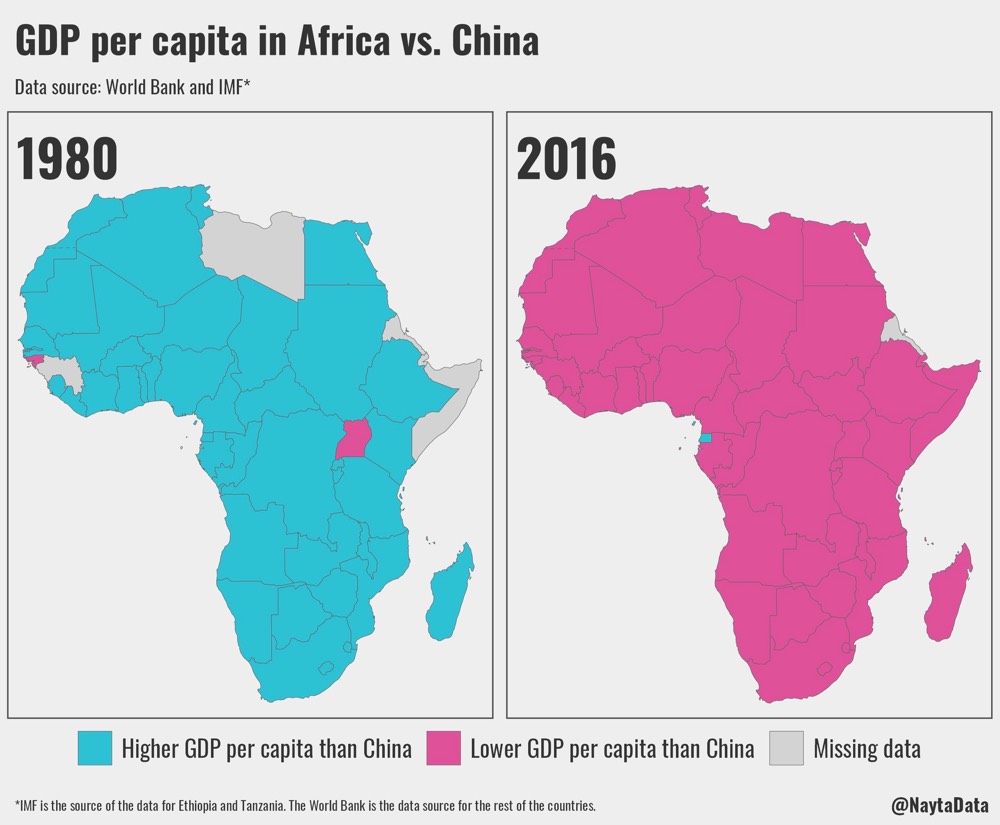
Using data from the IMF and World Bank, this map by Näytä Data shows how quickly the relative fortunes of China and African countries changed over the last few decades. For reference, in 1980, Africa had an estimated population of 480 million and China’s population was 994 million, while in 2016, Africa had 1.23 billion people and China had 1.4 billion people.
LIFE UNDER LATE SOCIALISM: Women want to escape Venezuela so badly they sell hair, breast milk, sex. “Without passports or work permits, the Venezuelans — many with university degrees or decent jobs in what was once the wealthiest nation in Latin America — are now resorting to whatever it takes to survive.”
It’s like the old joke: What did socialists use before candles? Electricity
Recently Casey Newton decided her favorite YouTube genre is “teenagers getting pulled on stage to perform with their idols and melting everyone’s faces off,” and so here are some videos in that vein that you may enjoy
— Casey Newton (@CaseyNewton) December 16, 2018 So here is a Brissie boy who convinces Bruce Springsteen to let him duet on "Growin' Up" and you see the kid literally grow up in front of you but also Bruce briefly becomes a teen again and your heart explodes https://t.co/dCimviYOut
Here is a 14-year-old boy who loves the musical "Waitress" and gets to perform "She Used to Be Mine" on stage and it's so powerful that the cast behind him is visibly unsettled https://t.co/nvrwa2aEyd
Here is a 17-year-old girl who loves "Wicked" and gets to perform "For Good" with Kristin Chenoweth and manages to achieve harmonies so pure that Chenoweth looks as if she thinks she's been prankedhttps://t.co/gB8DK23889
In 1984, a young programmer begins to question reality as he adapts a sprawling fantasy novel into a video game and soon faces a mind-mangling challenge. Welcome back.
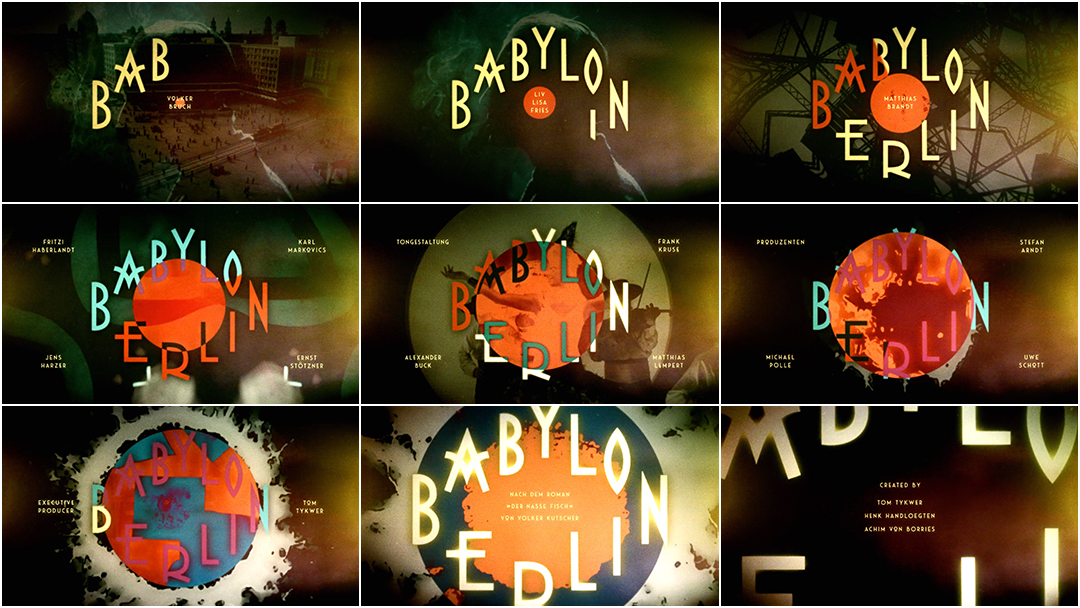
. Their #1 is Babylon Berlin, which would have been my pick as well.
It taps into growing international interest for depictions of German history and the rise of Nazism, deftly exploring the anxieties swirling through many cultures today.
According to most studies, people’s number one fear is public speaking. Number two is death. Death is number two! Does that sound right? This means to the average person, if you go to a funeral, you’re better off in the casket than doing the eulogy.
Closing tax loopholes has long been a central priority for both center-left and progressive tax policy proposals. This approach provides an appealing messaging strategy by focusing on tax cheaters and by prioritizing incremental change. It is also necessarily inadequate. While closing loopholes is by no means detrimental, designing a tax platform around tax loopholes is insufficient to achieve progressive policy priorities: It’s inherently reactive and small in scale. A preoccupation with legislative fixes to loopholes also creates the negative inference that our tax administrators are not positioned to close loopholes on their own, shifting responsibility for loophole closing away from the Treasury Department while consuming scarce room on the congressional tax agenda.
Repealing the so-called Tax Cuts and Jobs Act (TCJA) of 2017 is also insufficient as a progressive tax platform. While there are many elements of TCJA that should be repealed, the pre-TCJA baseline was no promised land; inequality was already rampant prior to TCJA, our infrastructure was already crumbling, and the federal government was failing to provide basic services to the American people. The deep pockets of concentrated wealth left outside of our tax base prior to TCJA also produced political inequality. Indeed, the passage of TCJA is a natural consequence of these pre-TCJA trends: wealth concentration enabled by a broken tax code allowed huge businesses and their owners to further tilt tax policy in their favor, compounding their wealth and political power even further. Meanwhile, middle class workers continued to see themselves shut out of both the political process and the purportedly growing economy.
An alternative approach to loophole closing or TCJA repeal is to view tax policy as central to restoring our democracy. To the extent rising inequality and the collapse of the middle class is a threat to our Constitution and the values it enshrines, tax policy offers a direct answer to this crisis. More than just closing tax loopholes or repealing fly-by-night tax giveaways to the rich, tax policy can be central to the functioning of our democracy by rebuilding the middle class and reviving the full potential of our public institutions.
This report proposes a suite of tax policies to put forth an affirmative vision of tax policy. These proposals are rooted in four principles:
Ms Dell and her Harvard colleagues Isaiah Andrews, Nathaniel Hendren and Stefanie Stantcheva; Parag Pathak and Heidi Williams of the Massachusetts Institute of Technology…Emi Nakamura of the University of California, Berkeley and Amir Sufi of the University of Chicago Booth School of Business…
Mr Pathak and his co-authors have compared pupils who only just made it into elite public schools with others who only just missed out, rather as Ms Dell compared villages on either side of the Pentagon’s bombing thresholds. The study showed that the top schools achieve top-tier results by the simple contrivance of admitting the best students, not necessarily by providing the best education. Ms Dell and her co-author showed that bombing stiffened villages’ resistance rather than breaking their resolve.
Ms Williams has exploited a number of institutional kinks in the American patent system to study medical innovation. Some patent examiners, for example, are known to be harder to impress than others. That allowed her to compare genes that were patented by lenient examiners with largely similar genes denied patents by their stricter colleagues. She and her co-author found that patents did not, as some claimed, inhibit follow-on research by other firms. This suggested that patent-holders were happy to let others use their intellectual property (for a fee).
How much of the internet is fake? Studies generally suggest that, year after year, less than 60 percent of web traffic is human; some years, according to some researchers, a healthy majority of it is bot. For a period of time in 2013, the Timesreported this year, a full half of YouTube traffic was “bots masquerading as people,” a portion so high that employees feared an inflection point after which YouTube’s systems for detecting fraudulent traffic would begin to regard bot traffic as real and human traffic as fake. – New York Magazine