Wednesday, March 30, 2022

I Nearly Died From COVID. Now I’m Letting Go Of The Fear

 CHRISTIAN TOTO: Meet Jeffy, the YouTube Sensation Who Breaks All the Woke Rules.


Lat: I Nearly Died From COVID. Now I’m Letting Go Of The Fear.


ZDNet: “The COVID-19 pandemic drove many into “hermit mode” as our employers required us to work from home for months. Working from home seems easy until you have to do it while dealing with the ordinary distractions of home life! Luckily, there are many strategies for how to improve your focus in this unique work situation. 


Net Zero Tracker and Green Finance Measures Database

  • Net Zero Tracker – “We analyse all countries and territories, every region in the 25 largest emitting countries and all cities with 500,000+ inhabitants…
  • The Green Finance Measures Databaseincludes policy and regulatory measures issued by public authorities, includes  governments, central banks, financial regulators, and public financial institutions. For more information on the database please see the background technical note…”


These people who go around wanting people they don’t like dead have probably never been anywhere near some of the places I’ve been very late at night that even I found scary. And bear in mind, some years ago, when a guy started walking toward me while opening a switchblade,  I positioned my walking stick — then a fashion statement, not (as it is now) a utility — in a peculiar way and said to him in my best Clint Eastwood voice, “Go ahead, make my day.” He figured out that I wasn’t going to hit him in the head with my stick. I was going to deprive him of one of his eyeballs. He folded up his knife and walked away.  I actually know how to use my walking stick  —  I have several — as a weapon. I wonder what “tough guy” Professor  Zack would have done.

Internet Archive Blogs: “As the war intensifies in Ukraine, volunteers from around the world are working to archive digital content at risk of destruction or manipulation. The Internet Archive is supporting several preservation efforts including the Saving Ukrainian Cultural Heritage Online (SUCHO) initiative launched in early March. “When we think about the internet, we think the data is always going to be there. 
But all this data exists on physical servers and they can get destroyed just like buildings and monuments,” said Quinn Dombrowski, academic technology specialist at Stanford University and co-founder of SUCHO. “A tremendous amount of effort and energy has gone into the development of these websites and digitized collections. The people of Ukraine put them together for a reason. They wanted to share their history, culture, language and literature with the world.”…


Magpies stereotype: Gough, Marg, Bee Gee(s), Lyllie, Lucifer …

 Putin on art, and what it is like for a Canadian woman to have dinner with him.  And another piece with “He considered the fact that primarily women were responsible for Russia policy in the Obama administration to be an intentional attempt to humiliate him.”  Link here


The Anti-Putin Songs That Have Gone Viral In Ukraine

A track titled “Bayraktar,” of indeterminate origin, has been receiving hundreds of thousands of plays online, and is in rotation on Ukrainian radio. Over a simple beat, a gravelly voice insults Russian President Vladmir Putin’s forces. - The Atlantic

Tanner Greer Op-Ed on Ukraine (NYT).  He is the Scholar’s Stage blogger


Magpies stereotype (NYT).  Among other things


Who writes on the internet?


 Natural immunity right now is looking somewhat weak.  And total ivermectin fail (WSJ).


The decline of Cesar Franck (NYT).  And the sounds of Dune (NYT).


Where can you visit in Asia right now?


 “This paper examines the factors that have been driving the fall in inequality and poverty over two recent decades in the Russian Federation.

Is Russia shifting toward a long-term, static war?


A Ukraine-related hypothesis about the unpaid UCLA job.


How to improve your focus while working from home ZDNet: “The COVID-19 pandemic drove many into “hermit mode” as our employers required us to work from home for months. Working from home seems easy until you have to do it while dealing with the ordinary distractions of home life! Luckily, there are many strategies for how to improve your focus in this unique work situation. Working from home presents challenges because it blurs work and leisure. If you have all day at home to complete a task, it’s human to get distracted by the internet or your phone.  Evidence-based strategies for improving focus — such as eliminating distractions, getting exercise, and practicing time management — can help you stay productive and empower you as a remote professional. Read on to learn some of the best strategies for improving focus as a home-based remote worker…”Magpies stereotype


ZDNet: “How secure is your home or office network? I’ll assume you already have an antimalware/antivirus solution in place, such as Windows Security, which is built into Windows 10 and Windows 11 (and which I believe works particularly well). 

But antivirus isn’t enough. Escalating international tensions — coupled with an ever-increasing number of professionals working remotely— are driving the need for small-scale solutions and best practices to secure home- and small-business networks and mobile devices from malware, malvertising, and other threats.  What follows is a brief guide — with product recommendations and best practices — for those of you looking to navigate the rapidly evolving cybersecurity landscape. 

If you have limited network security experience but want to provide additional security for yourself, your small business, or your friends and family, this guide is for you. (If you’re looking for more extensive resources on networking security, CISA’s guide is a good place to start.)  Below are the products I am currently using to protect my family’s home networks and mobile devices. (I expect to add more product and service recommendations when I have sufficient time to investigate them.)…


Magpies stereotype: Gough, Marg, Beegee, Lyllie, Lucifer …


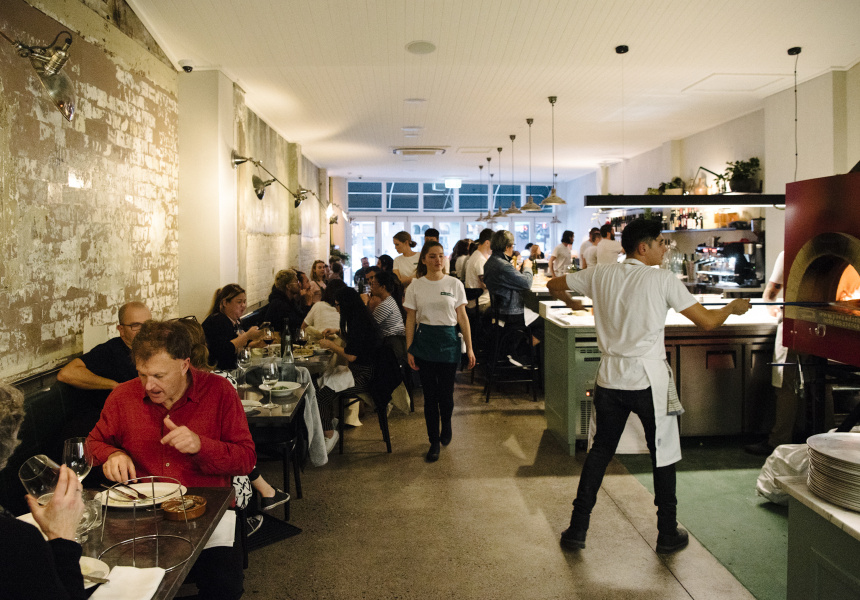
Sauerkraut: Servants - Pacem in Terris & Pacho - Bella Brutta


Antipodean Australian with parents who have Kenyan coffee connection … one of the best doughs on earth is served at not so brutal and more beautiful pizza 🍕 place on King 👑 Street 

The base is thin, and the edge is puffy and blistered, but it isn't as bready as a Neapolitan-style slice. It's just crisp enough to resist sagging. It’s savoury, slightly sour and elastic thanks to its long fermentation, and it’s made with a mix of Australian wholegrain and ultra-refined Italian flours. 

The toppings are creative and anything goes. 

Bella Brutta by Lukaš  


I do not consider film to be a tool for generating issues or for moral condemnation. I do not want to present a specific opinion or an answer to the audience; I want to prompt them to think. Not to think critically solely about the others – the “bad guys” – but most importantly, to think about ourselves. It is way too easy to leave the cinema patting ourselves on the back, thinking that we belong among the good guys, and the bad guys are behind the line that the film drew, dividing society into good and bad people. I agree that evil should not be relativised, but it certainly cannot be trivialised either. That’s why I like to pick characters that, even if they do something reprehensible, are similar to us in some ways. We understand why they succumbed to fear, frustration, insatiability or rational arguments that maintain it could not be done any other way. I want the audience to understand how easy it is to end up on the wrong side of history. 

Pacem in Terris 


Ivan Ostrochovský • Director of Servants

“I want the audience to understand how easy it is to end up on the wrong side of history”


The year is 1980, twelve years since the 'Prague Spring' and nine years before the Iron Curtain that divided Europe was crushed down by history. Michal and Juraj are two students of the Faculty of Theology in totalitarian Czechoslovakia. Their teachers, out of fear of cancelling the seminary, educate theologians in a form that suits the Communist Party. Juraj and Michal are thus cast straight into a high-stakes moral battle between church and state — in which sides must be chosen, with severe consequences for body and soul alike. With both being strong believers, adherence to the communists is tough, especially when Catholicism teaches them that they should only listen to the word of God. 

Servants offers both a fascinating insight into the conflicts of the era while managing to bring out the universal struggle between doing what’s right and what’s comfortable.

The movie is exactly 77 minutes long as in charter 77 or 007


Servants  is an arresting title for this film. The setting is a seminary in Bratislava, Slovakia, 1980. The question immediately arises: are the seminarians servants of the church, servants of the state? Conflicts?

One of the co-writers of the screenplay, British writer, Rebecca Lenkiewicz, also wrote the screenplay for such striking films as Ida, Disobedience, Collett. Audiences of Central European films will immediately make a connection to Ida, Catholic themes in difficult times, black-and-white photography, brevity of the narrative, (Servants connecting with Ida and the Polish cinema, means connections with Polish films about clergy, clerical abuse in Kler, a young man masquerading as a priest in a village in Corpus Christi.)

The black-and-white photography is quite striking, use of light and shadow, unexpected angles, like an aerial shot of seminarians kicking a football, some reminiscences of Expressionist cinema. The editing and pace are quite different. Often there is a tableau-like presentation of characters and situations, some time before the characters actually speak, scenes reminiscent of silent cinema. With the editing, sometimes swift, audiences are asked to supply from their imagination and response some details as to the characters and the events. The musical score is quite wide ranging, suggestive, piano tones, orchestral during the final credits.

All this has a rather different cumulative effect on the audience.

The film opens with sinister events, depositing a dead body under an overpass. The sequence recurs later in the film, the murder of dissident priest from the seminary. However, the film is mainly about two young men, a blessing from their parish priest, a train journey to Bratislava, a rather formal entry into the seminary, their beginning their training.

The film has a lot of detail about the seminary and the staff, an unexpectedly large number of seminarians, the gatherings, instructions by the seminary Dean, meetings with the spiritual director, cassocks and formality, yet moments of sport, football, trampoline, and a table tennis match involving up to ten seminarians moving in a circle and successive men batting the ball. And surreptitious smoking on the seminary roof.

However, some of the seminarians listen to Radio Free Europe, part of the underground church, in contact with the Vatican. On the other hand, there is a Catholic group, named Pacem in Terris after the encyclical by Pope John XXIII, more of a compliant group led by the Dean.

Ultimately, the two young men are caught up in the political-religious conflicts, one making contact with dissidents, a scene with a rebel group of laity meeting and reading quite apocalyptic texts, some women present (the only women in the film apart from the nuns who work in the seminary). Then the seminarians are urged to participate in a hunger strike against the authorities who have collected all the typewriters from the seminary, trying to track down who composed dissident notices.

There is a sobering sequence when one of the young men is arrested, interrogated by a panel, standing naked before them, threatened with the draft, insinuations about his mother wanting him to be a priest. Both the young men are forced to take stances, one tragic, the other leaving the film with an open ending. (Audiences know that within the decade, the Soviet Empire will have collapsed with changes in Slovakia.)

A very interesting and challenging film, an addition to studies about Catholic priests.

1. The title? Servants of the church? Servants of the state?

2. The black-and-white photography, light and shadows, stylised compositions? Echoes of expressionist cinema?

3. The photography, like a silent film, the pauses before characters speak, aspects of tableau? Angles? Editing and pace? Audience supplying links? The effect of this kind of cinema experience?

4. The brevity of the film, the narrative, characters, situations, themes?

5. The prologue, the police, the overpass, the body? Later this sequence in detail? The identity of the body, of the police?

6. 1980, Czechoslovakia, the setting in Bratislava, the role of the government, Communist, anti-church, spies, informants, anti-church stances? Arrangements with the church in a seminary? Threats, interrogations, the police, the agents and some thuggery, torture and deaths?

7. A Slovak story, Bratislava, the seminary, the range of students and staff, the spiritual director, the Dean? The classes? The activities, the accommodation, the refectory, confession sequence? The numbers, morale? The playing of sports, the circle for table tennis? Football? Trampoline? The isolation of the students, the nuns present? No female presence? (And the glimpse of the dancing and the seminarians in pairs?)

8. The group, Pacem in Terris, its name, echoes of John XXIII? Its aim, compliant with the government? The leadership of the Dean? The members present, the silent raising of hands and approval? The reports? The group being denounced?

9. Radio Free Europe, those listening, giving information, the underground church, the contact with the Vatican?

10. The two young men, Juraj and Michael, the parish priest blessing them, going on their travels in the train, their arrival, the formality of the seminary, the cassocks, the room with the bunks? Meeting the spiritual director, the gift of the alcohol from the parish priest? The tone? Settling in?

11. The range of ordinary activities? Sport, gatherings, classes? On the roof smoking?

12. The two young men, the response to the situation, entering into seminary life? The motivation?

13. The dissident priest, the activities, his murder, depositing the body under the overpass, his funeral?

14. The character of the Dean, his age and experience, the discussions with the police officer? His determination to keep the seminary open? Compliance?

15. The police officer, living alone, his apartment, concerned about his health, looking in the mirror, his image? Government loyalty? Threats to the seminary, discussions with the Dean?

16. The agents, the behaviour, stand over tactics, the violence? The search of the seminary, collecting all the typewriters?

17. Activity in the seminary, the rebels, the notices on the notice board, typing, writing, notes under doors? The urging of the hunger strike by Michael? The seminarians sitting in the dining room, not eating? The spiritual director and his advice for more compliance?

18. The meeting outside the seminary, the group, men and women, the apocalyptic reading?

19. Juraj, the connections, his ideas, stances, the arrest, the interrogation, naked, the threats, draft for the military, the return to the seminary, the discussions with Michael, Michael revealing his role in the hunger strike? Juraj’s death, Michael in the bunk, the blood?

20. Michael, the interrogation, the spiritual director, keeping silence, his continuing his vocation?

21. The role of the church in Slovakia in the 1980s, the men with locations, their motivation, perseverance in difficult situations?


This bittersweet cult comedy about oppression of poor Slovakian people by Austro-Hungarian aristocracy is inspired by the stories about the legendary outlaw Jánošík and traditional folk humour. Pacho from the mountain village of Hybe is in almost every way the exact opposite of his predecessor however: he is small and weak and not known for big words or big deeds. Detesting injustice and feudal oppression, as well as arrogance of the local nobility, he begins to stand up for his subjects. Being no ordinary outlaw, he copes with each troublesome situation with the help of his cleverness and wit. Armed only with a severed mouth, healthy impudence, clever brain, and a deadly French frenzy brandy, Pacho eventually wins the battle for the position of bandit leader.

Slovakia, 2020, 77 minutes, black-and-white. Samuel Skyva, , Samuel Polakovic, Vlad Ivanov. Directed by Ivan Ostrochovsky.

SHORT FILM: Overboard / Přes palubu | 2019 SK / CZ | Animation | 12 min


PACHO, THIEF OF HYBE / Pacho, hybský zbojník 


The scene where cabbage is made with bare feel is a classic Slovakian autumn story of making Sauerkraut 

The FBI Guide to Internet Slang

Nothing is more securely lodged than the ignorance of the experts.

— Friedrich Hayek, who died  in 1992

  • Economic growth is forecast to hit 3.5 per cent in 2022-23, an upwards revision from a year ago. It will then cool to 2.5 per cent.
  • Australia’s 4 per cent unemployment rate is already the lowest it has been since 1974 and it’s forecast to fall further to 3.75 per cent. This well below the 5.5 per cent forecast last year and the worst-case predictions of 8 per cent.
  • Wages growth is expected to run above 3 per cent annually for the next four years, though almost all of that growth will be cancelled by rising prices.

Winners and losers: Who gets what in the budgetby James Massola

Scott Morrison labelled an ‘autocrat and bully who has no moral compass’ by Liberal senator Concetta Fierravanti-Wells 


WELL, THAT’S COMFORTING:  An AI Experiment Generated 40,000 Hypothetical Bioweapons in Just 6 Hours.


Is Sunak a fit and proper person to be in charge of the nation’s finances?

Sky broadcast a damning interview with Rishi Sunk yesterday in the links he has, via his wife and her holdings in Infosys, to Russia, in
Read the full article…


Russian soldier runs over his commanding officer with a tank as revenge for the botched up operation that led to the death of his comrades.

Vladimir Putin used to be popular in Slovakia. Then he invaded Ukraine


Ukrainian intelligence publishes list of 620 Russian FSB agents operating in Europe


FRAGGING? Russian soldier reportedly runs over commander with tank in protest.

A Russian soldier reportedly drove over his colonel with a tank — while two other service members were caught venting about strongman Vladimir Putin’s “bulls—” invasion of Ukraine amid reports of heavy losses.

The Russian soldier who was behind the wheel of the tank “blamed the commander of the group, Col. Yury Medvedev, for the deaths of his friends,” Ukrainian journalist Roman Tsimbalyuk said on Facebook.

“Having waited for the right moment, during battle, he ran over the commander with a tank as he stood next to him, injuring both his legs.

Take all battlefield reports with a grain of salt, of course, but this is far from the first of these stories to show up in my feed.


An almost $9 billion package to bolster Australia's cybersecurity and intelligence capabilities will be unveiled in tonight's federal budget, as concerns grow over threats from potential adversaries across the globe.


The FBI Guide to Internet Slang

In response to a Freedom of Information Act request in 2014, the FBI released their internal 83-page guide to internet slang(most of which are initialisms and acronyms). The quality of the scanned document is very poor, but it’s (just) readable. A few of my favorite phrases gleaned from skipping around the report:

BMUS - beam me up, Scotty
EMFBI - excuse me for butting in
JC - Jesus Christ/just curious/just chilling
MOS - mom over shoulder
PS - photoshop/play station/post script
SMG - sub-machine gun
TOTES FRESH - totally precious
YOYO - you’re on your own 
WYLABOCTGWTR - would you like a bowl of cream to go with that remark?

For their annual publication that they send out to their company mailing list, Pentagram recently made a far more legible and well-designed version of the FBI’s guide featuring some of their own favorites.


The booklet challenges readers to identify 14 abbreviations of varying difficulty and absurdity, with answers at the back. The acronyms are set in two custom typefaces designed by Pentagram partner Matt Willey, based on the markings that appear on the agency’s uniforms, particularly in popular media. The two fonts are fittingly named Edgar Sans and Clyde Slab in honor of longtime FBI Director J. Edgar Hoover and his deputy and alleged lover Clyde Tolson.


After 25 years Brewster Kahle and the Internet Archive are still working to democratize knowledge

NiemanLab: “…In 1996, Kahle founded the Internet Archive, which stands alongside Wikipedia as one of the great not-for-profit knowledge-enhancing creations of modern digital technology. You may know it best for the Wayback Machine, its now quarter-century-old tool for deriving some sort of permanent record from the inherently transient medium of the web. 

(It’s collected 668 billion web pages so far.) But its ambitions extend far beyond that, creating a free-to-all library of 38 million books and documents, 14 million audio recordings, 7 million videos, and more. (Malamud’s book is, of course, among them.) That work has not been without controversy, but it’s an enormous public service — not least to journalists, who rely on it for reporting every day. 

(Not to mention the Wayback Machine is often the only place to find the first two decades of web-based journalism, most of which has been wiped away from its original URLs.) A little while back, the Internet Archive celebrated its 25th birthday, and I used that as an excuse to chat with Kahle about how his vision for it had changed along with the internet it tries to preserve in amber — and about why there is still so much human knowledge locked away on microfilm. Here are some bits of our conversation, lightly edited to make me sound more coherent on Zoom calls…”