The coffee shop where 162 regulars have their own mug (1977). “The cups may not be such a small thing after all. They are a town register and a history and a confirmation that life goes on in a small American town.”
This just in from reader Theophrastvs:
"here's a portentous calendricular note/post for today (only) Bradbury ~May 1950 wrote a short story about robotic assistants doing the daily choirs for an apparently extinct humanity and it's dated to occur August 4, 2026:"
A 50-year-old short story written for today
As Elon Musk, Peter Thiel and their peers have grown richer and more influential, Gil Durán argues they have all but abandoned democracy – and found the perfect government to enable them

FROM OUR PARTNERS
Miles Franklin Award 2026 winner
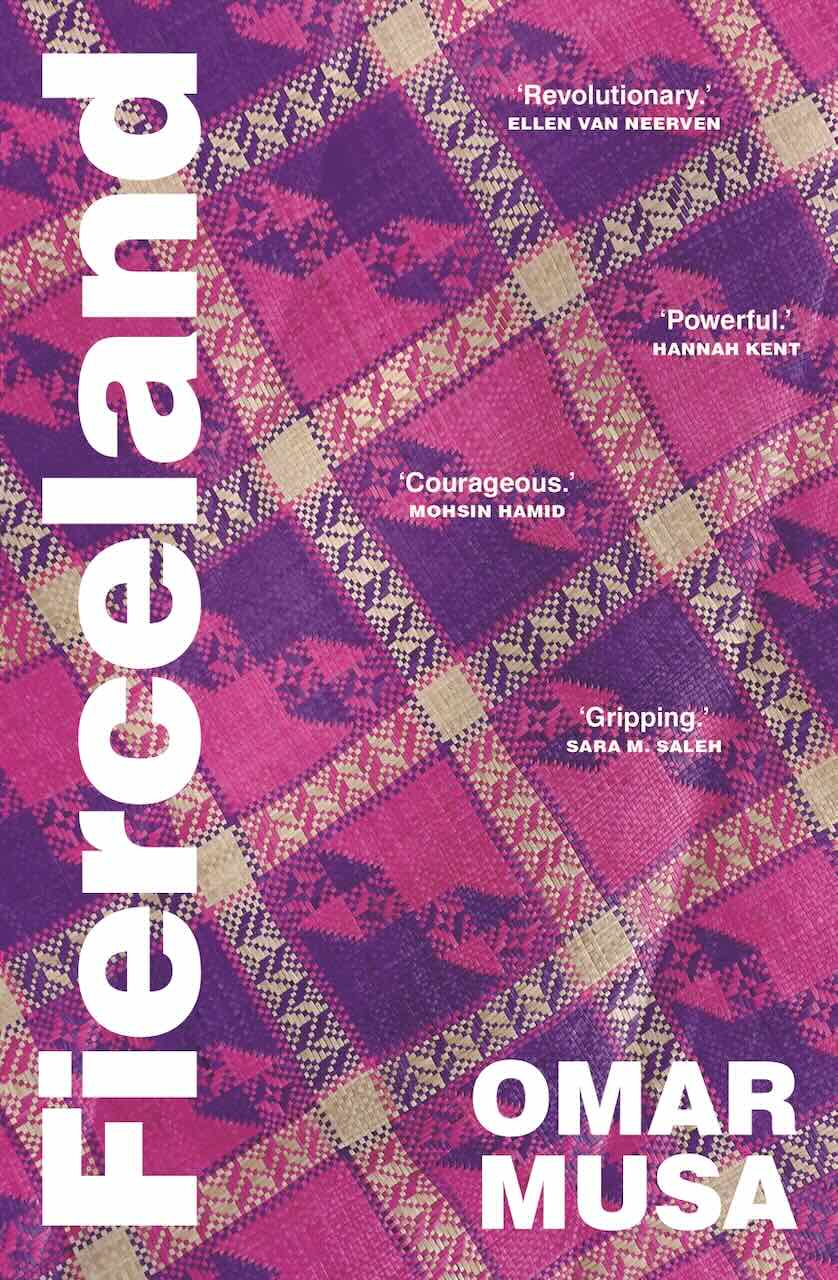
Champagne corks will be popping in the Canberra region tonight because “our” Omar Musa has been announced the winner of this year’s Miles Franklin award with his second novel, Fierceland. At the recent ACT Literary Awards which I attended, there was quiet hope – and not a little optimism – that this might be our region’s year, so, woo-hoo. Fierceland had already won this year’s Victorian Premier’s Literary Award for Fiction.
The Queanbeyan City News‘s Len Power describes Musa as “local author, visual artist, rapper and poet”. The ABC provides something of Musa’s background, which is well-known to many Canberrans, but is not I suspect known widely elsewhere. He grew up in Queanbeyan, and his mother, Helen Musa – now an arts journalist, but with a background in theatre – is a constant present across Arts events in the ACT. She met Musa’s Malaysian father – a poet and actor – when she went to Malaysia to direct the first Malay production of Hamlet.
According to Power, the judges described Fierceland as “a tour de force set against the destruction of Borneo’s rainforests”. They praised both “Musa’s prose” and the book’s “exploration of family, identity and environmental loss through the story of siblings confronting their father’s legacy”. Power also wrote that:
Perpetual, trustee of the award, said Fierceland reflected the cultural depth and complexity of contemporary Australia. Perpetual Wealth managing partner Caitriona Fay said the win showed Australian literature continued to embrace new voices and broaden its understanding of the Australian experience.
This is partly, I presume, to underpin its meeting the Miles Franklin Award stipulation that the award is for “a novel which is of the highest literary merit and presents Australian life in any of its phases”. The above-mentioned ABC report describes the novel in more detail, and states that “with narrative strands unfolding in both Malaysia and Australia, Fierceland situates Australia firmly in the Asia-Pacific region”.
Musa is passionate but also clear-eyed about the systemic nature of the ills we are confronting. With first-hand experience of racism, while growing up in a city sometimes described as “struggle town”, and with family in southeast Asia where colonialism and capitalism are still playing out with destructive results, Musa is well positioned tell some truths – as indeed he has been doing for 20 years, initially through performance poetry and hip hop. He may be a new voice to many, but he is no johnny-come-lately.
When I shared the shortlist, I wrote that I will stick my head out now and say that if I had to prioritise some to read, they would be Musa’s Fierceland, Rowe’s Little World, and Wilson’s You must remember this. Musa is a local and his passion and way with words have engaged me on the several times I’ve heard him speak; I’ve read and liked Rowe before; and kimbofo’s and Brona’s reviews of Wilson tell me his is a book for me. Needless to say, I didn’t get to read any, not because I didn’t want to, but because none were on the review pile, which tends to get more priority than perhaps it should. I’m working on this.
For posterity’s sake, here’s the longlist, with the shortlisted books in bold
- Randa Abdel-Fattah, Discipline (UQP, Bill’s and Rach’s reviews)
- Dominic Amerena, I want everything(Simon & Schuster)
- Lyn Dickens, Salt upon the water(Wakefield Press)
- Toni Jordan, Tenderfoot (Hachette Australia)
- Steve MinOn, First name second name(UQP)
- Konrad Muller, My heart at evening(Evercreech Editions)
- Omar Musa, Fierceland (Penguin Random House Australia)
- Josephine Rowe, Little world (Black Inc)
- Madeleine Watts, Elegy, Southwest (Simon & Schuster)
- Sean Wilson, You must remember this(Affirm Press, kimbofo’s and Brona’sreviews)
The winner’s prize is $60,000.
This year’s judging panel comprised Richard Neville (Mitchell Librarian of the State Library of NSW and Chair), Associate Professor Jumana Bayeh (literary scholar), Dr Mridula Nath Chakraborty (literary scholar and translator), Professor Tony Hughes-d’Aeth (literary scholar and author) and Associate Professor Maggie Nolan (literary scholar and director of AustLit).
You can read the judges report at the Miles Franklin Award webpage.


‘The Odyssey’ and the Longing for Home
Christianity Today: Why Christopher Nolan’s ‘Odyssey’ Haunts Us Right Now, by Russell Moore:
One of the biggest cultural events this summer isn’t a superhero sequel or a streaming series. It’s a 3,000-year-old Greek poem. That The Odyssey would be a box office powerhouse is not all that unexpected—after all, filmmaker Christopher Nolan gave us The Dark Knight Rises and Oppenheimer.
But this is more than that. Bookstores are moving copies of the epic at just the time most people would have expected the typical American to answer “Who is Homer?” with “Bart Simpson’s dad.” People who had never before thought about Ithaca, Penelope, or the Cyclopes are arguing over which translation to buy.
I should have known something was afoot when I opened a movie theater app to buy tickets. The reserved seats weren’t marked by little red squares anymore; they appeared as tiny bronze helmets until the whole virtual auditorium looked like a Trojan battlefield. Our obsession with the story seems to be more than just opening-week hype. Something ancient suddenly looks urgent again. And some people—including some Christians—are asking why.
Some, Christian and otherwise, have argued that Nolan has made a film that is “kinda Christian,” as one writer put it, softening Homer’s ancient heroism with mercy, guilt, and forgiveness. There’s truth to that observation. But I think the film’s deepest significance lies elsewhere—not in the answers it gives but in the longing it exposes.
The Odyssey—the original poetry and the modern film—is not really about adventure, although it has an abundance of it. It’s also not primarily about virtues in some abstract way, whether the kill-your-enemies or love-your-enemies type. The Odyssey is about home. Odysseus wants to return to his place but comes to see that his obstacle is not merely geographical. He must become a different kind of person, the kind of man who can receive home as gift rather than as trophy. And at almost every step of the path, those who imaginatively walk with him can feel the ache.
Some of us are pulled toward nostalgia, looking to something better in the past. And some of us are pulled toward discontentment, looking to something better in the future. Regardless of where we turn, we all recognize something is missing. And all kinds of people—politicians, marketers, tech lords—are there to say, “You want to get home, and I can get you there.”
But it never works.
That’s because homesickness points in contradictory directions all at once. In “Homesick,” songwriter Noah Kahan sings of being stuck in a Vermont hometown of winter “hibernation” that is so slow “I feel my organs failing,” yet he is too disillusioned to find the will to leave. “Spend the rest of my life with what could have been,” he sings. “And I will die in the house that I grew up in. / I’m homesick.” Homer imagines a man desperate to get home. Noah Kahan imagines a man desperate to leave home. Those sound like opposite longings. They’re actually the same.
We’re either trying to get back to something (to re-live some place or situation where we once were happy) or trying to get away toward something (a new job, a new love, a new identity that will fill the void of the emptiness we feel). We become bored of what’s familiar and scared of what’s not.
For Paul at Mars Hill in Acts 17, the pagan poems demonstrated that, deep down, we already recognize that something’s missing in all our attempts to find and create meaning, whatever our rhetoric.
The ancient problem says “I can’t get home.” The modern problem says “I got home—it isn’t home.” One longs for return, and one longs for escape. These are not two problems but one. No matter which way we turn, we don’t know what home is. That’s why Homer still rings true, even in the era of IMAX and SpaceX.
And that’s what makes the Christian story stranger than the pagan ones. Odysseus spends 20 years trying to get back to Ithaca. Jesus has spent 2,000 years (so far) telling us to stop mistaking Ithaca for Eden.