Jozef Imrich, name worthy of Kafka, has his finger on the pulse of any irony of interest and shares his findings to keep you in-the-know with the savviest trend setters and infomaniacs.
''I want to stay as close to the edge as I can without going over. Out on the edge you see all kinds of things you can't see from the center.''
-Kurt Vonnegut
The fundamental question is existential: does leaking sensitive client data destroy the foundational trust required to run a professional services firm?
When KPMG’s predecessor firm signed off on its first Lendlease audit in 1959, television was black and white, pubs closed at 6pm and Robert Menzies was in the 10th year of his second stint as prime minister.
In fact, the global firm known today as KPMG would not be formed for another 28 years, barely the halfway point of an extraordinary 68-year relationship that has generated an estimated quarter of a billion dollars in lifetime fees.
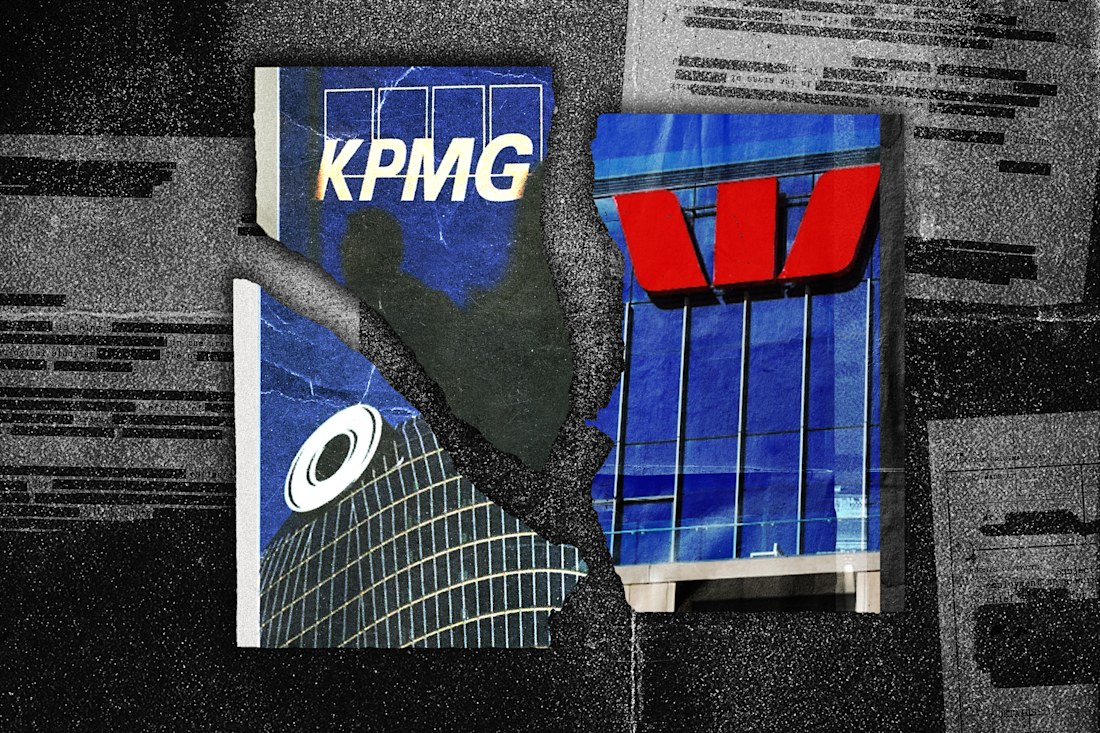
Yet, it is this historic, blue-chip union that now sits at the epicentre of a scandal threatening to dismantle the firm. In short, a whistleblower has accused the firm of weaponising confidential Lendlease board papers to win audit contracts at Westpac and Dexus.
While information is still emerging, the crisis is escalating rapidly. In many ways, it threatens to be more damaging to KPMG than the infamous tax leaks scandal, involving the misuse of confidential government data to win corporate work, was to PwC.
Unlike the PwC case, it appears so far that no client has suffered direct financial damage from the disclosures. However, the fundamental question is existential: does leaking sensitive client data destroy the foundational trust required to run a professional services firm?
By failing for more than two years to properly investigate the whistleblower claims, despite the recent PwC wreckage, KPMG has left itself exposed to a backlash from a sensitive government sector.
The allegations also concern unethical behaviour by partners in the firm’s audit division, a highly regulated service relied on by the capital markets, and which goes to the heart of the firm’s trusted brand.
KPMG’s strategy to become Australia’s leading corporate auditor appears also to be in tatters as it will struggle to win new mandates – until a truly independent investigation clears the air.
The losses are piling up, and fast. The firm has already lost its chief executive, head of audit and chief operating officer. The chairman is under pressure, and its 68-year-old relationship with Lendlease will be over from next year.
The firm also faces a parliamentary inquiry, an ASIC probe and a shadow-ban on winning any new public sector work, and the scandal has triggered the reopening of scrutiny on the big four industry-wide.
So what exactly is KPMG accused of, how serious are the alleged breaches, what has the firm done in response and why is this crisis tracking to be more damaging than the downfall of PwC?
Lendlease
“Confidential Lendlease board papers were taken and circulated internally within KPMG and used to support pursuit of major audit tenders, including Westpac and Dexus. These documents were taken from Lendlease by the lead partners on the account, Eileen Hoggett and Paul Rogers, and were physically secured in Ms Hoggett’s locker. Michael Ullmer, then chairman of Lendlease, and presiding over the Westpac audit selection process, was not informed that the tender process had been compromised by misuse of Lendlease confidential materials.” – whistleblower claim
That is what Labor senator Deborah O’Neill told the Senate, under the protection of parliamentary privilege, on March 24 this year. She was quoting from a document provided by a whistleblower, who is a former KPMG audit director. (We will cover each allegation in turn.)
When the alleged breach occurred in mid-2023, Lendlease was running a tender for a new auditor, having allowed KPMG to check its books for 65 years – well beyond modern governance guidelines that recommend rotating firms every 10 years to safeguard the independence of the role.
Lendlease had picked PwC to replace KPMG, but the decision was put on hold because of PwC’s tax leaks scandal. Instead of changing, Lendlease kept KPMG as its auditor, a contract worth $10 million a year.
The reason the board papers would have been of interest to KPMG’s auditors is that within the documents were the EY and PwC pitch documents for the Lendlease audit tender. (Deloitte had been knocked out of the process by this stage.)
Those documents would provide intelligence about their rivals’ pricing, value-add services and audit approach, material that could be used to help KPMG craft its audit pitches.
The firm has denied these allegations.
KPMG has admitted to Lendlease that audit partner Paul Rogers accessed “two documents from the Lendlease board papers”.
“KPMG advised that these documents were put on a screen in the presence of the KPMG audit team then tendering for the Westpac audit,” Lendlease chief executive Tony Lombardo said in correspondence to O’Neill’s committee.
“KPMG acknowledged that the audit partner should have advised Lendlease that it had access to the audit tender folder in Diligent and should not have viewed any of the documents in that folder,” he wrote.
“KPMG deemed the documents to be of ‘low sensitivity’ and gave KPMG ‘zero competitive advantage’.”
Lombardo described the behaviour as “not acceptable”.
Lendlease announced this week it would put its audit out to tender again next year. In addition, Rogers, will no longer work as an auditor on this year’s accounts.
Dexus
“While acting as internal auditor to Dexus, KPMG positioned itself to bid for the external audit, creating a clear independence risk ... On 6 November 2023, a meeting was held at KPMG’s Barangaroo office … during that meeting, and despite acknowledged independence sensitivities, an arrangement was proposed where [one of the people present] would leave his laptop open with Dexus internal audit documents visible while he went for lunch, allowing external audit personnel to view them.” – whistleblower claim
KPMG’s Barangaroo office “war room” was where partners and staff were working on the Dexus audit bid, which it won in late 2024, replacing PwC on an audit worth $2.5 million a year.
The internal audit data would have provided details about the strengths and weaknesses of Dexus’ internal operations, information that would have helped KPMG auditors refine their pitch.
KPMG found that head of internal audit services Jeff O’Sullivan meant the proposal as a joke, and the Dexus information was not sensitive. Despite this, the firm penalised O’Sullivan for making an “inappropriate informal remark”.
The firm’s now-former chief operating officer Hoggett has also been removed as the signing partner of this year’s Dexus accounts, and Rogers has also been removed from the Dexus audit.
Telstra
“KPMG personnel offered access to restricted documents from Telstra’s IT environment via a Telstra-issued laptop. These documents related to Telstra’s AI governance policies and internal practices during a live external audit tender. KPMG was not authorised to access or deploy those materials.” – whistleblower claim
EY has audited Telstra since 1999 and the race to replace the firm as its auditor was a hard-fought battle. It’s debatable if the internal Telstra information provided the KPMG bid team with much help, but the act of accessing the data was not authorised by the telco.
The Telstra audit tender, worth about $15 million a year, was ultimately awarded to Deloitte in mid-2024.
A separate allegation relates to KPMG personnel working on the external audit of Singtel-owned Optus being present in the Telstra audit bid room, in defiance of assurances given to Optus that this would not happen.
The whistleblower alleged that the Optus audit team members were effectively forced to be in the Telstra bid room to help the KPMG bid team. The information being sought was data analytics about Optus’ operations that would provide useful benchmarking information for the Telstra bid team.
An initial investigation into the allegation found the Telstra allegations were unsubstantiated, but the firm did concede to the client that the KPMG Optus audit team had discussions with the Telstra bid staff about sector-related issues.
On May 29, the firm disclosed that it had substantiated a third incident of wrongdoing described as “a separate incident where internal documents containing client information have also been inappropriately shared internally”.
That was KPMG’s roundabout way of saying that KPMG-derived confidential data related to Optus analytics and benchmarks had been supplied to the Telstra bid team.
The Macquarie and Westpac audits are lucrative contracts for KPMG. Bethany Rae
Macquarie
“Serious concerns regarding independence and integrity arose during the pursuit of the Macquarie audit contract.” – whistleblower claim
The Macquarie Group audit is the single most lucrative contract in the country, worth about $75 million in annual fees. The Australian part of that global auditing work is worth about $30 million.
In November, the bank announced KPMG had won the highly contested race to replace PwC as its auditor, a major victory for the firm and a blow to its rivals. It also positioned KPMG as dominant auditor in the country.
Macquarie said KPMG would take over as auditor in April 2027, after “an 18-month transition” from PwC. Auditing contracts are expected to run for about a decade.
Parliament heard that the whistleblower alleges Macquarie Group director Michelle Hinchliffe – who had a 37-year audit career at KPMG in Sydney and London – was centrally involved in the Macquarie audit tender process, and that she preferenced KPMG over its rivals for the auditing role.
Hinchliffe joined the Macquarie board in 2022 after the departures of Diane Grady and its chair of the audit committee.
Her role in the tender process was never quite clear. Rival firms wanted her to be recused completely, given her connections to senior KPMG partners.
Macquarie chairman Glenn Stevens told shareholders Hinchliffe would be involved in deciding who got the contract, but would not be involved in the scoring of those bidding.
Hinchliffe would not “be conflicted out of the process” and would take a “proper part” in the selection of an auditor. He dismissed, as “silly talk”, her KPMG links and said she was a “highly credentialled” member of the board.
Westpac
“The Westpac audit tender was structurally compromised by the concentration of former KPMG partners in key Westpac decision-making roles.” – whistleblower claim
KPMG won the audit of Westpac, worth $32 million a year, in March 2024, replacing PwC which had audited the bank for more than 50 years.
The result triggered fury within the firm’s consulting arm due to the sheer amount of work they were doing at the bank at the time. That’s because audit firms are conflicted out from providing consulting work to their audit clients.
The move was part of a strategy shift at KPMG to capitalise on PwC’s tax leaks crisis under former chief executive Andrew Yates.
It wasn’t just KPMG advisers unhappy about the audit bid. Rival firms also fumed about the many KPMG alumni at the bank, including Peter Nash, the chairman of Westpac’s audit committee, and Michael Rowland, the bank’s chief financial officer and another former KPMG partner.
The whistleblower’s allegation, put before parliament, was that Nash and Rowland shared bid information with KPMG during the tender process.
How serious are these allegations?
The misuse of internal information claims involving Lendlease, Dexus and Telstra are by far the most serious allegations raised by the whistleblower.
These allegations involve potential breaches of rules that require auditors to be independent of their client, to act with integrity and to protect client confidentiality. These obligations are enshrined in ethics guidelines, industry standards, and KPMG’s global code of conduct.
The whistleblower also claims he was victimised when he raised his allegations, but the big four partnerships are not covered by laws protecting whistleblowers.
The key question is whether KPMG had a culture of using confidential client information – regardless of whether the information was sensitive or valuable.
“Breaching client confidentiality, regardless of materiality, violates ethical rules for auditors,” said Gary Monroe, a UNSW professor specialising in audit and risk assessment.
“It’s one of the cornerstones of auditing in that [the] client needs to trust you’re not going to disclose confidential information. If clients don’t trust you, they won’t reveal the information required to allow you to do the audit properly.”
Less credible financial statements will make markets less efficient and more opaque.
Ben ButlerKPMG is facing international intervention as its chief executive resigns and legal loopholes limit ASIC’s access to documents and capacity to penalise the company.
Six years ago, Brendan Lyon blew the whistle on conflicts of interest and a potential multibillion-dollar hole in the New South Wales state budget while working at KPMG.
Five people directly involved in the case were later promoted at KPMG. One of them, Andrew Yates, was forced to step down immediately as chief executive on May 29 over a different scandal.
“You can’t say the circus is different when the clowns are the same,” Lyon, who is now a professor at the University of Wollongong, tells The Saturday Paper.
“The organisation, when I was there, was amoral. All of the people who refused to change that amorality became very senior leadership, partially off the back of all of the money they got in profit from those kind of exercises.”
KPMG is now facing intervention by its powerful international governing body after new allegations of conflicts of interest and corporate misconduct were made in parliament.
The scandal has put at risk strategically important work KPMG does auditing the books of some of Australia’s top companies. It raises further questions about the extraordinarily lucrative stream of government and university consulting work enjoyed by the accounting giants and the legal loophole it and the other big firms use to avoid scrutiny by the Australian Securities and Investments Commission.…
KPMG has been thrown into turmoil after allegations from a whistleblower.MATT DAVIDSON
Sydney’s rejuvenated harbour front precinct, Barangaroo, offers some of the most expensive real estate in the country. The offices of Australia’s business elite are nestled in just a stone’s throw from rich-lister neighbours sitting atop Crown’s Sydney casino.
To be able to afford office space in this precinct, you have to do something very lucrative, very well.
For Australia’s multi-billion dollar consulting industry, which provides two significant tenants at Barangaroo, it is providing the audit work that every Australian business must get to assure everyone that their financial accounts are credible.
Everyone with an investment or a super fund relies on their important work.
The implosion of former $2.3 billion sharemarket giant Corporate Travel Management, after its auditors discovered it had overcharged the British government as much as $240 million, is a case in point. As the Australian travel company’s woes have deepened, some have slashed their valuation of the business to zero.
Sensitive government departments such as the tax office and the federal police all use auditors’ services extensively.
For KPMG, one of the largest tenants in the multi-billion-dollar Barangaroo development, it underlines the fact that their financial superpower is a reputation for integrity, independence and iron-clad confidentiality.
You don’t need much imagination to understand what happens when this reputation gets tarnished.
KPMG’s Barangaroo neighbour and rival, PwC, shed lucrative clients and hundreds of staff and it was forced to spin off its entire government business for $1 after a tax leaks scandal erupted in 2023 alleging the firm had used confidential government tax plans to help recruit new clients.
The KPMG offices in Barangaroo.DION GEORGOPOULOS
In this context, it is easy to understand why it has taken two years for explosive claims by a former employee turned whistleblower to surface publicly. Critics also allege KPMG has been too slow to investigate the allegations, to say the least.
Last week, the scandal cost KPMG Australia boss Andrew Yates his job. The same goes for audit boss Julian McPherson. Yates and McPherson have abruptly resigned after the company confirmed confidential client data had been shared and potentially used to win new business with other clients.
This week, the carnage continued when Yates’ heir apparent Eileen Hoggett stepped down from executive duties while an investigation into the scandal continues.
Lendlease – which has had KPMG as its auditor since Robert Menzies was prime minister and developed Barangaroo – has also signalled that it is preparing to cut all ties with the firm.
“It is not appropriate to make a change in auditors this close to financial year end. We will be reviewing our audit services following the completion of FY26 reporting,” a spokeswoman said.
KPMG Australia chairman Martin Sheppard and former CEO Andrew Yates during a hearing at Parliament House in Canberra in 2024.PHOTO: ALEX ELLINGHAUSEN
A day later, another major client, property giant Dexus, publicly stated it did not want Hoggett signing off its financial accounts, which are being finalised.
One of the most colourful allegations, which became public in March when Labor MP Deborah O’Neill raised the whistleblower allegations in a Senate speech, perfectly illustrates the reason for the carnage.
The story involves a laptop and a lunch break in a scene that could have been written for Hollywood casino caper, Ocean’s Eleven.
According to the whistleblower’s account, the day before the 2023 Melbourne Cup, a KPMG executive providing services for Dexus casually announced he was going to lunch and walked out with sensitive Dexus documents open on his laptop.
Eileen Hoggett stepped down from executive duties while an investigation into the scandal continues.PETER RAE
This allegedly orchestrated arrangement meant KPMG staff from a different part of the firm, who were pitching for Dexus’s multi-million dollar external audit business, could gain access to this sensitive information against the express wishes of Dexus.
KPMG’s response has been that its investigations had turned up an “inappropriate informal remark in a team setting” for which the individual had been reprimanded. In plain terms, he made a joke.
This matter is being re-investigated, which is a pretty significant caveat given what has already emerged.
Was the laptop left open in a room with employees who were forbidden to have access to any of this Dexus information? It is the sort of conflict management that is mandatory for a professional firm dealing with the most sensitive client information and internal teams with conflicting motives.
ASIC has confirmed it is investigating individual KPMG staff mentioned in the allegations, which is as far as its authority extends.
KPMG will need to do better to shield the firm from allegations cited by O’Neill, which include the “misuse of confidential information, corruption of ASX audit tender processes” and allegations that KPMG retaliated against the whistleblower for raising these concerns.
“There are clear allegations here of profoundly unprofessional and unethical behaviour,” she said.
By the time this came to light, KPMG had already won the Dexus contract, from PwC. It is due to sign off on the accounts for the financial year ending this month in what are now very controversial circumstances.
A Dexus spokeswoman said: “As soon as we became aware of this matter, we engaged directly with KPMG at board and executive level, and this active engagement is ongoing.
“We take this matter seriously and are committed to ensuring the integrity and independence of our external auditor arrangements. We confirm Dexus will have a new signing partner for its FY26 accounts.”
For KPMG, it is a reminder that the allegations – and the impact – are starting to echo the tax leaks scandal at rival PwC, which was already feeling the blows as the laptop incident played out.
Just days after the 2023 lunch incident, Westpac announced it would dump PwC as its auditor. It put it out to tender for business that generated $70 million in fees over the previous two years alone.
Hours later, PwC announced hundreds of staff would lose their jobs due to the scandal and its impact.
The Westpac tender was won by KPMG, another contract win that features in the whistleblower’s allegations. So does the most lucrative audit business in Australia, Macquarie Group, which is currently handing its $70 million a year business to KPMG, if shareholders approve the change.
Another serious allegation raised by the whistleblower related to Lendlease and access to the most sensitive documents inside any corporation: boardroom documents that are normally privy to directors, and occasionally, senior executives and trusted advisors.
The documents, which KPMG auditors were not meant to have access to, concerned deliberations on whether Lendlease should put its audit work out to tender. The importance of the information went beyond KPMG’s lucrative work at the group.
Labor senator Deborah O’Neill brought the whistleblower allegations to public attention in March.DOMINIC LORRIMER
A letter from Lendlease chief executive Tony Lombardo in late April to a parliamentary joint committee chaired by O’Neill confirmed that KPMG first made it aware of whistleblower allegations in May last year – that sensitive board papers had been accessed by its audit partners to win work with other clients – but KPMG said it was satisfied there was “no issue”.
After O’Neill aired the whistleblower’s allegations in March, KPMG told Lendlease that one of its audit partners had actually accessed the board papers but the consulting group deemed the documents to be of “low sensitivity” that gave it “zero competitive advantage”.
This matter is also being re-examined in an external investigation by law firm Allens.
“Lendlease has advised KPMG that the actions of its employees are not acceptable and is in discussions with KPMG as to the action to be taken,” Lombardo said in the letter to a parliamentary committee.
That was in April. This week Lendlease began the process of finding a new auditor for work worth about $10 million a year.
The big question for many is why it took almost two years for the whistleblower’s complaint to finally surface.
KPMG is not saying why it took this long. But O’Neill says she believes the firm has used “every legal tool at their disposal to gaslight the whistleblower and to prevent the proper investigation of the matters that were raised”.
Significantly, as recently as May 14, KPMG was referring to the person making the allegations as a “former employee” rather than a whistleblower. The fact it did not use the word whistleblower for two years is telling. Once a company recognises a staff member as a whistleblower, there are protections for the employee under corporate law.
Despite KPMG offering whistleblower services to corporate clients, which face serious consequences under the Corporations Act if they breach whistleblower protections, partnerships like KPMG are not covered by these laws.
The complainant first made KPMG aware of the allegations in May 2024 and sought protection as a whistleblower.
KPMG confirmed that it recognised the former employee as a whistleblower last Friday when Yates resigned. It is now offering whistleblower protections. An announcement from KPMG just weeks earlier does not refer to the former employee as a whistleblower.
It has been a long slog for the whistleblower, who endured an internal investigation in 2024 that found no evidence of wrongdoing by the firm. This was followed by a “review of the internal investigation” by law firm Ashurst, which supported the initial findings.
The whistleblower took the only step available, raising his concerns with high-profile KPMG board members like former NSW premier and current Cricket Australia chairman Mike Baird, in August last year.
Legal firm Allens was then hired for a separate external investigation, which finally confirmed some of the 38 allegations.
It was a matter uncovered by Allens against KPMG staff last week that triggered the departure of Yates and McPherson. Highly sensitive Optus audit information had allegedly been leaked to another team at the firm, which was bidding for rival Telstra’s account.
Yates and McPherson won’t be the only departures. As we know from PwC, many innocent staff can expect to lose their jobs if parts of the firm lose business as a result of the scandal.
The NSW and Victorian governments have already announced that they are scrutinising their multimillion-dollar relationships with KPMG.
On Friday, the federal government also indicated it would put its contracts with KMPG under the microscope, declaring a “significant event” that the Finance Department is assessing.
Last week, Finance Department officials told Senate estimates that they had already warned KPMG Australia it could be banned from bidding for contracts after the firm had repeatedly failed to notify officials about wide-ranging allegations of client data misuse.
And there will be much more to come.
O’Neill is dragging everyone she can before a public senate hearing on June 19 to unearth more details of what exactly happened at KPMG.
The hearing is expected to be just as uncomfortable as the inquiry that uncovered the PwC misdeeds.
“There’s a real awakening by corporate Australia that the practices they saw being perpetrated on the government (by PwC) … being perpetrated on some of the biggest companies in the nation,” she said.
Edmund Tadros, Joyce Moullakis and Angira Bharadwaj
KPMG chairman Martin Sheppard and former chief operating officer Eileen Hoggett are under renewed pressure to resign from the embattled firm as the federal government put $270 million in contracts under review and the escalating data scandal implicates the firm’s global bosses.
Despite the departure of chief executive Andrew Yates and head of audit Julian McPherson last week, a growing number of partners are pushing for expanded executive accountability, including for Sheppard and Hoggett to leave.
Westpac is said to be considering putting its audit work – worth $32 million a year – out to tender only two years after awarding the contract to KPMG. Bethany Rae
The corporate regulator on Friday confirmed that Hoggett, who stepped down from her leadership role on Wednesday, was one of three registered auditors being investigated over the allegations that client data was misused.
In a related development that is another potential blow to the firm, Westpac is considering putting its audit work – worth $32 million a year – out to tender only two years after awarding the contract to KPMG, according to people with knowledge of the deliberations, who spoke on the condition of anonymity.
The Sydney-based lender is also applying pressure to KPMG to help cover the multimillion-dollar cost of that process. No decision has yet been made by Westpac, and discussions remain ongoing. Westpac and KPMG declined to comment.
Any such move would be devastating to KPMG’s audit division and would call into question the firm’s recent wins of contracts to audit Macquarie Group, Wesfarmers and Brambles, worth almost $100 million a year, but which are yet to be approved by those companies’ respective shareholders.
Also on Friday, the government said it would reopen an examination of how large partnerships are governed, as the growing data-misuse scandal threatens to engulf the entire professional services industry
The federal finance department has formally declared the scandal a “significant event”. Under strict rules introduced after PwC’s tax leaks scandal to ensure timely disclosure, public sector clients can now demand that KPMG guarantee that no personnel working on their projects are linked to the misconduct.
Crisis goes global
The crisis was triggered by a whistleblower – a former audit director – who came forward internally in May 2024. The core of the allegations is that KPMG partners misused confidential Lendlease board papers to pitch for and win the external corporate audits of Westpac and Dexus. Inside information was also allegedly used to secure lucrative work from Macquarie Group and Westpac.
The firm’s crisis has also gone global after details emerged of the whistleblower’s extensive efforts to have KPMG International investigate his allegations in 2025, following the local firm’s failure to act.
KPMG International, which will soon be run by former KPMG Australia chief executive Gary Wingrove, refused to provide the whistleblower with legal protection, denied having the authority to intervene and directed him back to the local firm.
KPMG only signed on as Westpac’s auditor in 2024, changing over from PwC, which held the role for more than 50 years. The big four auditor has so far signed off on only one annual report, for the 2024-25 financial year.
The bank’s annual audit is highly coveted by accounting firms as the third-most lucrative in the banking sector, behind that of Commonwealth Bank and Macquarie. The board of Westpac has existing links to KPMG, with Peter Nash, the chairman of the bank’s audit committee and a non-executive director, having spent almost 25 years at the firm, including a stint as its chairman between 2011 and 2017.
Separately, Assistant Treasurer Daniel Mulino told AFR Weekend that the severity of the allegations prompted him to reopen a broader look at partnership governance structures.
“These are very serious allegations. I think it’s really appropriate that the Department of Finance has taken the steps that it has in relation to existing contracts,” Mulino said.
“Where individuals are identified as being associated with those matters ... mitigation steps may be required and entities can work through those with KPMG.”
ASIC investigation
Australian Securities and Investments Commission chair Sarah Court told parliament on Friday that the regulator has had “significant” interaction with KPMG at its most senior levels during its ongoing investigation into the allegations.
Three of the four KPMG partners sanctioned so far over the allegations are registered auditors, bringing them under the jurisdiction of ASIC. The commission confirmed it was investigating audit partner Paul Rogers, along with Hoggett.
Rogers has been removed as the co-signing partner of the Lendlease audit and as an auditor working on the Dexus audit. Hoggett was removed as the signing partner for the Dexus audit on Thursday.
Mulino said the government was “stepping through all the core recommendations” of the existing proposals from earlier inquiries that have stalled.
Those changes include capping the number of partners at 400 at Deloitte, EY, KPMG and PwC – which range up to almost 700 partners – bringing these firms into line with law firms. Other ideas include bringing the large partnership under the Corporations Act and giving ASIC the power to take action against the firms, as well as individuals
“So we’re stepping through all the core recommendations of that report ... we’re also dealing with whistleblower issues, and we’re in the middle of receiving submissions on those issues,” Mulino said.
“When it comes to the other issues, I am considering those other recommendations and will obviously take into account the events that have recently come to light in considering those other recommendations.”
Canberra operations face revenue cliff
KPMG’s Canberra operation was already bracing for a June 30 revenue cliff, given dozens of separate multi-year government contracts worth $330 million are set to expire at the end of this month, according to the government’s tender database.
Treasury and the Reserve Bank of Australia were already forced to defend hiring the firm in parliamentary hearings on Thursday, and last week, Finance officials warned that the firm could be banned from bidding for new work for breaching the notification rules.
Within KPMG’s Canberra operation, there are now new fears that federal contracts that would once be extended as a matter of normal business will now be allowed to expire. This adds to existing concerns that an unofficial ban on KPMG has now taken hold at the federal and state levels.
The developments will accelerate moves by dozens of KPMG partners, especially those based in Canberra, to find alternative work. The firm’s leadership has been reassuring the partnership that partners are not seeking to leave the firm and that the matter is being handled.
A dozen current and former partners – including chairman Sheppard, former chief executive Yates, who resigned last Friday, McPherson, Hoggett and Rogers – have been summoned to appear before a federal parliamentary inquiry on June 19.
Edmund Tadros leads our coverage of the professional services sector. He is based in our Sydney newsroom.Email Edmund at edmundtadros@afr.com.au
Joyce Moullakis is an associate editor writing across company news, policy issues, investment banking, private equity and financial services. Connect with Joyceon Twitter. Email Joyce at joyce.moullakis@nine.com.au
Angira Bharadwaj is a banking and financial services reporter for The Australian Financial Review. Send tips to @angirab.60 on encrypted messaging platform Signal. Email Angira at angira.bharadwaj@nine.com.au